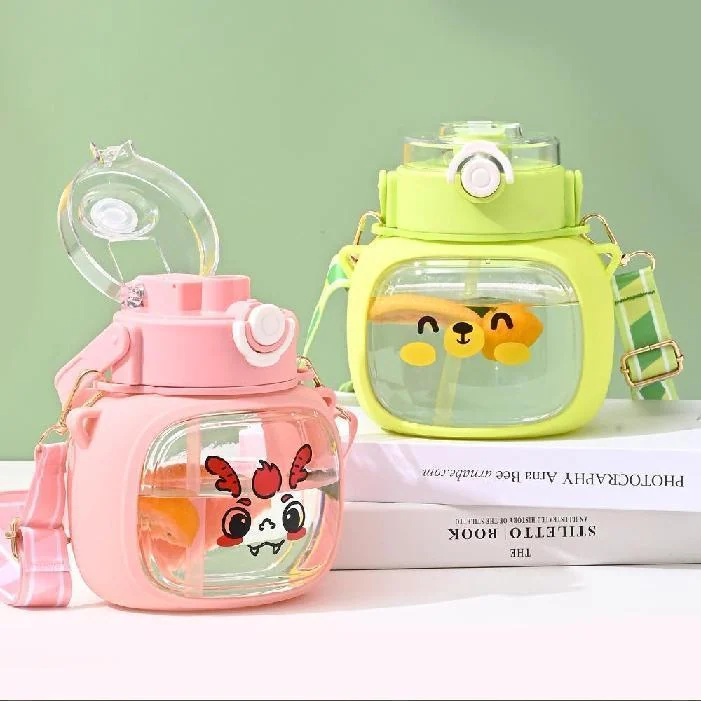
A buyer-focused guide to age suitability, straw lids, materials, cleaning, labeling and children's bottle sampling. The following checkpoints help importers and private-label buyers compare real product specifications instead of relying on generic sales claims.
- State age range, country and intended liquid
- Check loose parts, closure force and straw cleaning
- Request component-level materials and relevant evidence
Define the exact age group and sales destination
'Kids bottle' is too broad to determine suitability. A product for older school children may differ in dimensions, closure strength and component size from one intended for young children. Clarify the age group, where the bottle will be sold and whether it is for water only. Market-specific children's-product rules may add labeling, chemical or mechanical requirements beyond ordinary food-contact rules.
Compare lid mechanisms with real user behavior
Straw tops, flip buttons and screw caps offer different convenience and cleaning trade-offs. Check whether the closure takes too much force for intended users and whether any parts can come loose during repeated use. A dust cover can protect a mouthpiece but adds a hinge to inspect. Ask for assembly diagrams and samples that represent the exact product variation.
Verify every food-contact component
The body, straw, mouthpiece, cap, gasket and internal colorants may all have different materials. Ask for a complete bill of materials and evidence relevant to the market and intended use. Never assume the body being Tritan proves the entire product is BPA-free, heat resistant or compliant with child-specific requirements. Confirm if the product includes small detachable accessories.
Test sealing, cleaning and durability
A children's bottle may be tossed into a school bag, opened repeatedly and washed frequently. During sample approval, inspect hinge action, straw access, seal positioning, odor, accessible cleaning surfaces and whether water is trapped in hidden cavities. Agree on leak and drop-test methods with the supplier, but do not advertise absolute guarantees from an untested sample.
Design labels that answer parent questions
Retail packaging should clearly state model, capacity, materials where required, age guidance, cleaning instructions and appropriate warnings. Destination-language requirements differ, as do responsibility for importer details and traceability labels. Confirm the exact text and artwork before mass printing cartons. Avoid broad 'non-toxic', '100% safe' or dishwasher-safe claims without relevant substantiation.
Build sampling and production sign-off
Order a physical sample with the actual cap, straw, strap and packaging. Record which details were checked and whether tests or documents are pending. Once approved, lock the components and decoration design. For multi-color collections, verify colors do not introduce different materials or require separate compliance review. A clear reference sample prevents unintended changes on repeat orders.
Children's bottle purchasing needs an end-use and market definition
A bottle sold for children is not proven suitable merely because it has a colorful design or a straw lid. Where food-contact requirements apply, the regulatory evaluation concerns the actual materials, their components and their intended use. Additional age- and jurisdiction-specific rules may also apply.
Practical next step: Include intended user age, market, cap and strap components, cleaning instructions, material list and requested finished-product testing in the RFQ. Ask for SKU-specific reports rather than general factory certificates.
Primary references
- US FDA: Determining regulatory status of food-contact components ↗
- EUR-Lex: 2025/351 update to EU plastic food-contact rules ↗
External regulations and standards are independent references, not product certification or proof of testing by XUYI. Confirm applicability and the latest rules for the exact product, destination and transaction date.
Buyer checklist
- State age range, country and intended liquid
- Check loose parts, closure force and straw cleaning
- Request component-level materials and relevant evidence
- Verify samples and packaging warnings
- Lock the approved component configuration
Frequently asked questions
Are all kids water bottles suitable for toddlers?
No. Suitability depends on intended age, detachable components, lid design and market requirements. Ask for a product-specific assessment rather than assuming one kids category fits every age.
Can a kid's bottle be called BPA-free?
Only with adequate evidence for the actual finished product and its food-contact components. The polymer name or appearance alone is not enough.
Need a quote for a specific model?
Send the model, expected order quantity, logo requirements and destination market. XUYI can review confirmed material and customization options.
Request a Plastic Bottle Quote →