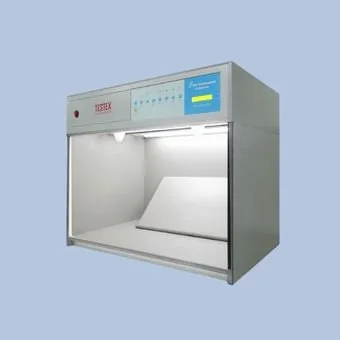
Color Assessment
Compare molded and printed colors against references.
Plastic bottle quality involves more than the appearance of the body. Buyers should verify the components, lid fit, drinking mechanism, capacity, printing, carton packing and any destination-market food-contact documentation. XUYI discusses inspection needs against the selected model and agreed specification, not a blanket certificate claim.
Review Quality Requirements →Depending on the bottle and packaging requirements, relevant quality and durability checks can be specified and confirmed for each order.
Compare molded and printed colors against references.

Evaluate print and decoration durability where specified.
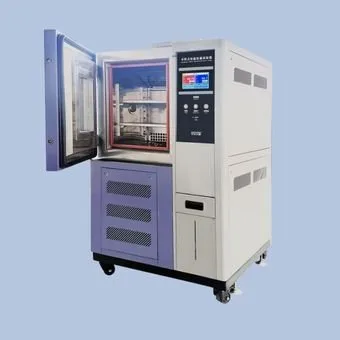
Discuss environmental exposure checks for the order.
Review handling and shipping protection.
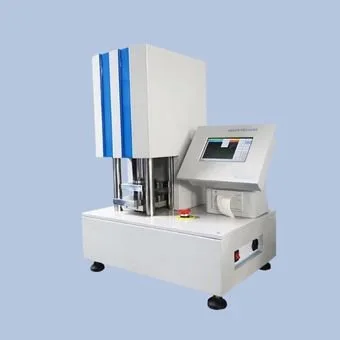
Check carton material strength when applicable.
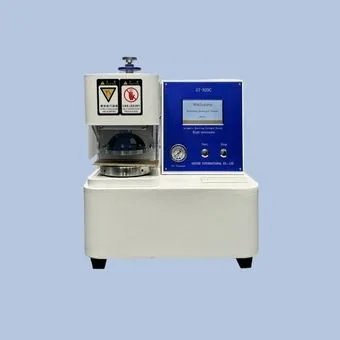
Assess packaging performance under agreed conditions.
Use this matrix to plan scope with your supplier or independent inspection team.
| Component / issue | Typical buyer check | Evidence to request |
|---|---|---|
| Body / capacity | Actual volume, dimensions, finish and visible defects | SKU specification and dimensional record |
| Lid / gasket / straw | Fit, opening/closing operation and agreed leak check | Sample record and functional check description |
| Handle / carry strap | Attachment and use-related handling suitability | Component specification and relevant test scope |
| Printed design | Location, color, legibility and resistance criteria | Approved artwork and reference sample |
| Carton / retail packaging | Count, label, cushioning and transit expectations | Packing list, carton dimensions and markings |
| Food-contact components | Destination-market rules applicable to exact part and use | Matching declarations or scoped laboratory reports |
The tests above are selection guidance. Do not infer XUYI uses specific test machines or that every product passed the same inspection; agree the method, scope and evidence before an order.
For a plastic sports bottle or large water jug, buyers typically care about volume, lid fit, handling, leakage under defined conditions, surface condition and consistency between units. A kids bottle adds concerns about straw components, detachable accessories, cleaning and age-appropriate labeling. A shaker bottle can have additional closure, scale marking or mixing-component checks. Each design should have its own acceptance criteria.
Body and lid materials should not be treated as interchangeable. Catalog descriptions may list PP, PE, PC or other plastics for different parts. Material names alone do not prove BPA-free status, food-contact compliance or suitability for hot drinks. Any declaration or test report must match the exact product, components, intended use and destination market.
An effective inspection plan identifies what to check, when it is checked, how results are recorded and what happens if the sample does not meet the agreed specification. XUYI can discuss relevant sample and order checks with buyers; the website does not claim all listed tests, facilities, certificates or inspection methods are already available for every SKU.
Agree acceptance criteria, testing responsibility and reference samples before bulk shipment.
Identify the model, all component materials, intended beverage contact, dimensions, allowed colors and packaging.
Ask which food-contact, child-use or chemical-substance requirements apply in the destination country and product use case.
Check capacity, lid/handle function, decoration appearance and packing with the actual buyer before production release.
Specify function checks, dimensional tolerances, visual defects, packing counts, sampling plan and report responsibilities.
Use the agreed process to assess finished units and investigate deviations from the reference sample.
Record outcome, corrective actions where needed and approval of packing list, carton marks and transport readiness.
Clear answers on leaks, materials, test reports and buyer approval.
No blanket statement can be made from a source catalog. Specify the exact model and its component polymers, then review model-appropriate material evidence and testing before publishing BPA-free claims.
Required evidence depends on the actual model and destination. The terms FDA and LFGB are often used loosely in marketing; ask what regulation, test method and exact component a document covers. Availability must be checked per SKU.
Agree a realistic test that defines fill level, lid assembly, orientation, duration and use conditions. A passing result for one closure does not automatically cover another lid design.
They may have additional considerations for child use, detachable parts, drinking straws, cleaning and applicable local requirements. The model and target age/market must be specified.
Approve artwork size and location, actual ink or decoration on the substrate, color appearance, and agreed rub/adhesion or durability requirements.
Inspection requirements can be discussed, but availability, test scope, fees, access and corrective-action responsibility must be agreed for the individual purchase order.
Not automatically. Material substitutions, lid changes, colors, coatings and intended use can alter applicability; verify coverage instead of reusing a report without review.
Share the bottle code, target country, planned use, required documents and any leak, printing or packaging concerns. Discuss a written inspection and sample-approval scope for that project.
Discuss Your Order →Reference the intended destination and exact material assembly. A regulatory reference does not certify an XUYI model.
FDA explains that the status of food-contact articles depends on the regulatory status of constituent substances and their intended conditions of use. Request separate specifications for the bottle body, cap, straw, seal and colorants.
FDA food-contact component guidance ↗EU plastic food-contact requirements include amendments under Regulation (EU) 2025/351; rules for BPA and other bisphenols are covered by Regulation (EU) 2024/3190, updated in 2026. Check the finished SKU, use conditions and applicable transitional provisions.
EU Regulation 2024/3190 ↗EU Regulation 2025/351 ↗ISO 2859-1:2026 describes schemes for lot-by-lot inspection by attributes. Agree lot definition, defect severity, inspection level, sample plan and actual lid / seal tests in writing. Never imply that citing ISO makes the factory certified.
ISO 2859-1:2026 overview ↗Independent primary sources, not test reports for XUYI products. Verify current legal applicability with the buyer's compliance team and obtain product-specific evidence.
Share your model numbers, estimated quantity, colors, artwork and destination country.
Get an Instant Quote →