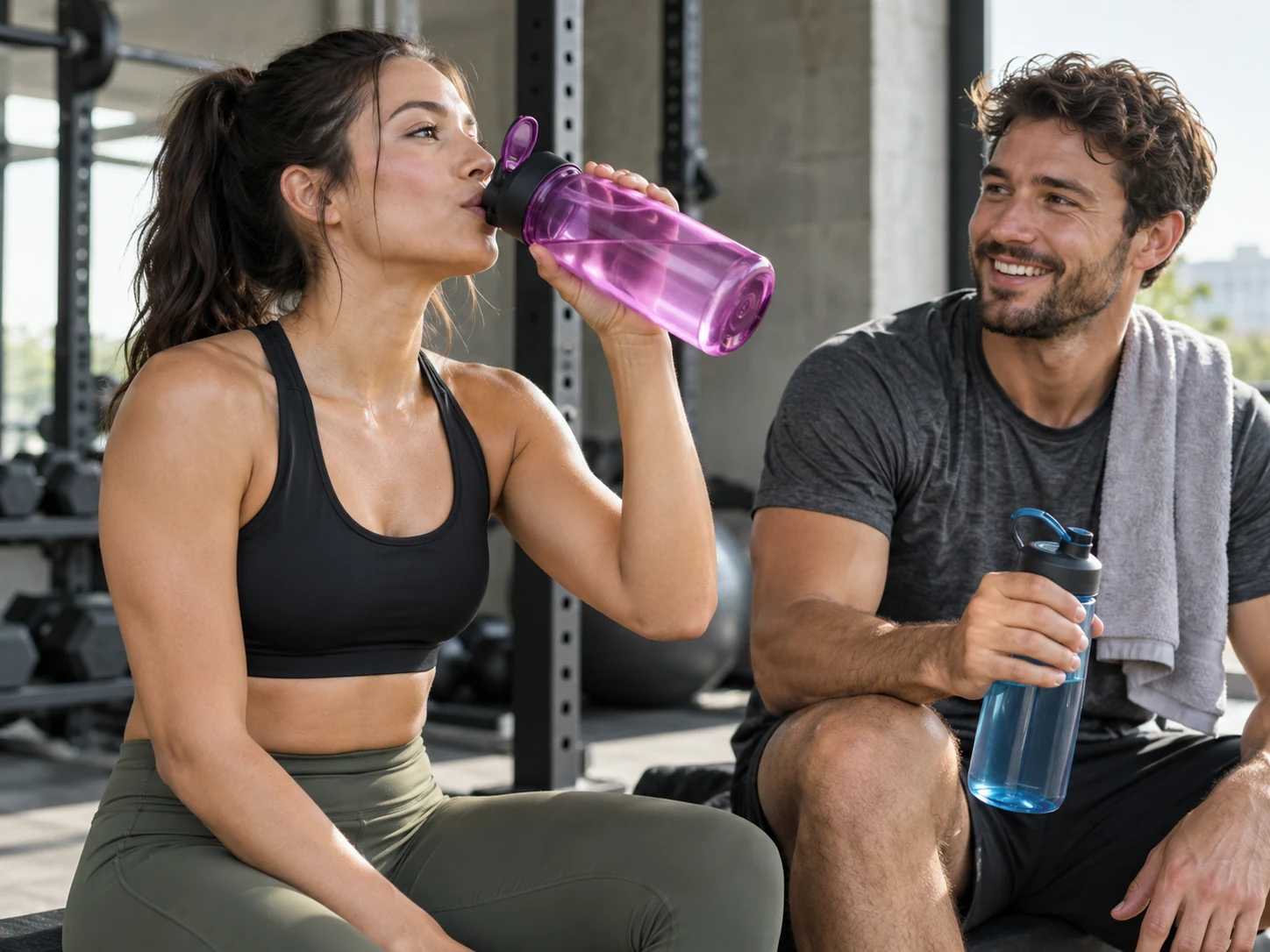
A component-level material guide for reusable bottles, food-contact documents and BPA-free requests. The following checkpoints help importers and private-label buyers compare real product specifications instead of relying on generic sales claims.
- State the intended temperature and cleaning method
- Identify body, lid, straw, gasket and colorant materials
- Request exact resin grades and relevant food-contact evidence
The body material is only part of the answer
A reusable bottle is an assembly: the body may use one polymer while a flip cap, carrying handle, straw and flexible seal use others. In RFQs, specify each drinking-contact component rather than writing only 'food grade plastic'. Ask for material grade, colorant, intended use and a declaration that identifies the exact model. This prevents material substitutions from slipping through a visually identical sample.
PC: clarity and mechanical performance require a BPA discussion
Polycarbonate can provide a rigid, transparent bottle body, but conventional BPA-based polycarbonate is not automatically BPA-free. If the destination market or brand policy excludes BPA, do not accept an unqualified 'PC + BPA-free' statement; ask for the exact resin identity and evidence supporting that claim. Confirm expected use temperatures and cleaning conditions with the manufacturer before approving the final construction.
Tritan: transparent copolyester options for branded bottles
Tritan is a family of branded copolyester resins, not a generic word for every clear plastic. It can suit retail-ready transparent designs, but performance depends on the chosen resin grade, molding conditions and the entire assembly. Ask whether the product uses authentic specified resin and request applicable declarations or test results for your intended market. Do not extrapolate one lid's properties from the bottle body.
PP and PETG: practical options with different trade-offs
Polypropylene is commonly used for lids and can also be specified for bottle bodies; it is generally more opaque than a crystal-clear copolyester. PETG offers clarity and forming flexibility, but suitability for heat exposure, dishwashing and certain liquids is grade dependent. Neither material name alone guarantees leak resistance, microwave suitability, food-contact compliance or long-term cleaning performance.
Match test documents to market and use
For EU buyers, specify applicable food-contact requirements and supporting declaration/test scope; for US buyers, ask for the relevant regulatory basis for each food-contact component. If the bottle is marketed for children or a hot-fill application, check whether additional rules or testing apply. A material brochure, a supplier statement and a finished-article test report serve different purposes, and none should be presented as a blanket worldwide approval.
Freeze the bill of materials before mass production
After comparing samples, record the agreed resin, lid parts, gasket material, color and finishing method in a bill of materials. Mark which changes require re-approval and keep a reference sample. This is particularly important when a buyer changes from PC to Tritan or from one lid design to another late in a project; the new configuration may need a revised mold, label or compliance review.
Food-contact evidence: what buyers can actually check
A bottle is an assembly, not a single resin label. For a US-destination SKU, request the component formulation or material declarations, intended food-contact conditions and the applicable regulatory basis. FDA explains that the status of each food-contact substance matters; its published guidance does not certify any XUYI product.
Practical next step: Request separate evidence for the bottle body, cap, straw, flexible seal, colorants and any food-contact decoration. Match each document to the product revision and intended use temperature.
Primary references
- US FDA: Determining the Regulatory Status of Components of a Food Contact Material ↗
- EU Commission Regulation (EU) 2025/351, amendments to plastic food-contact rules ↗
External regulations and standards are independent references, not product certification or proof of testing by XUYI. Confirm applicability and the latest rules for the exact product, destination and transaction date.
Buyer checklist
- State the intended temperature and cleaning method
- Identify body, lid, straw, gasket and colorant materials
- Request exact resin grades and relevant food-contact evidence
- Confirm BPA requirements per component
- Approve a controlled material list and physical sample
Frequently asked questions
Are all clear bottles made of Tritan?
No. PC, PETG and other transparent polymers may look similar. Confirm the resin and grade in the product specification instead of judging from photos.
Is every PC bottle BPA-free?
No. Conventional BPA-based PC should not be assumed BPA-free. Buyers seeking a BPA-free line should specify that requirement and verify the exact product construction and appropriate evidence.
Need a quote for a specific model?
Send the model, expected order quantity, logo requirements and destination market. XUYI can review confirmed material and customization options.
Request a Plastic Bottle Quote →