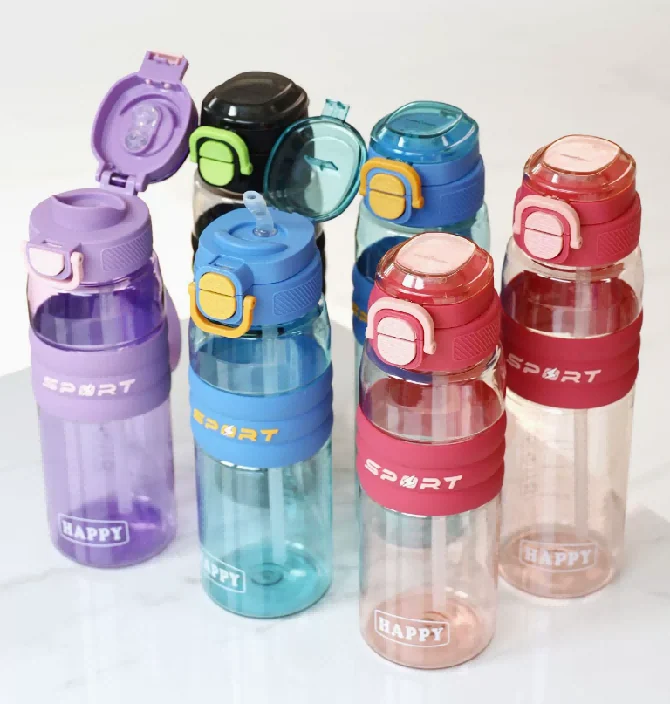
A practical comparison of four plastics for OEM buyers planning transparent bottles, sports caps and value-priced drinkware. Use the practical sourcing criteria below to define a quote, verify samples and avoid unapproved assumptions about a bottle model.
- Specify use temperature, cleaning and destination market
- Compare the actual resin grade for each component
- Clarify whether BPA-free is mandatory
Compare the exact intended product, not only its resin name
Plastic choice depends on the bottle shape, whether transparency matters, the intended liquid temperature, drop conditions, printing method and target price. These four families are not identical and individual resin grades may behave differently. A body may be one polymer while the cap and seal use others. Request grade-specific data and samples before choosing material for an entire line.
Tritan and PETG: both can be clear, but they are not synonyms
Tritan is a branded copolyester family frequently used in transparent reusable drinkware. PETG is another copolyester family that can give a clear appearance and different processing or cost options. Do not assume all PETG grades have the same heat resistance, dishwasher guidance or regulatory status as a selected Tritan grade. Specify the exact grade, use temperature and sample testing requirements.
PP: a versatile choice for functional parts and some bodies
Polypropylene is widely used for molded lids, handles and bottle components and can also serve suitable bottle body designs. It may offer different flexibility and visual appearance compared with transparent copolyesters. Color, wall thickness and molding choices affect the feel. Check hinge durability, seal fit and decoration feasibility on the actual part rather than assuming all PP constructions are interchangeable.
PC: resolve the BPA question before specifying it
Polycarbonate can be rigid and transparent. Conventional polycarbonate resins commonly involve BPA, so a generic PC label does not support a BPA-free claim. If your market requires BPA-free plastic drinkware, ask the supplier to propose an appropriate verified material system rather than repeating contradictory material labels. Resin substitution can change molding, price and material declarations.
Compare the total project cost
Material cost is only one element. Changes to resin may require new samples, tooling trials, adjusted print adhesion and different compliance evidence. For private label orders compare the finished-unit price at identical color, cap, carton and quantity assumptions. A cheaper resin is not automatically cheaper after higher rejects, an unsuitable finish or retailer-specific testing is taken into account.
Make a simple material approval matrix
A useful specification records material by component, desired transparency, intended operating conditions, required food-contact evidence, sample results and brand exclusions. Include a column for 'requires confirmation' so untested heat, dishwasher or chemical claims do not slip into artwork. Keep the matrix with the approved physical sample and order revision.
Why PC and BPA-free cannot simply be assumed together
A trade name or generic plastic abbreviation does not establish the chemical composition of a finished food-contact article. The EU has a specific BPA regulation updated in 2026. Check the currently applicable provisions and any transitional rules for your article and sale date; this is not evidence that a particular XUYI bottle meets them.
Practical next step: Require exact resin grades and finished-article documents before replacing a PC specification with Tritan, PETG or another material. Review the product's components and intended contact conditions.
Primary references
- EU Regulation 2024/3190, consolidated text as of 23 February 2026 ↗
- US FDA: Regulatory status of food-contact material components ↗
External regulations and standards are independent references, not product certification or proof of testing by XUYI. Confirm applicability and the latest rules for the exact product, destination and transaction date.
Buyer checklist
- Specify use temperature, cleaning and destination market
- Compare the actual resin grade for each component
- Clarify whether BPA-free is mandatory
- Sample-test closure and decoration for each material option
- Approve one component-level bill of materials
Frequently asked questions
Which is best for a transparent water bottle?
That depends on the precise resin grade and design. Tritan and PETG are among clear options, while PC may also be transparent; sample appearance and evidence against your intended use conditions.
Can I switch from PC to Tritan without changing anything else?
Not automatically. Molding conditions, shrinkage, tooling fit, test documents and pricing may all need review. Reconfirm the product specification and physical sample.
Need a quote for a specific model?
Send the model, expected order quantity, logo requirements and destination market. XUYI can review confirmed material and customization options.
Request a Plastic Bottle Quote →