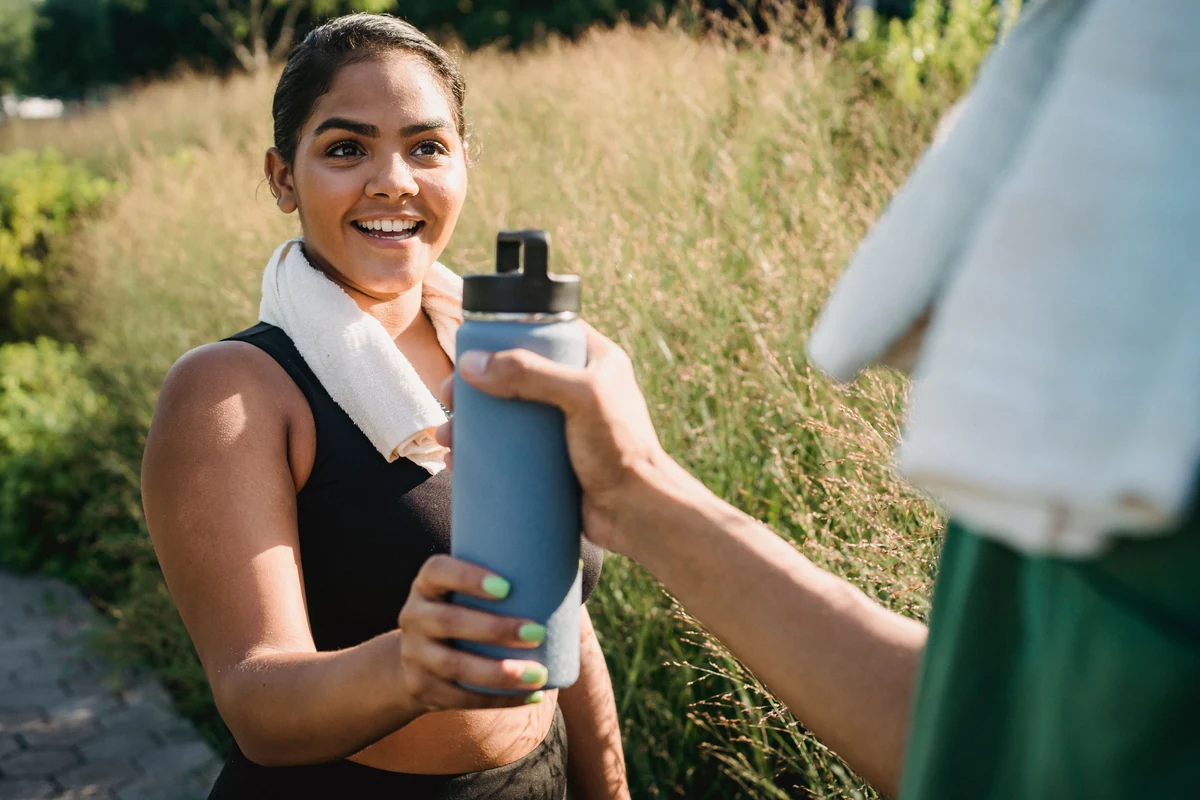
Corporate wellness challenges and employee activity days often combine several purchasing needs: participant kits, volunteer or coach allocations, team branding and ongoing staff use. A bottle order works better when those needs are planned separately and connected to a real event calendar. This guide helps HR, facilities and procurement teams select model references, approve artwork, test samples and compare delivered cost without turning a wellness campaign into unsupported product-performance or environmental claims.
- Separate one-time challenge kits from ongoing employee bottle stock.
- Confirm participant enrollment, office locations, volunteers and coaches.
- Choose model references based on actual carrying and activity requirements.
1. Separate one-time challenge kits from ongoing employee bottle stock
An employee wellness challenge may include a launch-day kit, weekly activity sessions, team events and an ongoing staff bottle program. Those quantities should not be combined into one number. Identify the campaign dates, participating offices, expected enrollment, volunteer or coach allocation and whether bottles are included for every employee or only registered participants. A one-time event has a fixed distribution date, while an ongoing staff program may need a replenishment plan after the first issue. Keep each allocation tied to a location and responsible coordinator so the central buyer can see what is confirmed and what remains an estimate. This prevents an event reserve from being mistaken for permanent staff stock and makes it easier to adjust the order when registration numbers change.
2. Segment participants and choose practical model references
A corporate challenge can include desk-based employees, outdoor activity groups, coaches and event volunteers. Consider how each group will carry the bottle, whether it needs to fit a work bag, and whether participants will use it during a class, walk or company sports day. Review Model 2511 as one sports-bottle reference, then compare the exact dimensions, cap configuration, color options and available documentation for the model being quoted. Do not assume that a larger bottle is automatically better for every participant or that one lid style suits every activity. If the campaign uses more than one model, label the allocation clearly and ensure the sample approved by procurement is the same configuration shown in the final quote.
3. Align company identity, campaign artwork and sponsor approvals
Corporate wellness merchandise may carry a company logo, campaign name, team color, event date or sponsor identity. Confirm the brand owner and approval contact before asking for artwork. Provide the correct logo file, print-area requirements and color references, then request a proof showing the artwork on the actual bottle shape. Approve each color and model combination separately, because a logo may look different on another body color or surface. If the company has several offices or business units, agree whether all bottles use one master design or whether each location has an approved variant. Keep the final artwork, proof, sample and purchase order under one revision record. Do not print health, sustainability or performance slogans that imply a product certification or test result unless the company has supporting evidence for the exact item.
4. Test the sample in the real activity and review care information
A bottle that looks suitable in a product image still needs a practical check. Ask a small group of intended users to handle the complete sample during the type of activity planned for the campaign. Check opening and closing, grip, carrying comfort, access while moving, removable parts and the supplier's cleaning instructions. If participants will place bottles in bags, lockers or shared event storage, test those arrangements too. Request the component information and available documents for the exact model rather than assuming that a general material description covers every part. Do not describe a bottle as leakproof, impact-resistant, dishwasher-safe or suitable for a specific temperature unless the supplier can substantiate that claim for the assembled model. The goal is to approve a product that fits the actual program, not to create a broad promise from a promotional photograph. A second candidate such as Model 2512 should be tested as a complete sample, including its cap, removable parts and care instructions.
5. Plan enrollment changes, office distribution and event deadlines
Work backward from the date the bottles must be delivered to each office or event coordinator. Include sample approval, artwork sign-off, final participant count, production, packing, freight and receiving inspection in the plan. Ask the supplier to confirm timing for the exact model, decoration and order quantity; do not treat a general lead-time estimate as a guarantee. If registration remains open close to the order date, agree the last date for quantity changes and whether a reserve can be held without committing the full amount. For multi-office campaigns, decide whether cartons will be shipped centrally and redistributed or delivered to separate destinations. Label each approved allocation by office, team or event so that the wellness coordinator does not have to sort an unmarked mixed shipment on launch day.
6. Compare total delivered cost and customization assumptions
Request comparable quotations using the same model, color mix, logo method, packaging, quantity and destination. Separate the bottle price from artwork or setup charges, individual packaging, carton configuration, freight, insurance, duties and local handling where applicable. If several offices receive separate shipments, include the cost and coordination effort of those deliveries. Ask for confirmed carton quantity and dimensions so facilities teams can plan temporary storage. A low unit price may not be the best option if it requires additional packing, a different decoration method or a delivery arrangement that does not match the campaign. Record every quote assumption and keep it linked to the approved sample and proof. This gives procurement a fair comparison and helps the company explain any cost change when enrollment or campaign scope increases. When comparing final quote options and packing assumptions, keep Model 2513 as a separate model rather than combining its costs with another configuration.
7. Measure participation feedback and use it to plan the next campaign
After the challenge, reconcile the number of bottles ordered, delivered and distributed by office or team. Ask coordinators whether the model, carrying method, artwork and packaging worked for the intended activity. Record practical feedback separately from general campaign satisfaction, and identify any reported product issue by model and sample revision. If the company repeats the program, compare the next campaign's enrollment forecast with the previous actual distribution rather than copying the original order quantity. Keep the approved sample and artwork so that repeat orders can be checked against the accepted version. If the campaign changes from an outdoor activity day to an office-based program, reassess the model and allocation rather than assuming the previous configuration remains suitable.
Buyer checklist
- Separate one-time challenge kits from ongoing employee bottle stock.
- Confirm participant enrollment, office locations, volunteers and coaches.
- Choose model references based on actual carrying and activity requirements.
- Test the complete sample with intended users before approving the order.
- Review component information and the supplier's care instructions.
- Approve company, campaign, team and sponsor artwork by revision.
- Work backward from each office's delivery and event handout date.
- Confirm quantity-change deadlines and the treatment of reserve stock.
- Compare equivalent delivered-cost quotations, cartons and distribution plans.
- Reconcile distribution and collect model-specific feedback after the campaign.
Frequently asked questions
Should every employee receive the same bottle model?
Not automatically. A single model can simplify distribution, but the buyer should first compare the intended users, carrying routines, activity and sample results. A small approved range may be more practical for a mixed program.
Can a corporate bottle carry both company and sponsor logos?
Ask the supplier to confirm the available print area and decoration method. Obtain approval from each logo owner and review a proof showing the actual model, color, logo hierarchy and placement.
Does describing a bottle as reusable allow a company to make broad environmental claims?
No. Reusability alone does not prove a lifecycle impact, recyclability or a particular environmental benefit. Use only claims supported by evidence for the exact product and relevant market.
When should HR or procurement place the order for an activity day?
Start with the required delivery date and work backward through participant-count confirmation, sample and artwork approval, supplier-confirmed production, packing, freight and receiving inspection.
Need a quote for a specific model?
Send the model, expected order quantity, logo requirements and destination market. XUYI can review confirmed material and customization options.
Request a Plastic Bottle Quote →