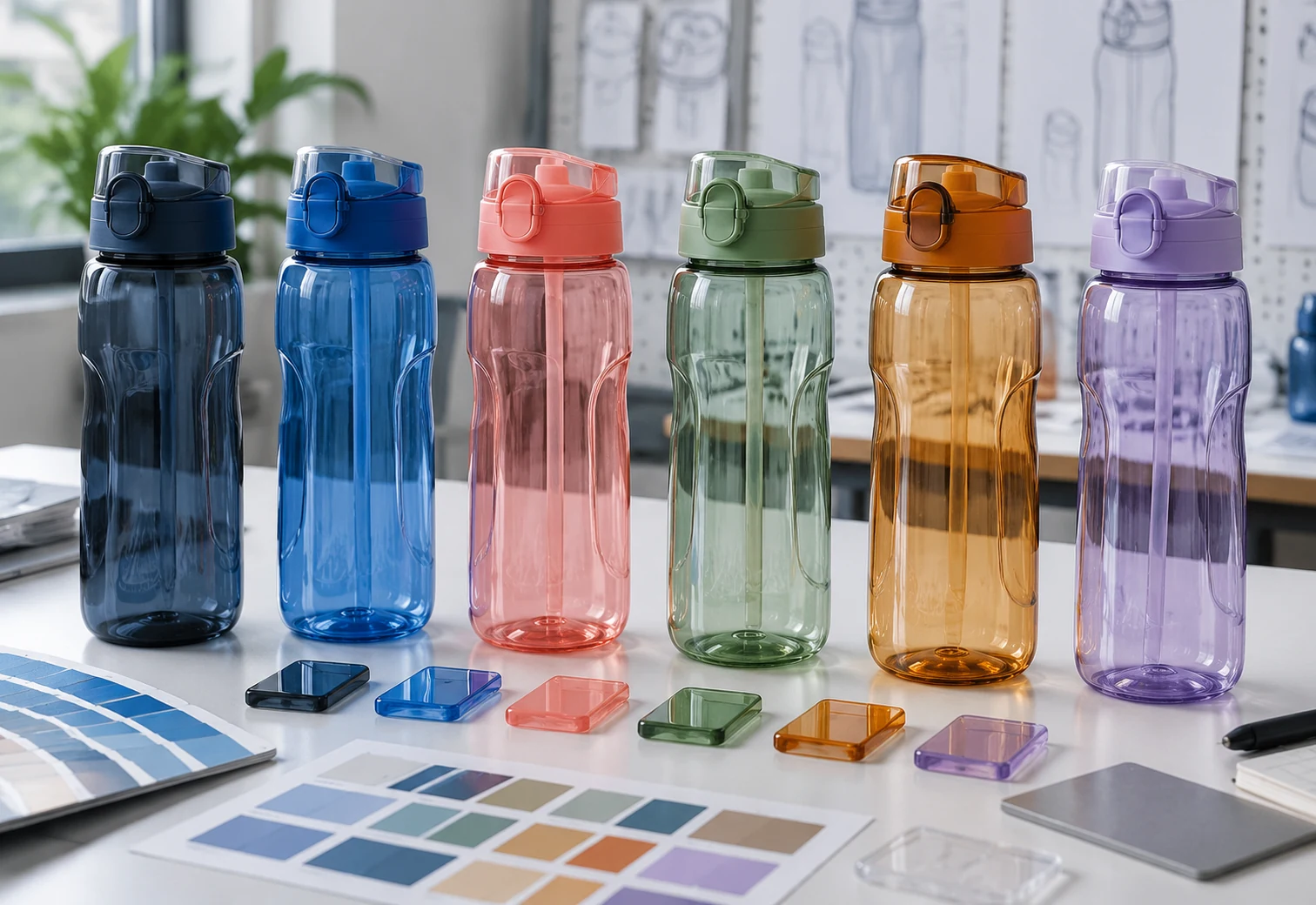
A color that looks correct on a screen can look different when molded into a translucent plastic bottle, printed on a curved surface or paired with a separate cap. Buyers can reduce avoidable revisions by defining the reference, components, finish, lighting and approval sample before mass production. A color code is useful, but it does not remove the need to agree how that color should appear on the actual material. This guide explains how to prepare a practical color brief for a custom bottle project without promising an exact match before a sample has been reviewed.
- Name the color system, code and edition or provide a physical reference
- Specify body, cap, straw, loop and logo colors separately
- State transparent, translucent or opaque appearance
Choose a reference designed for the right material
Begin with a specific physical color standard or a clearly identified target sample. A Pantone code from a paper guide can help communicate design intent, but paper ink and molded plastic are different substrates and processes. Pantone also offers plastic chips intended for communicating and evaluating color on plastic products. Tell the supplier which system and edition you are referencing, and provide the code plus a physical chip or approved sample when color is commercially important. Do not rely on a screenshot, phone image or uncalibrated monitor as the only acceptance standard.
Specify the bottle body, cap and accessories separately
List the target color for each visible component: body, cap, straw, carry loop, gasket if colored, and printed artwork. These parts may use different resins, colorants or manufacturing processes, so one code does not guarantee that all components will look identical. State whether the body should be transparent, translucent or opaque, and whether the cap should match exactly or intentionally contrast. If the logo is printed rather than molded into the plastic, define its ink reference and location separately. An annotated drawing or component table helps the factory quote the right work. Use sports bottle model 2400 as a model-specific starting point when preparing a color brief, then confirm the actual body and cap variants available for your order.
Approve a physical color sample before bulk production
Ask how the supplier will develop the color, whether a lab dip, molded chip or decorated bottle sample is available, and which revision will become the signed reference. A flat color chip can narrow the target, while the actual bottle reveals how curvature, thickness, transparency and surface finish change its appearance. Review the sample in consistent neutral lighting and compare it next to the physical reference, not from separate photographs. Record the approved sample ID, date, components, finish and any agreed deviation. Keep a protected reference for reorders whenever practical.
Understand why plastic color can shift
Color can vary with resin grade, colorant or masterbatch, dosage, wall thickness, translucency, surface texture, gloss and processing conditions. A transparent blue body may appear deeper where the wall is thicker or where the bottle overlaps itself, while a matte cap can look less saturated than a glossy body. Recycled or mixed material can introduce additional variability if it is permitted in the agreed specification. Ask the factory which variables it can control for the chosen design and what needs testing in a sample. Do not assume a printed color target transfers unchanged to molded plastic. Compare the catalog appearance of sports bottle model 2099 with the physical sample, but do not infer that its stock color or finish matches your custom target.
Agree a measurable tolerance and review method
If color is critical to the brand, discuss how both parties will judge the match before production. Some projects use a visual standard under specified lighting; others may agree on instrumental color measurement and a Delta E tolerance. A numeric tolerance is meaningful only when the instrument, measurement geometry, illuminant, sample preparation and agreed target are defined consistently. Do not add an arbitrary Delta E limit after the sample has been made or assume every factory uses the same setup. For many projects, a signed physical standard plus a written visual review method is the practical baseline.
Control production lots and color changes
Once the sample is approved, ask the supplier to keep the same reference for production inspection and future orders. Check early production pieces before the full lot is completed, especially when the body and cap are molded separately or when several colors are produced in one order. Record lot identifiers, resin and masterbatch details where available, inspection lighting and any accepted variation. A new resin supplier, pigment formula, surface texture or tool revision can change the appearance even when the nominal color code stays the same. Require approval before a meaningful color or material substitution. Keep sports bottle model 5340 identified by model and revision in the sample log so future color approvals can be tied to the correct product reference.
Write a color brief that the factory can quote
Include the target color system and code, physical reference availability, component-by-component colors, resin or finish requirements if already specified, transparent versus opaque appearance, matte or gloss finish, logo colors, sample type, acceptance method and the date the approved reference is needed. Ask whether color development, sample rounds, masterbatch setup and color-specific minimum quantities are charged separately. Identify which party keeps the master reference and how a later reorder will be compared. The goal is not to guarantee a perfect match from a code alone; it is to agree a repeatable process before the purchase order is released.
Pantone references for plastic color communication
Pantone provides plastic chips designed to communicate and evaluate color on plastic products. A reference system helps align expectations, but the actual molded component and its finish still need to be reviewed.
Practical next step: Choose the reference system, identify each component and approve a physical sample before authorizing bulk production.
Primary references
External regulations and standards are independent references, not product certification or proof of testing by XUYI. Confirm applicability and the latest rules for the exact product, destination and transaction date.
Color approval matrix for custom plastic bottles
Use the same reference and inspection conditions at quotation, sample approval, first production and reorder stages.
| Color variable | What to specify | How to verify |
|---|---|---|
| Reference standard | Color system, code, edition and physical chip | Compare against the named physical reference |
| Bottle body | Resin basis, transparency, wall and surface finish | Review a molded bottle, not only a paper swatch |
| Cap and accessories | Separate color target for each component | Inspect the assembled bottle under the same light |
| Printed logo | Ink reference, print method and position | Approve a decorated sample |
| Tolerance | Visual criteria or defined instrument setup | Use agreed lighting and measurement conditions |
| Reorder control | Sample ID, revision, lot and change notification | Compare early production pieces to the retained standard |
Buyer decision criteria, not XUYI certification, published MOQ or guaranteed delivery times. Verify the exact model and market requirements.
Buyer checklist
- Name the color system, code and edition or provide a physical reference
- Specify body, cap, straw, loop and logo colors separately
- State transparent, translucent or opaque appearance
- Define surface finish such as matte or gloss
- Review a molded or decorated physical sample in agreed lighting
- Record the approved sample ID, date and revision
- Agree visual criteria or a clearly defined measurement method
- Confirm color development and setup charges in the quotation
- Inspect early production pieces against the approved reference
- Require written approval for pigment, resin or color-process changes
Frequently asked questions
Is a Pantone code enough to guarantee the exact bottle color?
No. It communicates a target, but the substrate, molding process, transparency, wall thickness and finish affect the result. Approve a physical sample on the actual component before bulk production.
Should the cap and bottle body use the same color code?
You can specify the same target, but different materials and finishes may make them appear different. State the intended relationship and review the assembled bottle under consistent lighting.
Do I need a Delta E tolerance?
Only if both parties can use an agreed measurement setup and acceptance method. Define the instrument, measurement conditions and reference first; otherwise a signed physical standard and documented visual review may be more practical.
How can I keep color consistent on a reorder?
Retain the approved physical sample, record the component and material revisions, compare early production pieces under the same lighting, and require review before any pigment, resin or finish substitution.
Need a quote for a specific model?
Send the model, expected order quantity, logo requirements and destination market. XUYI can review confirmed material and customization options.
Request a Plastic Bottle Quote →