Museum shops need souvenir bottles that fit a retail story as well as a shelf, budget and receiving workflow. This guide covers permanent ranges and exhibition runs, artwork rights, decorated samples, barcode and carton setup, inspection criteria and evidence-led reorders.
- Separate evergreen stock from exhibition editions.
- Confirm image rights, territory, term and quantity.
- Choose the exact model and test shelf footprint.
Separate permanent souvenirs from exhibition-specific runs
A museum shop may carry evergreen city or collection designs while also ordering a limited run for a temporary exhibition, artist collaboration or anniversary. These are different inventory decisions. Forecast the permanent range from sales history and the exhibition range from the event calendar, expected visitor mix and the shop’s approved budget. Decide whether bottles are a year-round shelf item, a limited souvenir, a member benefit or a launch-day gift, because each use affects quantity and packaging. Keep limited-edition stock separate from general inventory and assign a clear product code or campaign label. A supplier quote should identify exact model, print version, quantity and packing for each run. Do not use a broad visitor forecast as a purchase commitment without considering store traffic and stock on hand.
Clear artwork, image rights and institutional approvals
Museum merchandise can involve collection images, artist names, exhibition titles, donor marks, partner logos or licensed reproductions. Confirm that the institution has permission to use every asset on a physical product and that the license covers planned sales territory, term, quantity and promotional use. Provide a final vector logo or print-ready file, identify approved colors and placement, and name the person authorized to release artwork. If several departments are involved, agree who resolves conflicting feedback before printing begins. Request a decorated sample or agreed proof using the exact design; a screen mock-up cannot confirm how fine lines, text or color will appear on a curved surface. Keep the license reference and artwork revision with the purchase order, and recheck rights for each new exhibition. Use Model 2100 · 650 ml catalog bottle as one catalog reference when comparing souvenir formats; verify the actual color, cap and available decoration for the selected SKU.
Choose a bottle format that works on the shop shelf
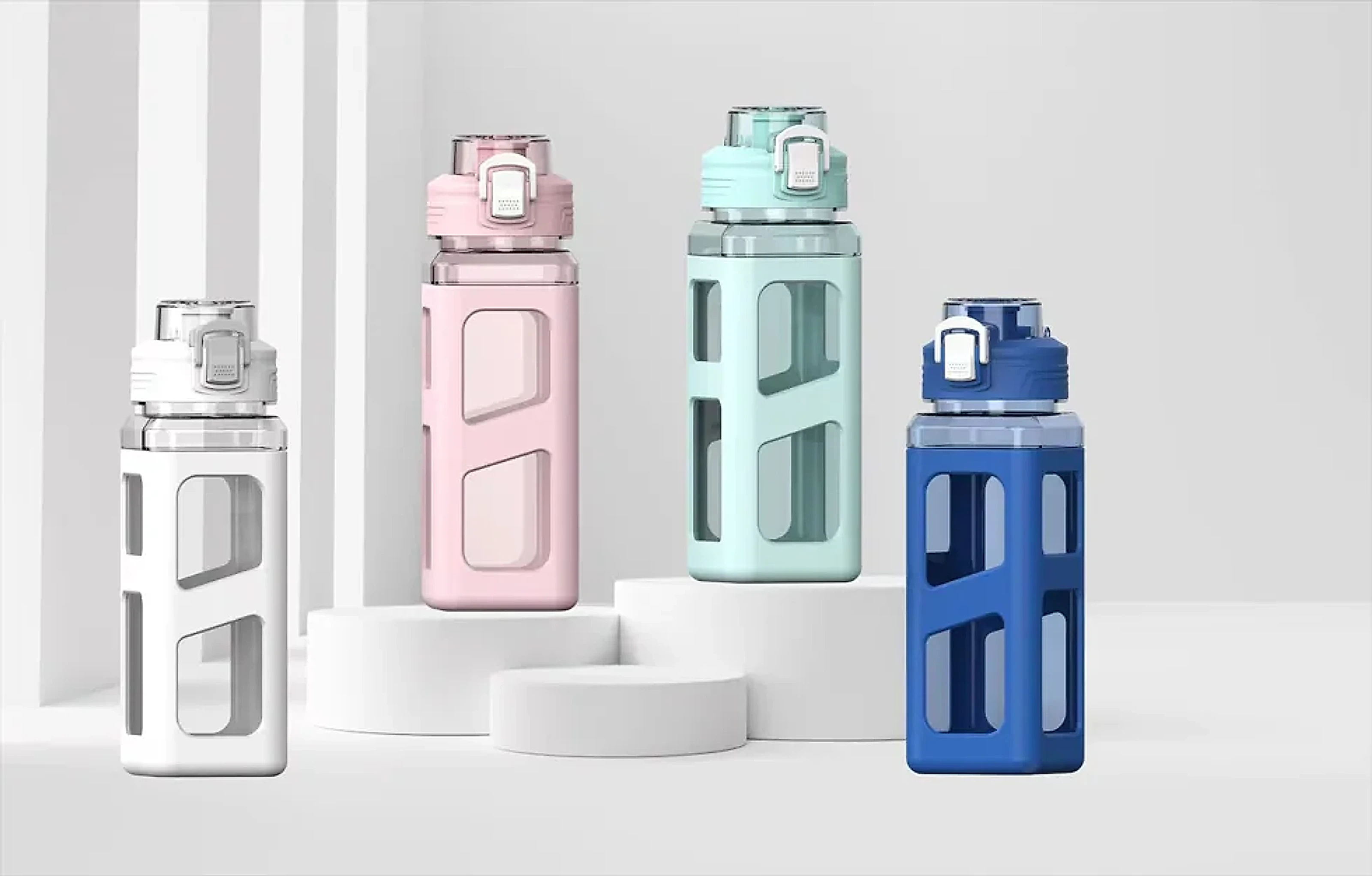
Gift-shop buyers balance visitor convenience, shelf presentation, display density and planned retail price. Compare actual samples for height, width, cap, grip and overall appearance, then test them in the shelf fixture and the bags or gift packaging used by the shop. Capacity alone does not show how the bottle fits beside books, prints or other souvenirs, and a catalog photo cannot establish its finished color. Confirm the exact SKU and available finish before choosing a retail barcode or writing product copy. A compact format may be easier to merchandise at checkout; a larger bottle may fit an outdoor collection but changes shelf footprint and carton size. Record the chosen model and why it suits the target visitor.
Test the decorated sample before setting the retail price
The approved sample should match the model and components supplied, including cap, logo position, color and any retail sleeve or box. Review readability at normal viewing distance, how the design wraps around the body and whether small text remains clear. Build the retail price from comparable landed cost, decoration, individual packaging, inbound freight, handling and the shop’s required margin. Include separate artwork review or setup costs for a limited edition. Do not calculate margin from an unconfirmed unit price while leaving setup and transport outside the model. Agree how sample changes are handled and whether a revised proof affects the production schedule. Verify care instructions or product claims against the actual SKU and market requirements, and retain the written approval with sample photos. Compare Model 2516 · 1000 ml catalog bottle against the shelf footprint, visitor carry needs and planned retail price; confirm its exact finish and packaging before approval.
Set up barcodes, carton labels and receiving details
Before release, confirm whether each artwork, color or exhibition edition needs a separate barcode and inventory record. Provide the supplier with the label format, case quantity, carton marks, purchase-order reference and receiving destination. For a central warehouse and several museum stores, decide whether stock ships to one location for redistribution or directly to each site. Request confirmed carton dimensions and gross weight so storage and freight can be planned from real figures. Ask the supplier to separate versions in cartons and provide a packing list matching the contents. Include a contact for delivery appointments and a process for documenting short shipments or damage. If the shop uses a point-of-sale system, test the barcode on the approved label proof before dispatch.
Define retail-ready inspection and defect handling
Agree on inspection criteria before production instead of deciding what is acceptable after cartons arrive. Points may include the correct model and count, cap fit, scratches, print alignment, color against the approved sample, barcode readability, packaging damage and separation of artwork versions. State which issues prevent retail sale and how staff should photograph and report a problem by carton or lot. Compare incoming goods with the approved production-representative sample. If a defect requires rework, replacement or partial release, identify who can decide and how costs or dates will be handled. Do not treat a generic test report as certification for a specific finished bottle. Any material or performance claim needs evidence matched to the exact components, intended use and target market. Check Model 2099 · 550 ml catalog bottle as a second shelf-size reference, then compare the approved sample, barcode placement and case label with the purchase specification.
Use sell-through data to plan the next edition
After the run, compare units ordered, received, damaged, sold, returned and remaining. Separate permanent souvenirs from exhibition-specific items so slow sales in a limited edition do not distort the core range forecast. Record model, approved artwork, license term, barcode, carton configuration and supplier-confirmed lead time. For a new exhibition, start with the rights and design schedule, then work backward from the receiving deadline while allowing time for sample review and correction. Reuse a successful model only after checking that the new artwork, color and packing are still available and correctly quoted. Use customer questions and sales data to decide whether to repeat a size, change the display or retire the design. A documented closeout supports the next quantity decision without assuming an old design or license remains valid indefinitely.
Museum shop retail release matrix
Each edition needs an approved sample, rights record and receiving plan.
| Gate | Evidence to keep | Release decision |
|---|---|---|
| Edition | Permanent or exhibition run | Demand defined |
| Rights | License and approved artwork | Use authorized |
| Sample | Exact SKU and decorated proof | Shelf fit accepted |
| Retail setup | Barcode and price model | Listing ready |
| Receiving | Carton labels and packing list | Stock traceable |
| Inspection | Lot and defect log | Retail release approved |
Buyer decision criteria, not XUYI certification, published MOQ or guaranteed delivery times. Verify the exact model and market requirements.
Buyer checklist
- Separate evergreen stock from exhibition editions.
- Confirm image rights, territory, term and quantity.
- Choose the exact model and test shelf footprint.
- Approve the decorated sample before final pricing.
- Set barcode, SKU and artwork revision per edition.
- Confirm case quantities, labels and destination.
- Agree inspection points for bottle, print and packaging.
- Keep lot and carton records for receiving and claims.
- Compare sell-through and remaining stock after the run.
- Retain license, proof, sample and reorder documentation.
Frequently asked questions
Can one bottle design be reused for every exhibition?
Only when the rights, approved artwork and intended use cover that edition. Treat each new image, title or licensed mark as a controlled version and secure the institution’s approval before production.
Should a museum choose a bottle from a catalog image?
Use catalog images to shortlist models, then inspect the actual sample for shelf footprint, cap, finish and packaging. Confirm the selected SKU and decoration options with the supplier before finalizing retail copy.
What should be on the cartons?
Agree model, quantity, purchase-order reference, artwork or edition revision and receiving destination. Provide actual carton dimensions and a packing list that matches the contents so the warehouse can identify each run.
How can a museum decide whether to reorder?
Reconcile units received, sold, returned, damaged and remaining. Review sales by edition and confirm that the license, artwork, model, packaging and current supplier quotation still apply before repeating an order.
Need a quote for a specific model?
Send the model, expected order quantity, logo requirements and destination market. XUYI can review confirmed material and customization options.
Request a Plastic Bottle Quote →