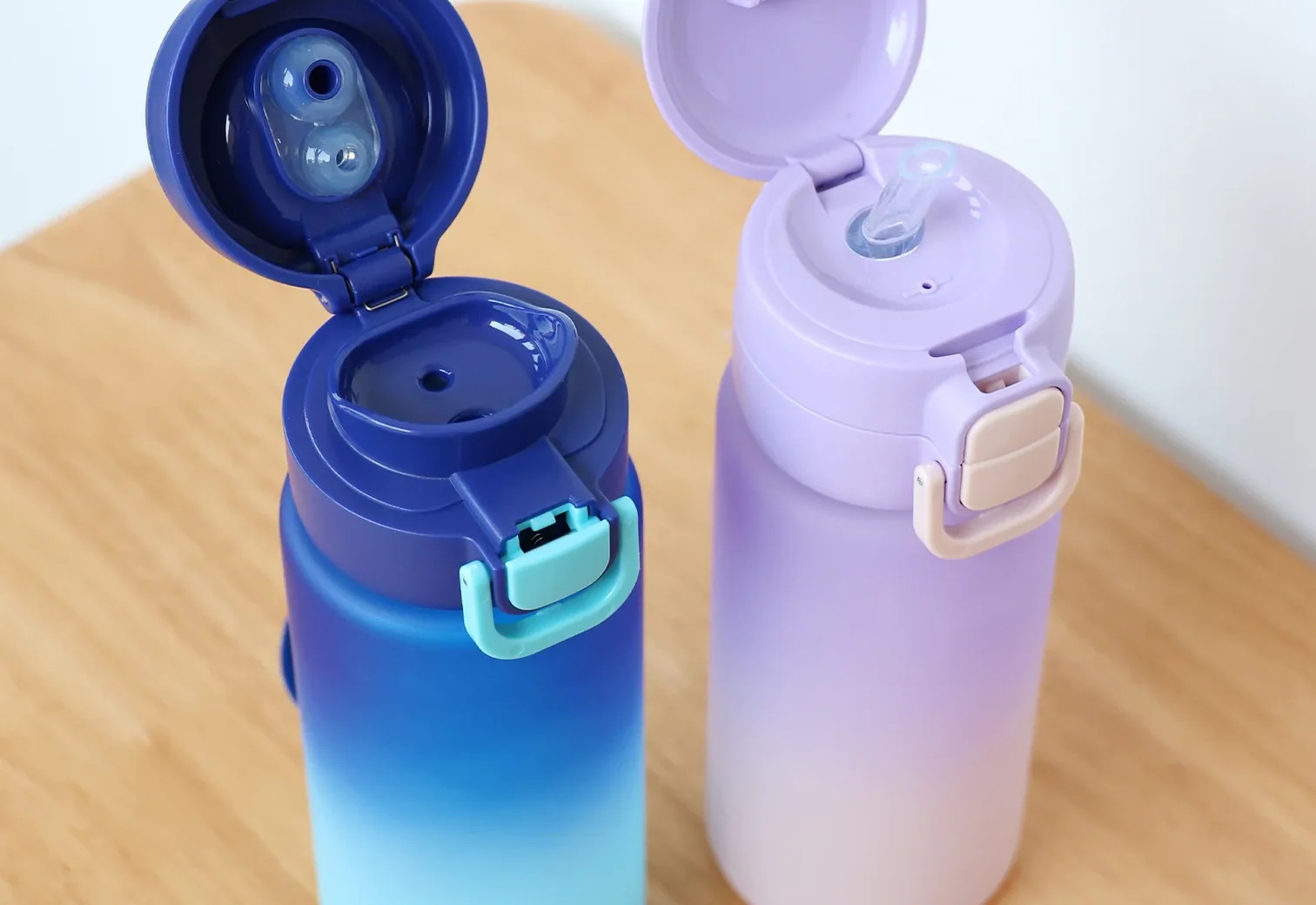
Are plastic water bottles dishwasher safe? Some are, but not all—and even a dishwasher-resistant bottle body may have a lid, seal, straw or printed logo that needs hand washing. Check the finished product's care instructions rather than relying on a recycling triangle or a material abbreviation. For brands ordering custom bottles, 'dishwasher safe' is a product-and-decoration claim that should be supported by a defined cleaning cycle and a reviewed sample, not a promise inferred from the word Tritan.
- Check instructions for the exact assembled model
- Do not treat a recycling number as a care symbol
- Ask which parts must be removed before washing
What does dishwasher safe actually mean on a water bottle?
A dishwasher-safe statement should cover what parts may be washed, where they are placed and the conditions used. The upper rack may be recommended for some designs, while other parts must be removed or hand-washed. Heat exposure, detergent, drying cycles and repeated washing can affect a different combination of materials and decorative finishes. A recycling number tells you about a resin category; it is not a care instruction. If the brand does not identify a dishwasher-compatible process for the exact bottle and lid, gentle hand washing is the safer default until the manufacturer confirms the limits.
Is Tritan dishwasher safe? What about PP and PC?
Eastman describes Tritan and Tritan Renew as durable in dishwasher environments, but the statement relates to defined materials rather than every assembled product on the market. Bottle lids may contain PP, seals, small flexible parts or adhesives, and their behavior should be assessed separately. A generic PP or PC label is also not a reliable guarantee about a finished container, its colorant or its logo. Verify the grade, part thickness, closure components and official product care instructions. If a label says 'top-rack only', do not silently change it to 'dishwasher safe under all cycles'. Use sports bottle model 2501 as a precise model reference; request the specific construction and evidence rather than assume extra features.
Why can the lid or straw fail before the bottle body?
Water can remain trapped under an attached gasket or in the narrow channel of a straw lid, while strong detergent and heated drying may affect a seal's fit. Some closures contain valves or hinges that need special care. Ask whether the maker expects users to remove the straw and seal, how they can do so without damaging them and whether replacement parts are available. A clean-looking transparent body does not mean the mouthpiece and its hidden crevices are clean. Compare cleaning access in a real sample before buying thousands of units for schools or fitness programs. Use kids bottle model 2409 as a precise model reference; request the specific construction and evidence rather than assume extra features.
Will dishwasher cycles damage a custom printed logo?
This is a separate question from whether the resin survives washing. Screen printing, pad printing, transfer decals and UV-related decoration each have process-specific durability that depends on ink, curing, substrate and abrasion. Even when the bottle body remains clear and intact, a printed logo can fade, lift or change appearance under detergent and repeated heat exposure. Define the exact artwork, colors, location and accepted appearance before testing. For a branded giveaway, check decorated samples through the proposed use and cleaning cycles. Do not advertise permanent print durability without a matching test and inspection agreement.
What should a product owner do before the first wash?
Read the specific care label and product instructions. Take apart only those lids, straws and seals the manufacturer says are removable; do not force valves or permanently fixed gaskets. If dishwasher use is confirmed, follow the specified rack and cycle instructions and allow all parts to dry completely after washing. If those instructions are missing, hand-wash with a suitable mild detergent and bottle or straw brush, rinse thoroughly and air-dry all components. Stop using damaged or visibly deformed parts and ask the maker for replacement guidance.
How can a B2B buyer test a dishwasher-safe claim?
Request a sample with the approved resin, cap, seal, strap and actual logo print. Agree the cleaning equipment, detergent, cycle conditions, number of washes, drying method and acceptable visual and functional changes before test work begins. Check leaks, lid fit, warping, color and print retention, and whether hidden cavities can be cleaned. Tie the report to a model number and component revision. If the result covers only an undecorated body, do not extend that conclusion to a full printed set with straw lid and accessories without further evidence. Use shaker model 5247 as a precise model reference; request the specific construction and evidence rather than assume extra features.
What should your RFQ say about cleaning performance?
Ask: 'Can the entire assembled and decorated bottle be put in a household dishwasher, and under what cycles?' Include the model, sales market, expected washing frequency, lid design, branding method, colors, quantity and proposed care language. Request the supplier's conditions, test evidence and exclusions for removable parts. If no tested dishwasher-rated version is available, specify hand-wash-only care and confirm that users will receive clear instructions. The goal is a defensible product promise that survives reorders, not a checkbox on a quotation sheet.
Dishwasher material and product-care evidence
A durable resin is not proof that a specific bottle lid, seal or print survives the proposed dishwasher cycle.
Practical next step: Ask for care restrictions and documented repeated-wash results for the decorated assembly.
Primary references
External regulations and standards are independent references, not product certification or proof of testing by XUYI. Confirm applicability and the latest rules for the exact product, destination and transaction date.
Dishwasher suitability: verify every part
Check the tested wash cycle, cap, seals and custom decoration.
| Decision | Lower-risk approach | Question for the supplier |
|---|---|---|
| Bottle body | Confirm resin grade and permitted cycle | Which wash and dry conditions were tested? |
| Cap and straw | Follow documented removal instructions | Are any parts hand-wash only? |
| Printed logo | Test the actual decorated sample | How did the print hold up to repeat cycles? |
| Care text | State rack, cycle and drying restrictions | What care statement can be supported? |
Buyer decision criteria, not XUYI certification, published MOQ or guaranteed delivery times. Verify the exact model and market requirements.
Buyer checklist
- Check instructions for the exact assembled model
- Do not treat a recycling number as a care symbol
- Ask which parts must be removed before washing
- Confirm top-rack and cycle restrictions, if any
- Check straw, valve, seal and hinge cleanability
- Review custom logo durability separately
- Agree repeated wash test conditions and acceptance
- Inspect a real production-representative sample
- Keep sample and material revision records
- Provide accurate care instructions with every order
Frequently asked questions
Can all reusable plastic water bottles go in the dishwasher?
No. Dishwasher suitability depends on the full construction and written care instructions; many bottle and lid combinations have restrictions.
Is a Tritan bottle always top-rack dishwasher safe?
Do not assume every assembled Tritan-containing product has the same care rating. Confirm the maker's instructions for body, cap, seal and decoration.
Does dishwasher safe mean the printed logo will not fade?
Not necessarily. Resin durability and printing durability need separate testing under agreed cleaning conditions.
What if my bottle has no dishwasher instructions?
Avoid an unsupported dishwasher claim. Use gentle hand washing until the manufacturer confirms the applicable process for that exact product.
Need a quote for a specific model?
Send the model, expected order quantity, logo requirements and destination market. XUYI can review confirmed material and customization options.
Request a Plastic Bottle Quote →