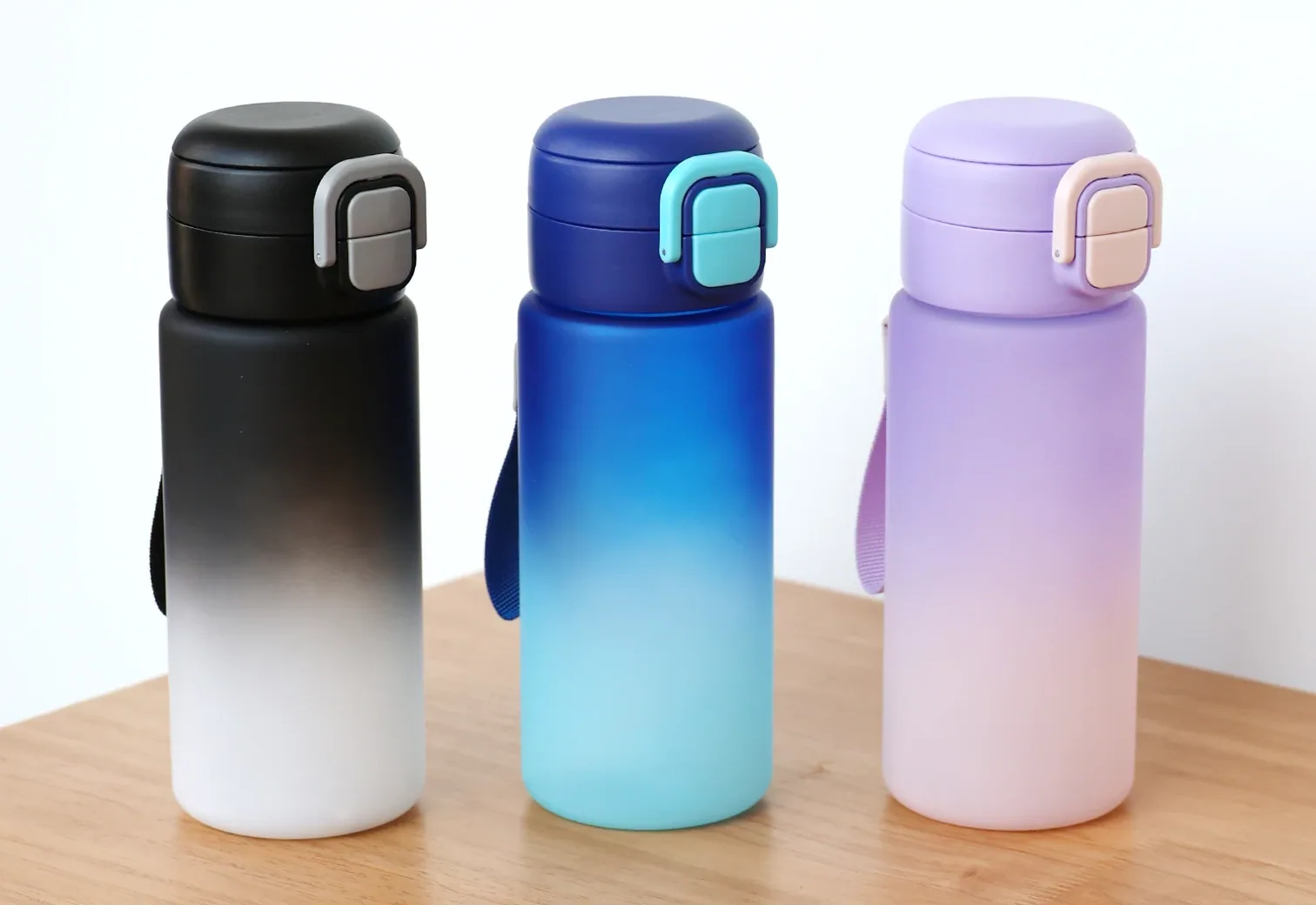
Can you put hot water into a plastic water bottle? Not without checking the exact product. Material names such as Tritan or PP are not a universal temperature rating. The bottle body, lid, straw, seal, permitted contact temperature, duration and washing method all matter. If a supplier cannot document the complete model's intended hot-water use, keep it to cold or room-temperature beverages. Below is a practical decision guide for consumers and brands sourcing reusable bottles; it does not certify any individual XUYI SKU.
- Specify maximum drink temperature and contact duration
- Confirm the sales market and intended beverage
- Identify body, cap, straw, valve and gasket materials
What does hot water mean for plastic food-contact safety?
Warm tap water, freshly boiled water, hot filling during manufacture and keeping a drink warm for hours are different conditions. The US FDA distinguishes room-temperature, hot-filled, boiling-water and sterilization conditions when considering food-contact substances. The temperature, duration and beverage must match the evidence. A test or declaration covering room-temperature water does not authorize boiling water. Write down the highest filling temperature, typical temperature during drinking, expected contact time and number of repeated cycles. This allows a factory or laboratory to answer a precise question rather than guessing from a broad plastic label.
Does Tritan, PP or PC mean that every bottle can hold boiling water?
No. Some specific Tritan materials have documented elevated-temperature and dishwasher applications, but material-provider statements do not automatically qualify a finished bottle. Different resin grades, colorants, transparent bodies and molded parts may behave differently. The lid may contain PP or another polymer; valves and seals may have their own limits. Even a BPA-free declaration is not a heat-resistance certification. Ask for the exact grade and authorized use of each food-contact component, then request evidence applicable to the complete assembled model. Never replace technical specifications with an unsupported 100°C headline. Use sports bottle model 2501 as a precise model reference; request the specific construction and evidence rather than assume extra features.
Why does the lid, straw and gasket matter as much as the body?
Hot drinks may touch a cap interior, spout, valve, straw and gasket when the bottle is carried or tilted. Heat can change how the lid seats on the bottle; a sealed container of hot liquid can also experience pressure changes. Before testing, identify which components contact the drink and whether the closure is designed for hot filling, sipping or cold use only. A body-only test certificate cannot prove the performance of an assembled cap. Buyers should request a component drawing and exact sample, not assume two bottles with similar exterior photos have interchangeable safe uses.
What paperwork should a wholesale buyer request?
Start with the destination market and a written intended-use specification. Request resin identification, a component bill of materials and food-contact documents that identify the tested material, sample or final article, test conditions, date and scope. US food-contact requirements relate to the relevant substances and conditions of use; there is no single universal FDA approval stamp for all finished bottles. In the EU, applicable declarations and migration evidence may be needed for a particular configuration. Ask what would change if the cap, seal, supplier, pigment or resin grade is substituted after sample approval.
How should you compare candidate bottle models?
Use exact catalog numbers only as starting points for a request for quotation. Check documented capacity and materials, then ask about cap construction and approved uses. A larger bottle is not automatically more heat-resistant, and a transparent finish does not prove the presence of Tritan. Compare shortlisted models with the same maximum temperature, contact time, testing criteria and artwork requirements. Separate the question of a product's availability from whether the factory can develop an alternative heat-rated configuration. Record that distinction so sales descriptions do not accidentally promise a feature that has not been approved. Use large water jug model 2305 as a precise model reference; request the specific construction and evidence rather than assume extra features.
Which sample tests should happen before a bulk order?
Agree the use conditions with your supplier or testing partner first. Assess the assembled sample against the written temperature, time and cleaning specification, including dimensional changes, lid fit, visible deformation and any required analytical food-contact testing. Check the exact configuration after repeated intended-use cycles where relevant. Homemade boiling-water demonstrations do not replace compliance work and may create a scalding hazard. Label and retain approved reference samples, component records and test results so later bulk production and any reorders can be checked against the same documented version. Use sports bottle model 2099 as a precise model reference; request the specific construction and evidence rather than assume extra features.
A better question to send the factory than 'is it heat safe?'
Send the chosen model, target sales market, expected bottle and lid materials, whether the beverage is tea or water, the actual maximum filling temperature, how long it stays hot, whether the cap is closed during use, the proposed cleaning cycle, order quantity and branding brief. Ask for a component-specific written answer and relevant evidence, plus the cost and lead-time implications of any heat-rated custom construction. If the answer is incomplete, limit marketing to verified cold or ambient use until a complete sample and document review supports a stronger statement.
Temperature-related food-contact references
FDA conditions of use depend on temperature and exposure; statements about Tritan as a material do not certify every assembled bottle.
Practical next step: Obtain exact-model evidence before describing a bottle as suitable for boiling or hot water.
Primary references
External regulations and standards are independent references, not product certification or proof of testing by XUYI. Confirm applicability and the latest rules for the exact product, destination and transaction date.
Hot-water suitability: what to confirm
Compare finished-bottle use conditions and documentation, not only resin labels.
| Decision | Lower-risk approach | Question for the supplier |
|---|---|---|
| Liquid temperature | Specify maximum temperature and contact time | What heat condition was actually tested? |
| Components | Confirm body, cap, straw, gasket and valve | Does the evidence cover this assembled SKU? |
| Food contact | Check destination-specific documentation | Which material and use conditions are covered? |
| Claims | Approve a sample before a heat claim | What restrictions belong on the label? |
Buyer decision criteria, not XUYI certification, published MOQ or guaranteed delivery times. Verify the exact model and market requirements.
Buyer checklist
- Specify maximum drink temperature and contact duration
- Confirm the sales market and intended beverage
- Identify body, cap, straw, valve and gasket materials
- Never treat BPA-free as a boiling-water rating
- Request model-specific conditions-of-use documents
- Check closure and pressure-related limitations
- Approve a sample of the complete assembled bottle
- Review any required food-contact and thermal tests
- Record the exact production materials and sample revision
- State verified usage and cleaning limits in marketing
Frequently asked questions
Is it safe to pour boiling water into a BPA-free bottle?
Not by that label alone. BPA-free does not establish boiling-water suitability; request a temperature-rated specification for the complete bottle.
Can Tritan water bottles be used for hot water?
Some documented Tritan material applications tolerate elevated temperatures, but confirm the finished model, cap and declared use instead of assuming all Tritan-branded bottles are identical.
Can any PP water bottle handle 100°C water?
No universal claim applies to every PP grade and assembled closure. Ask for the exact material, conditions of use and evidence.
Can a factory print '100°C safe' on my custom bottle?
Only after the exact production configuration and supported conditions are verified, and the claim accurately describes the resulting item.
Need a quote for a specific model?
Send the model, expected order quantity, logo requirements and destination market. XUYI can review confirmed material and customization options.
Request a Plastic Bottle Quote →