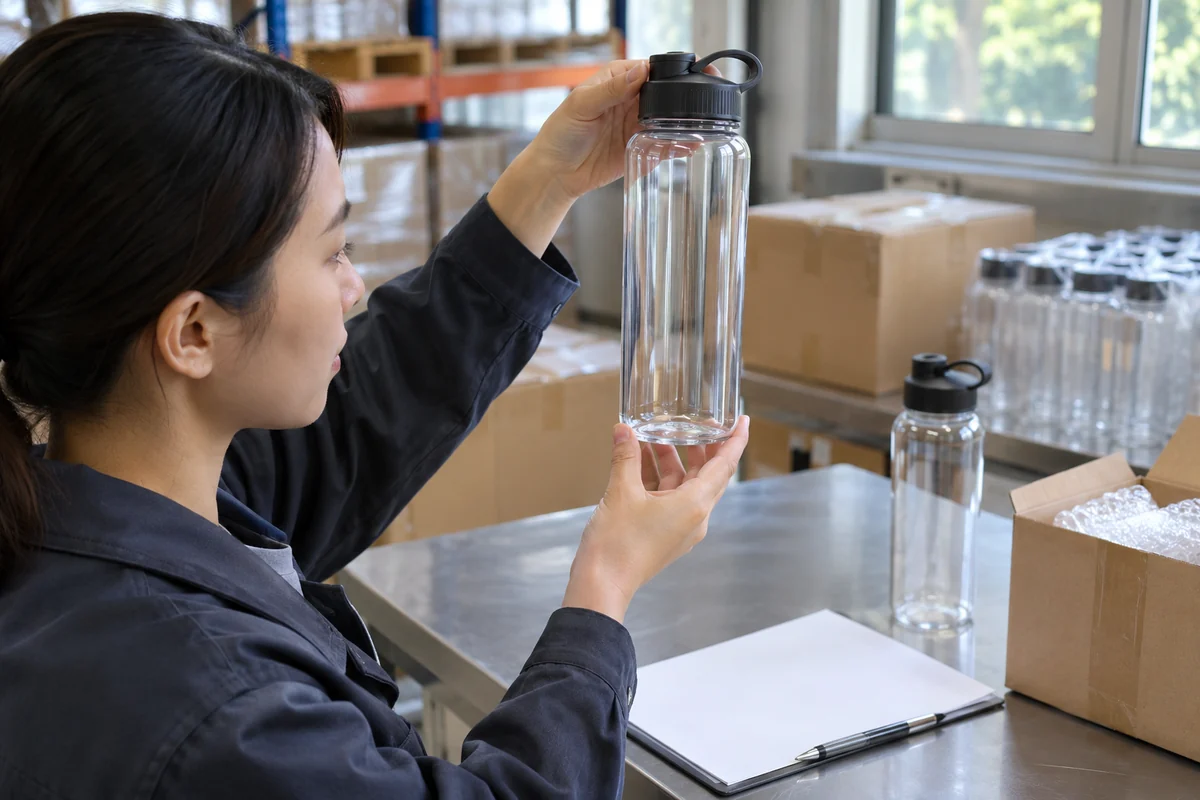
Clear bottles expose defects that a dark color can hide. A buyer needs a repeatable sample and lighting check for clarity, marks, seams, cap fit and packing before approving a wholesale production run.
- Define whether clear means liquid visibility, shelf uniformity or a defect limit.
- Record the exact SKU, material, ml capacity, ounce size class, cap and decoration.
- Use the same background, light direction, distance and sample condition.
Define what clear quality means for the channel
Clear can mean transparent enough to see the liquid, optically uniform for a retail shelf, or simply free from obvious cosmetic defects. Ask the buyer and supplier to define expected appearance before sampling. Record the body material as confirmed, capacity in millilitres and ounce size class, cap and decoration, intended price point and display context. A promotional bottle viewed at arm's length may have a different acceptance level from a premium transparent bottle sold beside technical goods. Do not promise optical clarity or zero defects without an agreed inspection method. The first useful step is a visual standard a second inspector can understand without relying on the word clear alone.
Inspect transparency and haze under consistent light
Use the same background, light direction and viewing distance for every sample. Look through the bottle body and across the shoulder, base and seam rather than checking only the front panel. Record haze, uneven wall appearance, bubbles, inclusions, color cast and areas that look different when empty or filled. A phone photograph can support the record but cannot replace an agreed visual comparison because reflections and exposure change the result. Keep the approved sample in the same lighting reference for a reorder. If the buyer wants a numeric transparency or haze limit, ask the supplier for the method and instrument rather than converting a casual visual impression into an invented specification. Compare the assembled 500ml / 16.9 oz class sports bottle model 2095 with the approved clear sample and packing record.
Separate molding marks from transport damage
Check the bottle before and after normal handling. Look for scratches, scuffs, sink marks, weld or parting lines, flash, black specks, trapped particles and deformation around the base and neck. Mark whether a mark is part of molding, caused by the cap or decoration, or introduced by packing and carton movement. A clear bottle can show small defects more easily, but the response should still be tied to the buyer's appearance standard and selling channel. Photograph the location, retain the sample and record the inspection condition. This lets the factory correct a mold or packing issue instead of receiving a vague complaint that the whole batch looks bad.
Check the cap, neck and base as a complete set
A transparent body does not pass inspection if the cap is misaligned, the gasket is visible in the wrong position or the base rocks on a shelf. Assemble the exact cap and body, close it with the approved method, and inspect neck finish, thread start, sealing surface, cap height and bottom contact. Fill the sample only under the agreed test condition; do not claim leakproof performance from appearance. If the bottle will be packed with a sleeve, label or handle, inspect the assembled envelope because the accessory may hide a mark or create pressure on the wall. Link the clear-body decision to the complete SKU and not to an unassembled sample. Keep the final decision tied to the written sample standard. Compare the assembled 650ml / 22 oz class PP/PC sports bottle model 2100 with the approved clear sample and packing record.
Review decoration and color consistency
Transparent plastic can make printing, film, gradient color and logo edges look different from a solid-color body. Compare artwork position, registration, opacity, edge sharpness and color under the agreed light. Confirm whether the buyer wants the liquid or fill line to remain visible and whether decoration must leave a clear area for capacity or care information. Avoid claiming Pantone accuracy, scratch resistance or permanent adhesion unless the supplier has supplied the relevant evidence. Keep one decorated sample and one undecorated reference when useful. A clear bottle quality check is about the final sellable assembly, so a good body with a misregistered logo still requires correction before the bulk order.
Protect the appearance through packing
A clear bottle can leave the factory in good condition and arrive with rubbing, dust or cap marks if packing allows parts to contact each other. Ask how bottles are separated, whether caps are protected, whether sleeves are used, and what the master carton does to prevent movement during the route. Check a packed sample, not only a loose bottle, and record the carton orientation and inner protection used for the approved variant. Do not invent a carton quantity or transport test result; ask the supplier to confirm the actual packing plan and, when needed, add a sample shipment or handling check to the purchase process. Keep the packaging record linked to the same clear-body SKU and artwork revision. Compare the assembled 1000ml / 32 oz class gradient sports bottle model 2516 with the approved clear sample and packing record.
Create a visual standard for reorders
Release the bulk order only after the buyer has a clear sample, inspection conditions, defect examples, cap and decoration approval, and a rule for changes. Identify model, capacity in ml, ounce size class, material, transparency expectation, cap, logo, packing and approving team. At receiving, compare the actual variant with that record before distributing cartons. If resin, mold, cap, sleeve, ink or packing changes, reopen visual review instead of assuming the product name protects appearance. This gives a distributor a repeatable way to detect a meaningful change before customers see it without promising perfection that the source evidence does not support.
Clear-bottle quality decision matrix
Separate appearance, assembly, packing and reorder change control.
| Decision area | Buyer check | Safe record |
|---|---|---|
| Appearance | Haze, marks, bubbles and inclusions | Same light and reference. |
| Assembly | Body, cap, seal and decoration | Exact SKU inspected. |
| Packing | Separation, dust, rubbing and movement | Packed sample recorded. |
| Channel | Shelf, promotional or premium standard | Buyer threshold stated. |
| Reorder | Sample, artwork and component revision | Repeat or re-test. |
Buyer decision criteria, not XUYI certification, published MOQ or guaranteed delivery times. Verify the exact model and market requirements.
Buyer checklist
- Define whether clear means liquid visibility, shelf uniformity or a defect limit.
- Record the exact SKU, material, ml capacity, ounce size class, cap and decoration.
- Use the same background, light direction, distance and sample condition.
- Check haze, bubbles, inclusions, color cast, seam, base and shoulder consistency.
- Separate molding marks, handling scratches and packing damage in the record.
- Assemble the approved body, cap, seal, sleeve and decoration before judging the SKU.
- Compare printing, transparent zones, logo edges and capacity information with artwork.
- Inspect a packed sample for rubbing, dust, cap marks and movement in the carton.
- Keep the approved sample, photos, defect examples and inspection conditions.
- Reopen visual approval after resin, mold, cap, ink or packing changes.
Frequently asked questions
What should a buyer check before ordering clear plastic water bottles wholesale?
Inspect transparency, haze, molding marks, base stability, cap fit, seals and the approved color under the same lighting used for the sample review. Record the exact SKU and finish before comparing bulk quotes.
Can a product photo prove which resin a clear bottle uses?
No. A photo can show appearance, not the resin grade or food-contact status. Ask for the exact material specification and applicable documentation for the offered assembly and destination market.
Should a buyer approve a bulk order from one attractive sample?
No. Approve a production-representative sample, freeze the body, cap, seal, color and decoration details, then define receiving checks for the delivered cartons.
Which clear-bottle details belong in a wholesale RFQ?
List the model, capacity, dimensions, material, cap and seal, color or clarity target, logo method, packaging, quantity, destination and the evidence required for approval.
Need a quote for a specific model?
Send the model, expected order quantity, logo requirements and destination market. XUYI can review confirmed material and customization options.
Request a Plastic Bottle Quote →