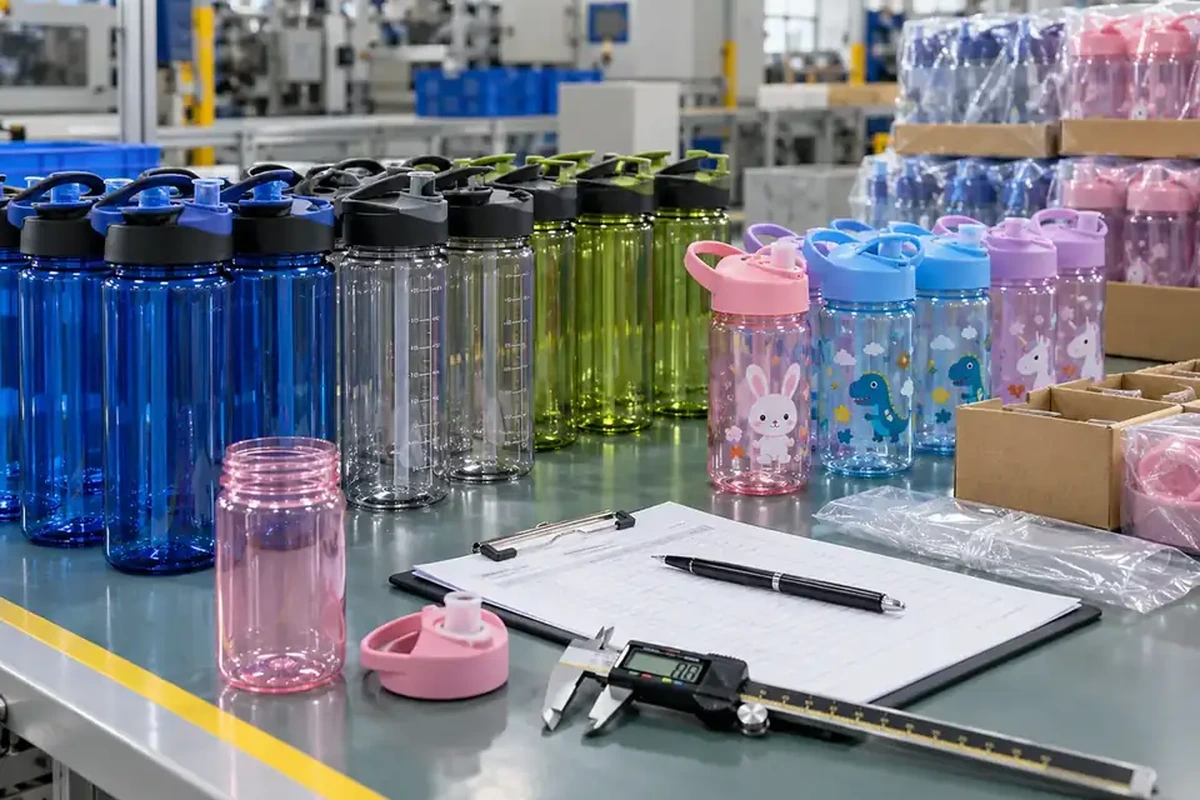
If you are comparing plastic water bottle suppliers for a wholesale or private-label order, the lowest unit price is rarely enough to make a safe decision. A useful supplier comparison looks at the exact model, the evidence behind the quote, the sample approval process and the work required after the goods arrive. This guide gives buyers a simple way to compare factories and custom manufacturers without turning a first request into a vague shopping list.
- Write one versioned product brief before requesting comparable quotations.
- Record the exact model, listed capacity and component assumptions in every offer.
- Request complete physical samples before approving packaging or decoration.
1. Start with a buyer brief that every supplier can answer
Before you ask a manufacturer for pricing, write down the decision you are actually making. State whether the bottles are for retail shelves, an employee program, a school distribution, a sports event or a private-label launch. Add the expected quantity, destination market, target delivery window, preferred capacity, lid style, color range, logo method and packaging level. A short brief makes replies comparable because each supplier is working from the same assumptions. It also helps you separate a genuine model recommendation from a generic catalogue reply. If a detail is unknown, mark it as open instead of asking every supplier to guess. Keep a version number on the brief, because changing the capacity or carton requirement halfway through a quotation can make two apparently similar prices impossible to compare. Review model 2030 as a physical reference before approving this variant; confirm its current product record rather than assuming the same material or cap configuration.
2. Compare the supplier response, not just the headline price
A responsive manufacturer should be able to identify the proposed model and explain which parts of the quotation are confirmed, estimated or still subject to a sample. Compare whether the reply names the bottle body, lid, seal and decoration method; whether color options are tied to a real model; and whether packing and shipping assumptions are written down. A trading company may still be useful, but the buyer should know who controls sampling, production instructions and final inspection. Ask for a clear contact responsible for technical questions and a separate commercial contact if necessary. Warning signs include a price with no model number, a capacity copied from a different photograph, a promised certification with no exact-product scope, or a request to approve artwork before the physical sample is defined. Review model 2059 as a physical reference before approving this variant; confirm its current product record rather than assuming the same material or cap configuration.
3. Use complete samples to test model, capacity and handling
A catalogue capacity is a starting point, not a complete buying decision. Request the full assembled sample and record the actual model, listed capacity, outer dimensions, lid projection, loaded weight and any removable pieces. For example, XUYI model 2501 is listed at 550ml, while model 2502 is listed at 750ml; a buyer should still measure the selected sample before approving a bag, shelf or carton. Check opening and closing, the fit of the seal, cleaning access and the way the bottle sits in the intended packaging. Do not describe a product as leakproof, dishwasher safe or suitable for hot liquids unless the exact assembly and intended market have supporting evidence. The purpose of a sample is to remove assumptions before production, not merely to confirm that a bottle exists. For a catalogue reference, compare XUYI model 2501 · 550ml plastic sports bottle at its listed 550ml capacity, then verify the exact sample and components before approval.
4. Separate customization capability from unsupported product claims
Custom color, logo printing, packaging and component selection are normal B2B questions, but they should be recorded as options to confirm rather than treated as automatic promises. Ask whether the supplier can provide plastic material options, logo placement, print proof, color references and a physical decorated sample for the exact shape. If a buyer wants Tritan, BPA-free material or another resin direction, describe it as a custom inquiry that requires a material and compliance review; do not silently replace the catalogue material of an existing SKU. Confirm the artwork area, print process, number of colors and whether the decoration is applied before or after assembly. A clear approval trail protects both sides when a logo, lid color or packaging instruction changes after the initial quotation.
5. Rebuild every quotation on the same landed-cost basis
Supplier comparison becomes meaningful only when the commercial assumptions match. Put the same model, capacity, color split, decoration, quantity tier, individual packing, master-carton data and Incoterm into a comparison table. Add sampling, artwork setup, printed packaging, labels, spare units, freight, destination charges and customs responsibilities where they apply. A nominally cheaper 800ml model can become more expensive if it uses fewer units per carton, needs extra protective packing or arrives on a different delivery plan. XUYI model 2505 is listed at 800ml; use the catalogue fact as a reference line, then confirm carton quantity, actual dimensions and the selected customization before comparing totals. Record every assumption beside the price so an internal buyer can explain why one offer is genuinely comparable. Use XUYI model 2502 · 750ml plastic sports bottle, listed at 750ml, as a sample comparison point only after the lid, dimensions and packing use are confirmed.
6. Make quality and documentation part of the supplier score
Quality should be evaluated through a repeatable sample and inspection plan, not through a broad statement that the supplier has good quality. List the visible checks for the body, lid, seals, print alignment, color consistency, scratches, odor, assembly and packing. Ask which records can be supplied for the exact model and destination, and make clear that independent regulations are not automatically product certification. Agree who approves the golden sample, who may change a component and what happens when a received carton does not match the approved version. A simple supplier scorecard can give separate points to model accuracy, sample response, documentation, communication, packing detail and corrective-action handling. This creates a usable record for future orders and keeps a low initial quote from hiding an expensive quality risk. Include XUYI model 2505 · 800ml plastic sports bottle, listed at 800ml, in a like-for-like cost table only when carton quantity and decoration assumptions match.
7. Choose the supplier you can reorder with confidence
The best supplier is not always the one with the shortest first reply. For a repeat B2B program, ask whether the supplier can retain the approved model, artwork version, color reference, packing instruction and inspection record in a controlled order file. Confirm how a future reorder will identify the same model and which changes require a new sample. Keep the final quotation, approved sample photos, product facts and open questions together with the purchase order. After delivery, record shortages, damage, print issues and any buyer feedback by SKU. A practical supplier comparison ends with a decision that another colleague can audit six months later. That is how a custom plastic bottle order becomes a stable sourcing process rather than a one-time price chase.
Custom Plastic Bottle Supplier Comparison Matrix
Use the same evidence categories for every supplier; confirm the exact model and market requirements before purchase.
| Buying decision | Evidence to collect | Internal owner |
|---|---|---|
| Supplier identity | Model source, contacts and response scope | Sourcing lead |
| Physical sample | Complete sample, measurements and handling notes | Product buyer |
| Customization | Color, print area, artwork proof and components | Brand owner |
| Commercial basis | Quantity, packing, freight and Incoterm assumptions | Finance / purchasing |
| Quality control | Inspection points, approved sample and change control | Quality lead |
| Reorder readiness | Saved specification, artwork version and corrective history | Procurement manager |
Buyer decision criteria, not XUYI certification, published MOQ or guaranteed delivery times. Verify the exact model and market requirements.
Buyer checklist
Use these points when comparing a factory sample, artwork approval and purchase quotation.
- Write one versioned product brief before requesting comparable quotations.
- Record the exact model, listed capacity and component assumptions in every offer.
- Request complete physical samples before approving packaging or decoration.
- Separate catalogue material facts from custom material and compliance inquiries.
- Compare color, logo, packaging, quantity, Incoterm and destination assumptions together.
- Keep artwork proofs and model-specific sample photos with the quotation.
- Score communication, documentation, sampling and corrective-action capability.
- Define who approves changes to the bottle, lid, seal and printed packaging.
- Record carton data and landed-cost assumptions before selecting a supplier.
- Save the final supplier decision so the next reorder can use the same evidence.
Frequently asked questions
How many plastic bottle suppliers should a B2B buyer compare?
There is no fixed number. Compare enough qualified suppliers to test whether the model, evidence, price assumptions and response quality are consistent, then narrow the list using the same written brief and sample criteria.
Should the cheapest wholesale water bottle quote win?
Not by itself. Compare the exact model, customization, packing, destination assumptions and evidence. A lower unit price can create a higher delivered cost if the sample, carton plan or quality controls are weak.
Can a supplier customize plastic material for an OEM bottle?
Often this can be discussed as a custom project, but the resin, components, test scope and destination requirements must be confirmed for the finished assembly. Do not treat a custom inquiry as proof of an existing certification.
What should I send when requesting a bottle quotation?
Send the use case, quantity, capacity, model or shape reference, material direction, color, logo artwork, packaging, destination and required timing. Mark unknown items clearly so the supplier can ask focused questions rather than guess.
Need a quote for a specific model?
Send the intended model, material requirements, expected order quantity, artwork and destination market. We will review the options for that exact product rather than assume one specification fits every bottle.
Request a Plastic Bottle Quote →Related Buying Guides
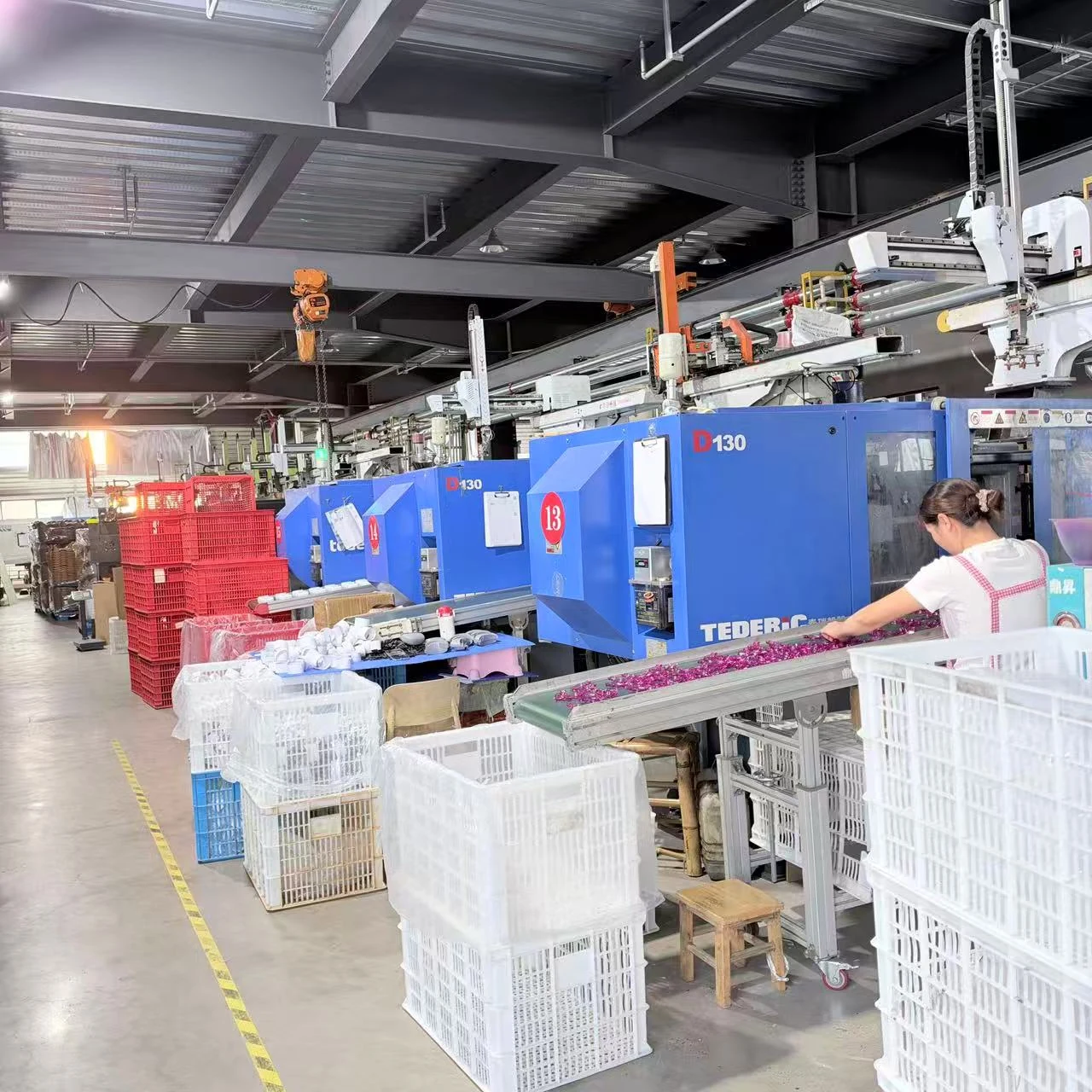 Wholesale Plastic Water Bottles: A Practical Sourcing Guide
How importers and distributors can compare plastic water bottle models, landed costs, samples, and supplier quotations.
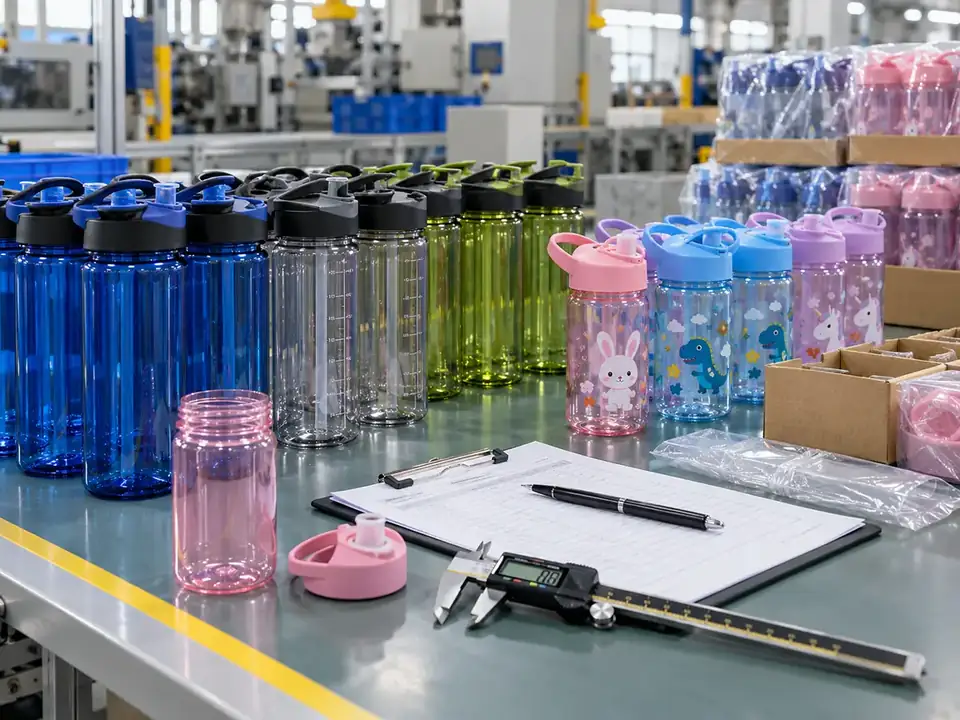 Plastic Water Bottle Quality Control Checklist for Bulk Orders
Build a model-specific QC plan covering visual finish, lid performance, materials, artwork, packing and pre-shipment inspection.
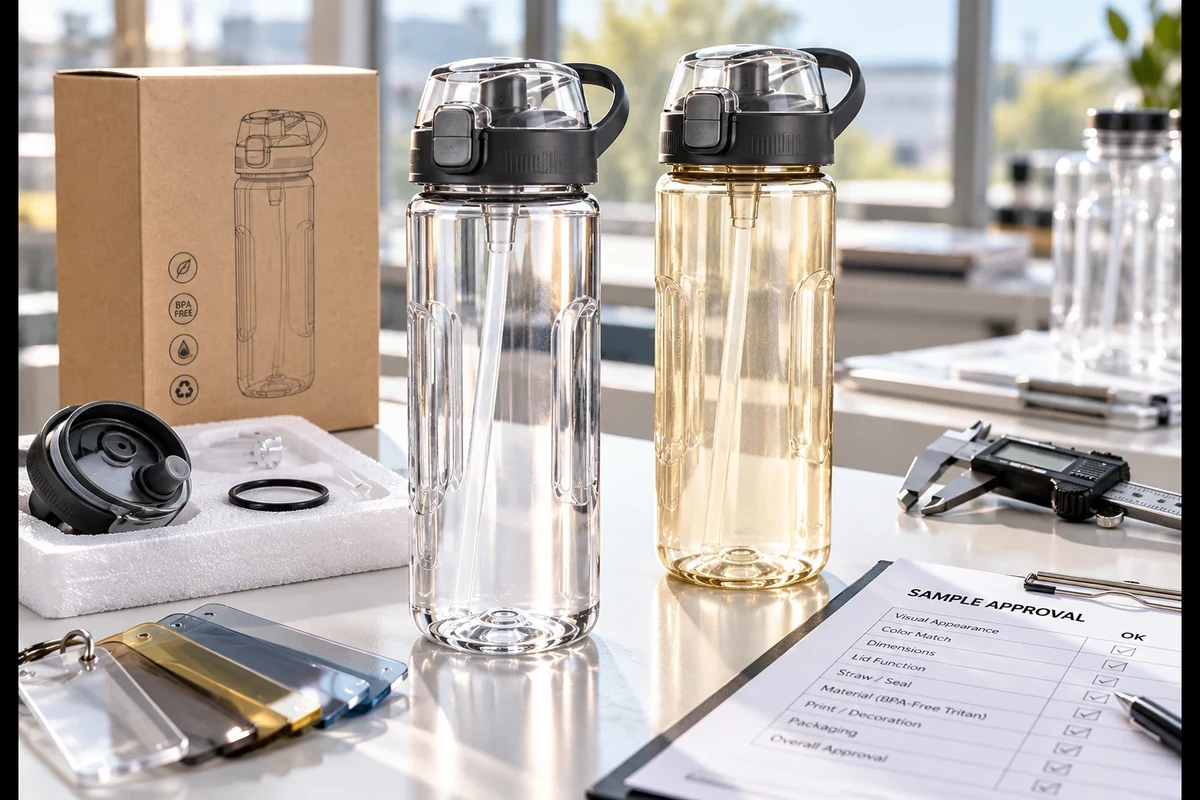 Water Bottle Sample Approval Checklist for Bulk Orders
Don't approve a bulk bottle order from photos alone. Learn how to check the body, lid, logo, packaging and golden sample before mass production.