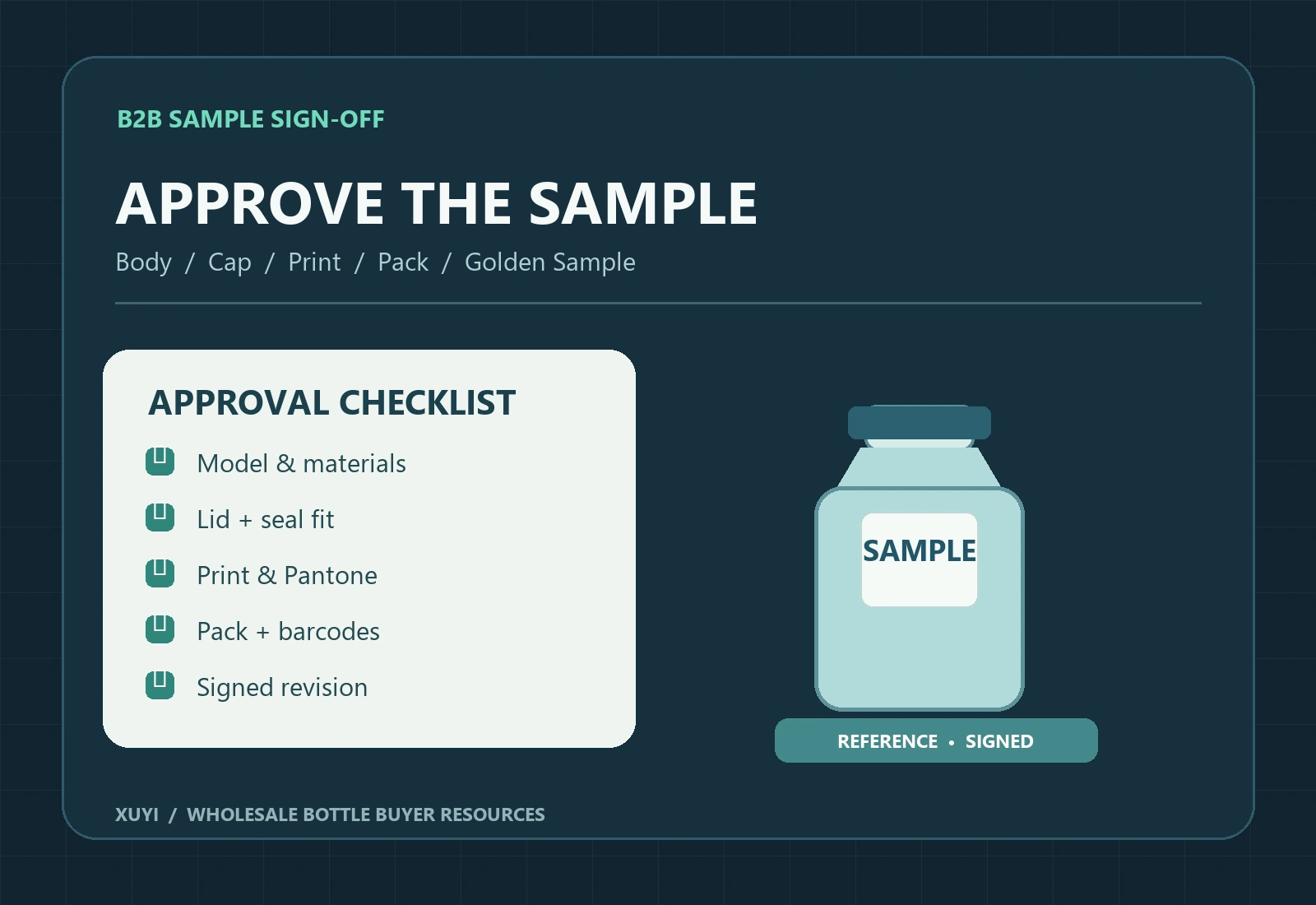
The sample on your desk is not merely a smaller version of an order. It is the only physical reference everyone can agree on when a later shipment looks different. A sample is useful only when its materials, fit, finish and approved exceptions are documented. Here is a practical method for moving from a promising first sample to a purchase order that describes the same bottle.
- Identify stock, decorated or pre-production sample status
- Check exact model, nominal capacity and body dimensions
- Confirm body, lid, straw and gasket material basis
Know which sample you are approving
A stock sample shows the factory's existing model. A decorated sample adds your logo, color or packaging. A pre-production sample should represent the specific approved construction and decoration planned for production. Do not approve one category as though it proves another: a stock body may feel good while the requested printed finish, replacement gasket or custom box has never been evaluated. Ask the supplier to label the sample's model, revision, materials and which production steps it represents. If any component is a substitute, record it before approval.
Check the bottle body against the quote
Start with the nominal capacity, dimensions, empty weight if relevant, mouth geometry, color and visible marks. Compare the actual bottle with the written product model and photograph from the RFQ. Fill and empty it in the way an end user would; inspect the base stability, carry comfort and areas that may trap liquid. Check scratches or uneven molding in bright, diffuse light, not just a dramatic studio photograph. If multiple variants share a similar silhouette, label the exact sample so the warehouse team will not mistake a look-alike for the approved SKU. Use 500ml sports bottle model 2095 as an example of a catalog-defined sports bottle; confirm the photographed and measured sample is the identical variant.
Treat the cap and seal as a system
Assemble and remove the lid several times. Check thread engagement, gasket seating, spout closure, straw insertion and any hinge or lock. Try controlled inversion over a sink and realistic handling tests appropriate for the intended use. A short check is not a leakproof certification: agree the test method, number of samples and pass criteria separately. If the quote includes spare gaskets or straws, compare those too. Ask the supplier which parts must remain unchanged between sample and production, because an apparently minor cap revision can change fit. For an age-sensitive closure check, compare the approved physical 750ml kids bottle model 2106 with the precise cap and seal documented in the order.
Sign off the logo, finish and artwork
Approve both the appearance and its measurable production references: artwork revision, location, approximate print dimensions, specified colors and acceptable tolerances. Under different light, a color can look unlike its PDF proof; photographs and monitors are not color standards. Request a physical color chip or approved printed sample when color accuracy matters. Examine the mark after handling and the cleaning procedure appropriate to that printed method. Do not promise an untested scratch or dishwasher rating; the agreed sample and any documented test report should define what has actually been reviewed.
Include retail packaging and carton labels
Open the proposed individual box and export carton instead of signing off on a bottle alone. Check barcode placement where required, model/color labels, language of care instructions, inserts, dividers and the packing count. A carton that fits a naked bottle may fail once the carry strap and printed retail sleeve are added. Confirm which packaging version was sampled and who pays for changes. If transport testing is necessary for your distribution channel, define the protocol and performance criteria in the PO instead of treating a good-looking mock-up as proof of shipping protection. Packaging varies by use case: check the exact packed assembly of protein shaker model 501 if the program includes a shaker rather than a sports bottle.
Create a golden-sample record
Give the approved sample a unique reference, date and sign-off by the buyer and supplier. Record photos of the front, rear, base, lid, open spout, seal and printed details; link them to the RFQ revision, final drawing, packaging artwork and inspection checklist. Note approved deviations explicitly rather than hoping nobody notices. Keep one sealed reference with the factory and another with the buyer when practical. Written change control matters more than the phrase golden sample: any later resin, cap, print or pack change should trigger a new review before mass production.
What the approval email should actually say
Do not write only “sample OK.” State the exact model and sample ID, the parts approved, attached artwork revisions, required documentation, measurable checks and open issues. Distinguish a sample approved for appearance from a sample fully approved for production. Ask for a written acknowledgment that no material, construction or color substitutions are permitted without approval. The same record then guides in-process checks, final inspection, reorders and any dispute about what the customer originally expected.
Bottle sample approval: compare what the buyer signs off
A stock example, a decorated sample and a pre-production reference answer different questions. Record the accepted evidence and the remaining gap before issuing the PO.
| Approval area | Physical or document evidence | Decision before mass production |
|---|---|---|
| Body and capacity | Specific model, nominal ml, dimensions and actual sample | Identify the accepted configuration |
| Cap and seal | Thread/gasket fit, closure operation and defined leak checks | Approve complete closure revision |
| Decoration | Artwork file, location, print size and physical color reference | Sign off the decorated sample |
| Packaging | Retail pack, labeling, carton count and component arrangement | Approve the shipped configuration |
| Documentation | Material declarations and relevant market test evidence | State applicable requirements and gaps |
| Golden sample | Photo record, sample ID, exceptions and signatures | Control any later supplier substitutions |
Buyer decision criteria, not XUYI certification, published MOQ or guaranteed delivery times. Verify the exact model and market requirements.
Buyer checklist
- Identify stock, decorated or pre-production sample status
- Check exact model, nominal capacity and body dimensions
- Confirm body, lid, straw and gasket material basis
- Inspect fit, seal seating and planned functional checks
- Approve logo placement, artwork revision and print colors
- Examine product condition in neutral lighting
- Review retail box, inserts, barcode and carton labels
- Record sample photos and measurable acceptance criteria
- Assign a signed golden-sample ID and store references
- Require written approval before any production substitution
Frequently asked questions
Is a stock sample enough to approve a custom bottle order?
Not usually. It can confirm an existing bottle's basic feel and shape, but it does not verify custom colors, printing or packaging. Identify what still needs a decorated or pre-production sample.
Who should keep the golden sample?
Ideally both parties keep labeled, protected references, or agree on an accessible controlled reference. More important is a shared written revision and sign-off record.
Can photos replace a physical sample?
Photos are helpful for documenting artwork position or color options but cannot establish seal feel, fit, surface finish or actual dimensions. For a substantial first order, ask what can be physically approved.
What if the factory changes the lid after approval?
Treat it as a change request. Get the reason, revised specifications, replacement sample and any required tests in writing before production proceeds.
Need a quote for a specific model?
Send the model, expected order quantity, logo requirements and destination market. XUYI can review confirmed material and customization options.
Request a Plastic Bottle Quote →