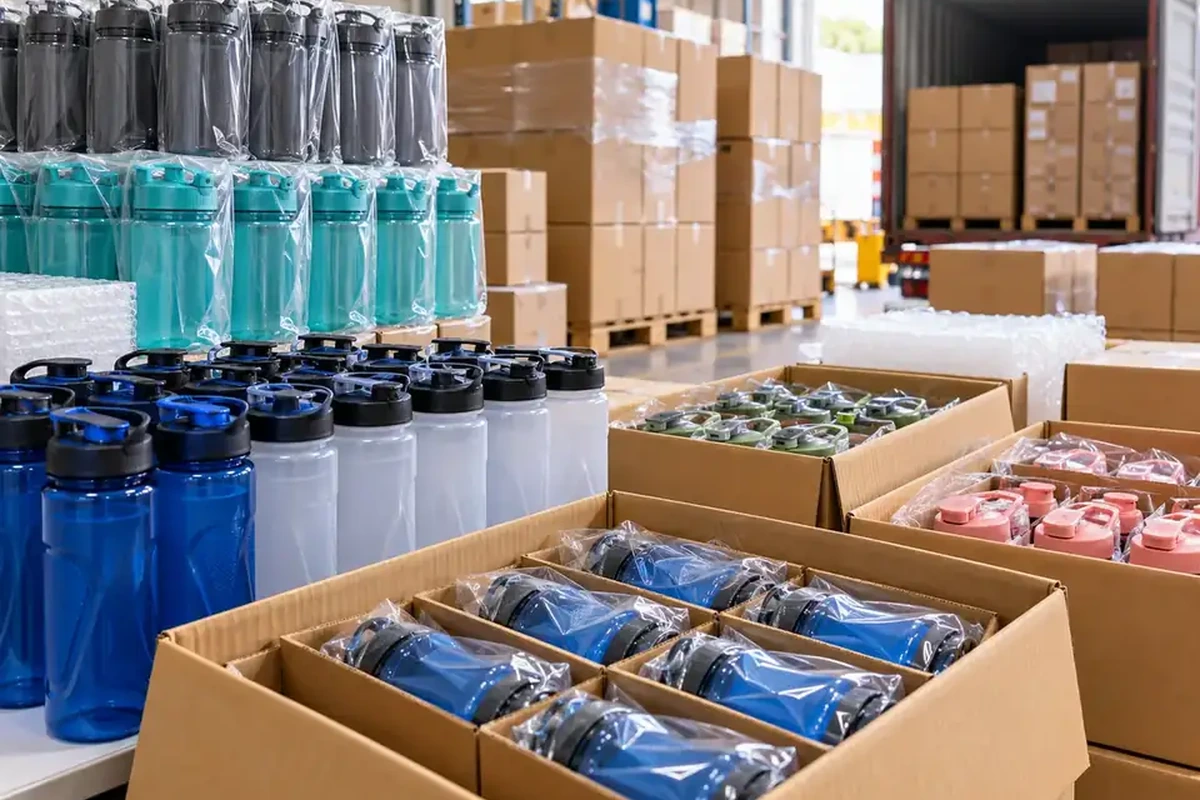
Export packing is easy to underestimate because a quotation usually starts with a bottle and ends with a unit price. Importers, distributors and 3PL teams need the complete path from the approved sample to the receiving dock: individual protection, carton quantity, outer dimensions, labels, pallet assumptions and destination handling. This guide explains how to plan that path before a custom water bottle order is released.
- Identify the warehouse, 3PL, retailer or fulfilment channel before fixing the pack.
- Confirm assembled bottle dimensions, lid projection and packed sample fit.
- Request units per carton, dimensions, weights and packing arrangement in writing.
1. Begin with the receiving channel and sales plan
Carton planning should start with where the finished bottles will go, not with a generic promise of export packaging. Tell the supplier whether the goods will arrive at your own warehouse, a 3PL, a retail distribution centre, a marketplace fulfilment site or several country-level locations. Explain whether the order will be sold as single units, colour assortments, case packs or promotional kits. A small distributor may need mixed cartons with readable labels, while a large retailer may require a fixed case quantity and a booking-compatible pallet. Write the destination, receiving rules, expected order split and first delivery window into the purchasing brief. This gives the manufacturer a reason to discuss carton quantity and dimensions early, before printed packaging and freight are already committed. Review model 2030 as a physical reference before approving this variant; confirm its current product record rather than assuming the same material or cap configuration.
2. Select the bottle and capacity with the carton in mind
A bottle that looks compact in a catalogue can become difficult to pack when the lid, carry loop, sleeve or individual box is added. Confirm the assembled height, widest point, lid projection and any parts that can press against neighbouring units. XUYI model 2502 is listed at 750ml; use that catalogue value as a starting reference, then ask for a physical sample and actual packed dimensions before fixing a case count. If two capacities are being compared, request separate carton calculations rather than assuming a larger bottle simply reduces the number of units proportionally. Test one complete packed unit, one inner bundle and one master carton. The purpose is to balance protection, cube, handling weight and the receiving channel's shelf or conveyor constraints. Review model 2059 as a physical reference before approving this variant; confirm its current product record rather than assuming the same material or cap configuration. Use XUYI model 2502 · 750ml plastic sports bottle, listed at 750ml, as the physical sample reference before fixing the case pack or receiving plan.
3. Request a carton data sheet that logistics can actually use
For every approved model and colour split, ask for units per master carton, carton length, width, height, gross weight, net weight and the packing arrangement. Request the data in one consistent unit system and keep the original supplier assumptions beside any internal conversion. XUYI model 2505 is listed at 800ml, but capacity alone does not tell a freight forwarder how much space the shipment will occupy. The carton data must reflect the final lid, decoration, individual bag or box and any inserts. Ask whether cartons can be mixed by colour, how mixed cartons are counted and whether a separate SKU label is required. Do not build a freight budget from a catalogue photograph or from a carton size copied from another bottle. Calculate the case plan for XUYI model 2505 · 800ml plastic sports bottle, listed at 800ml, only after the complete lid and individual pack are approved.
4. Protect the decorated bottle without hiding the packing cost
Custom printing and colour matching add a practical packing question: what may rub, bend, crush or transfer during transit? Ask whether the printed surface needs a bag, divider, sleeve, tissue, inner box or another protection method. For a large format such as XUYI model 2305, listed at 1600ml, compare the space and protection required for the bottle, lid and handle instead of copying a compact bottle's inner pack. Request a packing sample or a clear packing drawing when the order is sensitive to scratches, print alignment or mixed components. Make the protection cost visible in the quotation. A slightly higher pack cost can be cheaper than receiving decorated bottles with scuffed surfaces, loose lids or cartons that cannot be safely stacked. For XUYI model 2305 · 1600ml large-capacity plastic water jug, listed at 1600ml, compare inner protection and carton cube instead of copying the pack from a smaller sports bottle.
5. Align carton labels with the 3PL and retail system
A carton label is useful only when the receiving team knows how to read it. Confirm which fields are required: model or SKU, colour, capacity, units per carton, purchase order, destination, carton sequence and barcode if applicable. Ask the 3PL whether labels must be placed on two sides, whether mixed cartons need a special mark and whether the warehouse scans the outer carton or each inner unit. Keep the language and symbols consistent with the purchase order and commercial invoice. If a private-label buyer has different labels for several channels, separate the label artwork and approval records by shipment rather than hiding all variations under one generic file. A simple label specification prevents cartons from being opened just to identify their contents.
6. Calculate freight and landed cost from approved packing data
Once the sample and carton data are confirmed, compare freight scenarios using the same shipment assumptions. Include the number of cartons, gross weight, volume, pallet or floor-loaded plan, destination charges, customs responsibilities and any required delivery appointment. Ask whether the carton dimensions are measured after the final packaging is assembled and whether the quoted pack supports the planned transport. Avoid treating a unit price as a landed cost. If a supplier recommends a new carton quantity, update the freight calculation and the warehouse receiving plan at the same time. A cost table should show the source data and mark estimates clearly, so a buyer can see which figures need confirmation before booking the export shipment.
7. Lock the packing file before production and preserve it for reorders
Before production starts, attach the approved sample photos, carton drawing, label artwork, packing quantity, inspection points and shipment instructions to the purchase order. Name one person who can approve a change and record the version number when a bottle colour, lid, insert or carton is revised. At pre-shipment inspection, open representative cartons and verify the actual inner pack, label, count and visible decoration against the approved file. After arrival, record damage, missing units, mislabelled cartons and 3PL feedback by model and colour. This creates a reliable reorder record. A future supplier or colleague should be able to see why the case pack was chosen and which packing change would require a new freight calculation.
Custom Water Bottle Export Packing Matrix
Confirm the physical pack, label and freight assumptions together before production and booking.
| Packing decision | Evidence to collect | Downstream use |
|---|---|---|
| Receiving channel | Warehouse, 3PL or retail rules | Sets label and case-pack requirements |
| Model and capacity | Assembled dimensions and packed sample | Prevents the wrong carton calculation |
| Inner protection | Bag, divider, sleeve or box approval | Reduces decoration and transit risk |
| Master carton | Units, dimensions, gross and net weight | Supports freight and warehouse planning |
| Carton identification | SKU, colour, capacity, PO and sequence fields | Supports scanning and receiving |
| Shipment closeout | Inspection photos and arrival feedback | Improves the next reorder |
Buyer decision criteria, not XUYI certification, published MOQ or guaranteed delivery times. Verify the exact model and market requirements.
Buyer checklist
Use these points when comparing a factory sample, artwork approval and purchase quotation.
- Identify the warehouse, 3PL, retailer or fulfilment channel before fixing the pack.
- Confirm assembled bottle dimensions, lid projection and packed sample fit.
- Request units per carton, dimensions, weights and packing arrangement in writing.
- Calculate separate case packs for different capacities or colour assortments.
- Protect printed surfaces with a reviewed inner-pack solution.
- Define carton label fields, placement, barcode and mixed-carton rules.
- Compare freight using approved carton count, cube and gross weight.
- Mark estimated logistics figures separately from confirmed supplier data.
- Attach the carton drawing and label proof to the purchase order.
- Record receiving damage and packing lessons for the next reorder.
Frequently asked questions
What carton information does an importer need from a bottle supplier?
Request units per carton, inner-pack arrangement, carton dimensions, gross and net weight, colour or SKU split, label fields and any pallet assumptions. Confirm the figures after final packaging is approved.
Should every water bottle capacity have its own carton plan?
Usually it should be checked separately. Different heights, lids, handles and individual packs can change the safe case quantity and the shipment cube even when the bottle family looks similar.
How do I prepare custom bottle cartons for a 3PL?
Ask the 3PL for label placement and barcode rules, then align model, colour, capacity, case quantity, purchase order and carton sequence fields with the supplier's packing file.
Can export packing be changed after a sample is approved?
It can be discussed, but any change to inner protection, carton quantity, dimensions or labels should be recorded, re-costed and approved before production so freight and receiving assumptions remain accurate.
Need a quote for a specific model?
Send the intended model, material requirements, expected order quantity, artwork and destination market. We will review the options for that exact product rather than assume one specification fits every bottle.
Request a Plastic Bottle Quote →Related Buying Guides
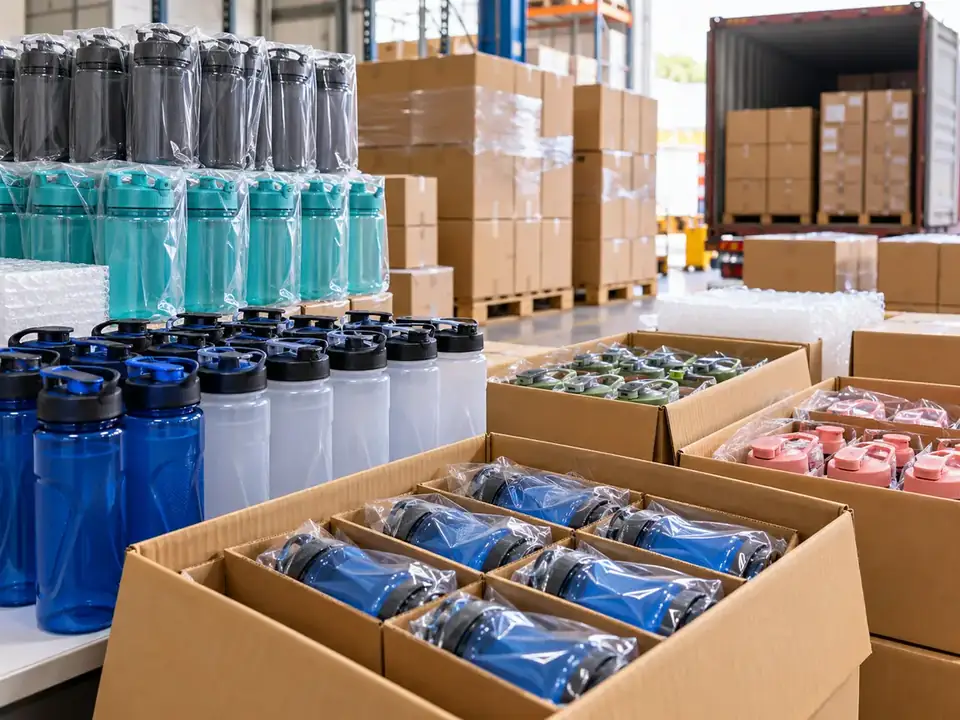 Export Packaging for Custom Water Bottles: Carton and Shipping Guide
Reduce damage and freight surprises with practical master-carton, retail-label and documentation checks for bulk drinkware.
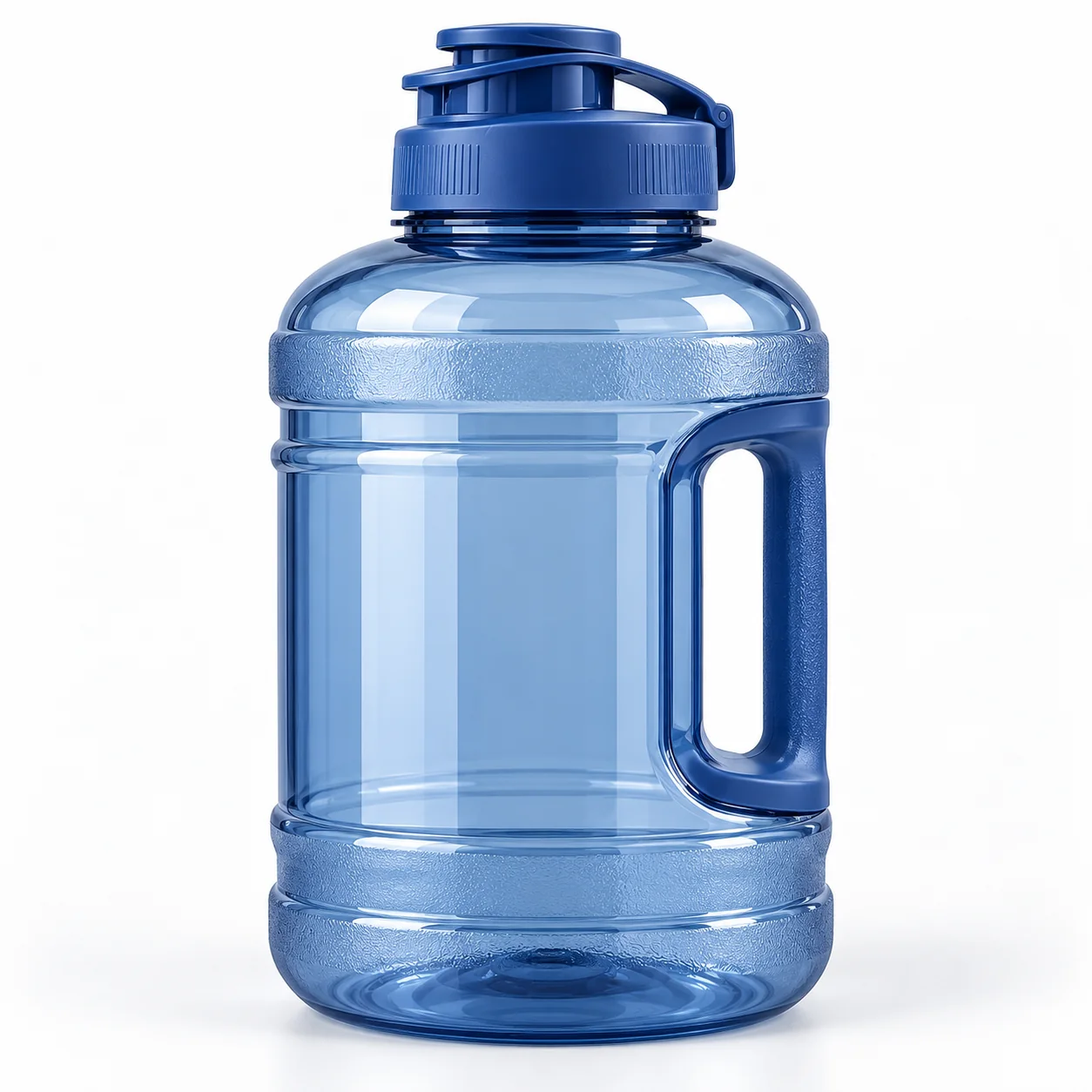 What Should a Wholesale Water Bottle Carton Label Include for a Retailer or 3PL?
A practical B2B carton-label and case-pack checklist for plastic drinkware importers: SKU variants, GTIN versus SSCC, scan tests, pallet records and warehouse receiving.
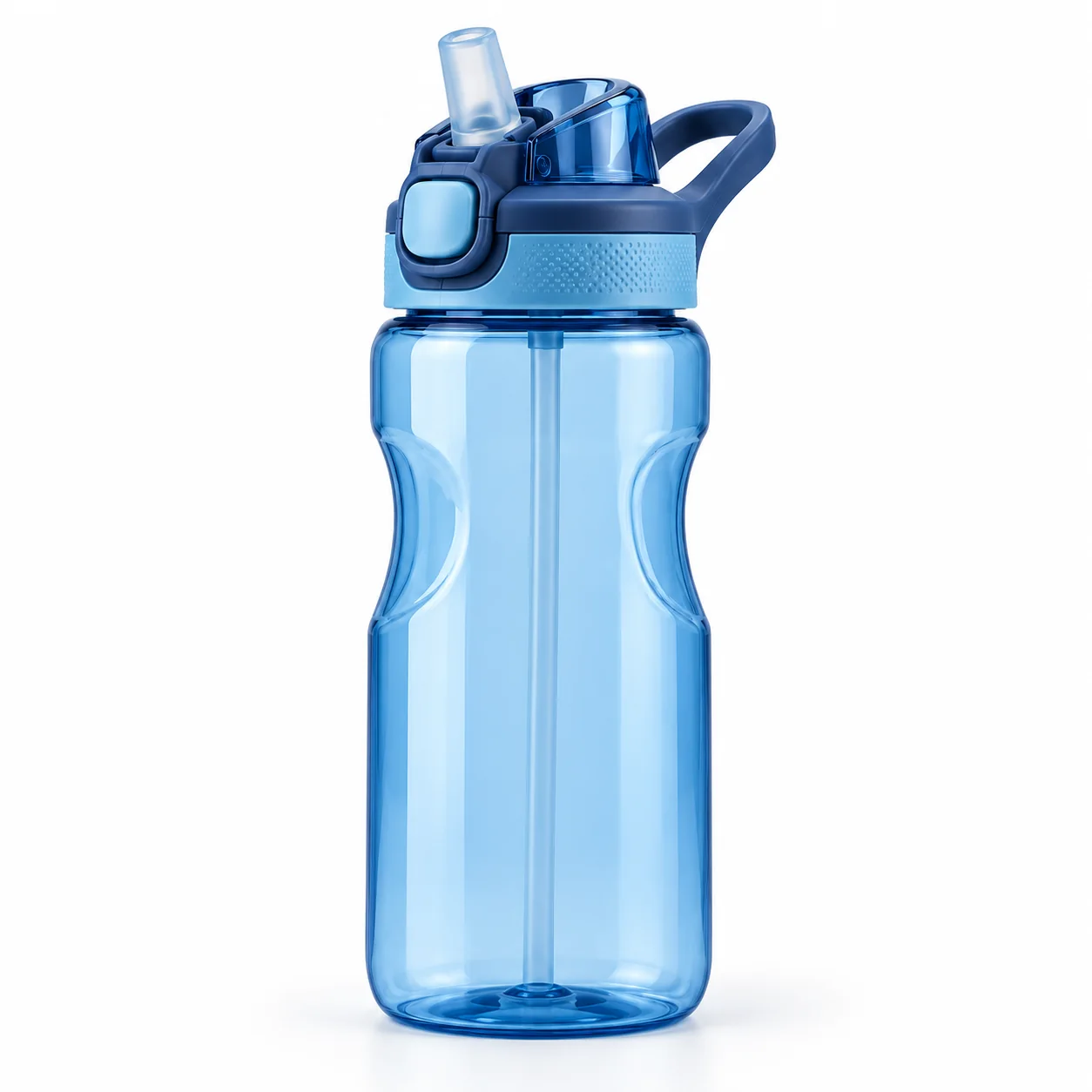 How Do Distributors Plan Reorders for Custom Water Bottles Without Stockouts?
A B2B reorder worksheet for private-label water bottle distributors: sell-through, production stages, forecast error, spare lids, variant MOQ, reorder points and cash flow.