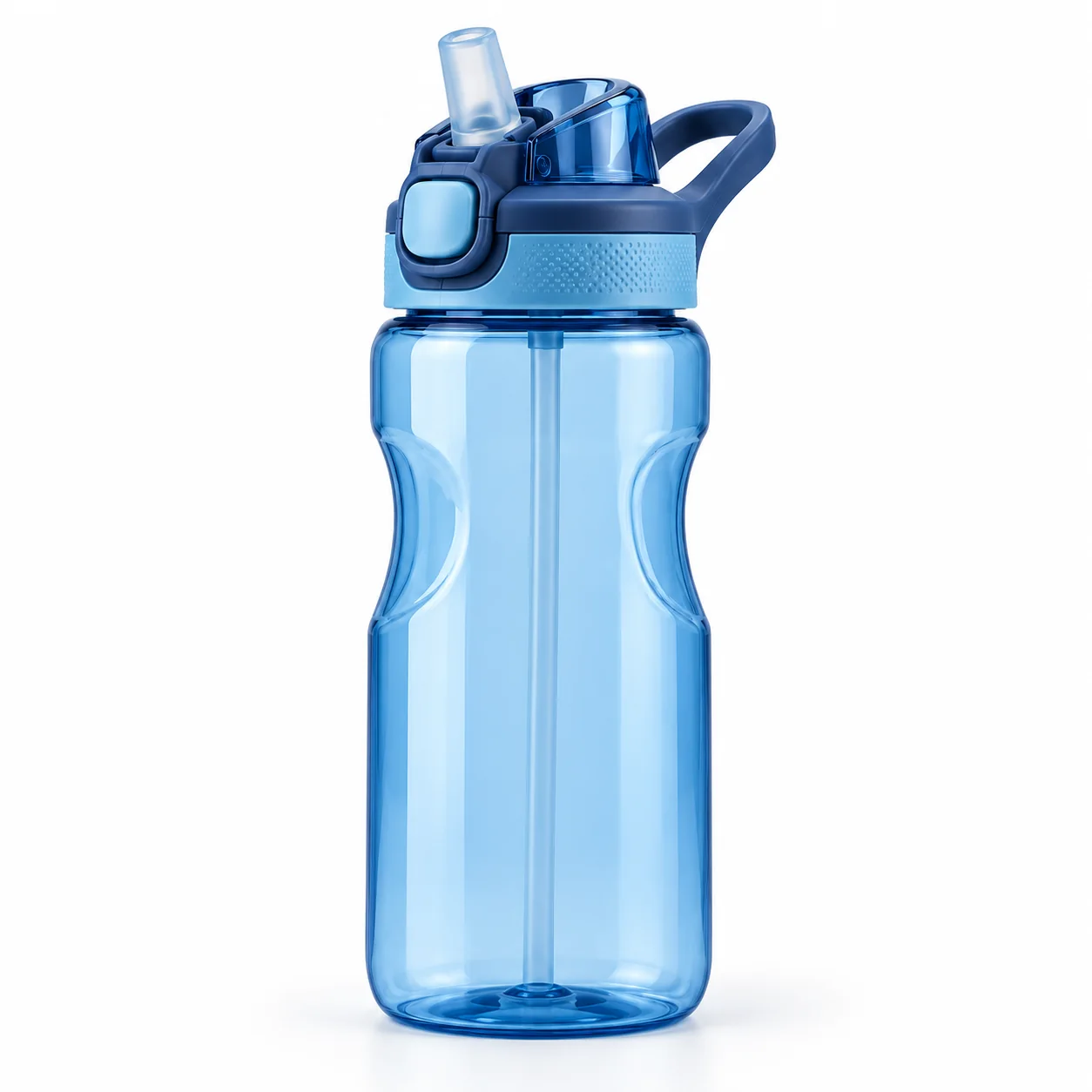
The hardest bottle purchase is sometimes the second one. A first production run may be approved, but the brand then discovers that sales cluster in one color, replacement lids move faster than bottle bodies, or decorated inventory cannot be replenished as quickly as catalog stock. Reordering custom plastic drinkware requires a demand estimate, a confirmed production-and-freight timeline, clear SKU definitions and an exception plan for late or defective lots. This article provides a practical way to calculate a starting reorder point, discuss risk with the factory and avoid replacing real lead-time evidence with invented promises.
- Separate stock, committed orders and confirmed inbound quantities.
- Forecast demand by exact model, lid, color and logo revision.
- Exclude one-off promotion weeks or note them explicitly.
Why is a repeat bottle order different from an initial wholesale purchase?
An initial order establishes product feasibility; a repeat order must protect consistent consumer experience while meeting an operating sales forecast. Start by comparing the final signed sample, approved production artwork, packaging revision and current available inventory. Check whether any resin, cap, colorant, label or subcontracted process has changed since the prior lot. The same factory model number does not prove that every customized component remains identical. Separate regular catalog items from custom-colored or printed variants, because production steps and minimum quantities may differ. Before promising retailer replenishment, ask which inputs the supplier can genuinely reserve and which must be sourced after deposit and artwork approval. Treat a production plan as a sequence of dated checkpoints that can be verified, not a single optimistic 'lead time' number.
How do you calculate demand by model, size and colorway?
Build a weekly sell-through table for each fulfillable SKU using actual sales and returns rather than total purchases shipped into distribution. Record stock on hand, units already committed to customers, open inbound purchase orders and the expected sellable yield after inspection. Separate core colors from promotional or seasonal variants; averaging them together can conceal a fast-moving option. Mark abnormal launches, one-off promotions and stockout weeks so they do not distort the baseline. If a retailer plans a campaign, ask for the confirmed order or written forecast assumption. Use the same SKU-to-model mapping in sales, factory RFQs and warehouse labels. A repeat purchase should specify the bottle body, cap and artwork revision, not rely on a marketing nickname alone. Track a smaller-format catalog reference such as model 2106 bottle separately from large-volume bottles when building the SKU demand table.
What is a useful reorder-point formula for private-label bottles?
A simple planning starting point is average daily demand multiplied by expected replenishment days, plus safety stock for uncertainty. For example, an illustrative SKU selling 10 units per day with a documented 45-day end-to-end replenishment window and a buyer-chosen 150-unit buffer yields a reorder trigger of 600 available-position units. Those numbers are a teaching example, not a XUYI quote or a predicted lead time. Available-position units should consider on-hand stock, confirmed incoming stock and customer commitments. Because lead times and sales vary, calculate at least a base, delayed-shipment and high-demand scenario. Review the buffer after each real shipment and do not treat a generic percentage or one formula as a universal guarantee against stockouts.
Which lead-time stages must be confirmed with the factory and forwarder?
Ask the supplier to break the schedule into artwork/sample confirmation, raw-material reservation, molding or purchasing components, decoration, assembly, packing, inspection and readiness for pickup or export. Ask the forwarder separately about booking, transport, clearance and final delivery to your 3PL or retailer. Note which stage starts only after the buyer approves a proof or provides payment; a quote stating '30 days' without a start event is ambiguous. Keep factory dates and freight-agent dates separate in the purchase tracker. Confirm whether molds, screens, packaging dielines or color recipes from the first order are retained and approved for reuse. Place inspection before the planned transport handover and allow an escalation path for rework.
How should buyers handle variant MOQs and slow-moving colors?
Ask for a repeat-order quantity ladder by model, lid, logo and color, including what can be combined in one production batch and what cannot. Core fast-selling SKUs may justify regular production; occasional colors may need fewer planned replenishments or preorders rather than excessive stock. Consider whether an unprinted catalog body can be decorated later, but verify material and process compatibility before assuming postponement is possible. Distinguish profitable gross margin from cash trapped in unsold inventory and cartons occupying storage space. Reconcile expected demand against master-carton rounding and minimum runs before requesting a quote. If a new lid or size is proposed, treat that as a distinct SKU and reapprove its sample rather than silently substituting it to fill a reorder. A large-capacity example like large jug 2305 should have its own case-pack and sales-velocity assumptions.
Should distributors stock spare lids, seals or straws separately?
Accessories can create avoidable after-sales problems when a distributor sells bottle bodies but has no compatible replacement components. Ask the factory to identify the exact lid, gasket and straw specification for each approved model revision, whether it can supply them separately, and what inspection and packaging would apply. Build a separate parts forecast using real service and warranty requests, not an invented fixed spare-parts percentage. Confirm whether a new mold revision or seal material changes the fit; a part that looks visually similar is not a verified compatible replacement. If replacement components are not available, make that limitation clear in customer support policies. Put accessory purchase and compatibility evidence in the same reorder file as the finished bottles. Use LO-001 large water jug as a reference when asking for exact replacement closure and seal part codes before committing to accessories.
What should a repeat-order purchase order and exception plan include?
Link the PO to the last approved physical sample and its controlled specification revision. Record quantities per SKU/color, cap and logo, carton packs, labeling, required market documentation, inspection release criteria, Incoterms named place and the agreed handover event. Ask for a manufacturing status update at predetermined checkpoints and written notice if any material, artwork or production slot changes. Establish an alternative action for missed milestones: partial shipment only if operationally workable, approved substitution only after validation, or a revised delivery plan shared with customers. At receipt, compare defects, actual lead times, landed costs and sell-through to the assumptions used for the reorder point. Feed that evidence back into the next forecast rather than repeating an untested spreadsheet number.
Reorder plan: evidence, trigger and fallback
All quantities and dates must be calculated from the buyer's own sell-through and confirmed partner schedules; the table gives questions, not guaranteed delivery terms.
| Planning variable | Evidence to record | Action if uncertain |
|---|---|---|
| Demand by SKU | Sales and commitments per model, color, lid and logo | Use scenarios, not blended averages |
| Available stock | On hand, inspected usable stock and confirmed incoming | Avoid double-counting open orders |
| Factory schedule | Approval date, material, decoration, assembly and QC milestones | Escalate at a named hold point |
| Logistics schedule | Forwarder booking, mode, customs and 3PL receipt window | Model a late-arrival case |
| MOQ and cash | Per-variant production ladder and carton rounding | Compare overstock cost with order breaks |
| Replacement parts | Exact lid/seal revisions and after-sales failure data | Validate compatibility and parts availability |
Buyer decision criteria, not XUYI certification, published MOQ or guaranteed delivery times. Verify the exact model and market requirements.
Buyer checklist
- Separate stock, committed orders and confirmed inbound quantities.
- Forecast demand by exact model, lid, color and logo revision.
- Exclude one-off promotion weeks or note them explicitly.
- Set a reorder trigger using real lead-time observations.
- Calculate base, delayed-delivery and high-demand scenarios.
- Confirm factory start date and each approval hold point.
- Quote variant MOQ and master-carton rounding.
- Verify accessory fit before buying replacement parts.
- Attach golden sample and QC/packing revision to every reorder.
- Review actual delivery, sell-through and defects after receipt.
Frequently asked questions
How early should a distributor reorder custom water bottles?
Use observed demand and the full factory-to-warehouse replenishment window, then add a risk buffer justified by demand and delay variability. No universal number of days applies to every customized bottle.
Can two colors be combined to satisfy the MOQ?
Only if the factory confirms the exact body, colorant, decoration and production-batch rules in writing. Ask for quantities and pricing for each variant instead of assuming total order volume counts.
Is it safe to reorder a previously approved bottle without another sample?
Confirm that the approved bill of materials, tooling, closure, artwork and packing have not changed. A new variant or material substitution may require fresh approval or testing.
How many replacement lids should I buy with a wholesale bottle order?
Base the estimate on model-specific support history, warranty data and availability of compatible parts. Ask the supplier for exact part numbers and sample proof rather than relying on a fixed generic percentage.
Need a quote for a specific model?
Send the model, expected order quantity, logo requirements and destination market. XUYI can review confirmed material and customization options.
Request a Plastic Bottle Quote →