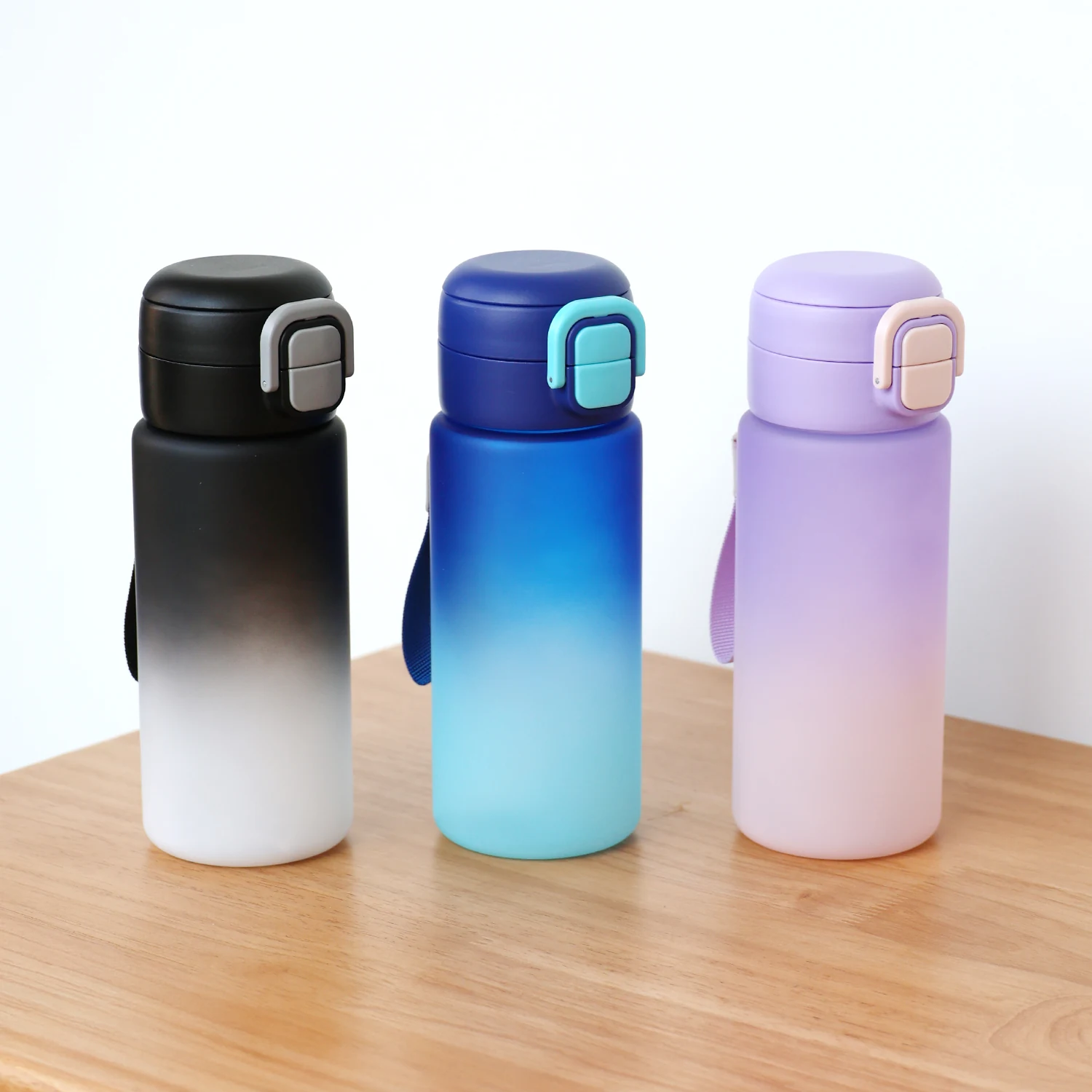
Can you order 500 ml sports bottles, 750 ml children's bottles and large water jugs on the same purchase order? Often you can ask for a combined quotation, but that does not mean every model, resin color and logo is allowed to share one minimum order quantity. A mixed order has different mold runs, decoration setups, lid parts, carton configurations and inspection records. The right first move is to separate the commercial question—can we ship the items together?—from the manufacturing question—can they share a production batch or MOQ? This guide shows purchasing teams how to build an honest variant matrix and avoid a cheap-looking quotation that cannot actually be produced.
- Separate model MOQ from per-color and per-logo minimums.
- Create one purchase row for each size, lid, color and decoration combination.
- Use real factory model IDs and verified capacities in milliliters.
Does mixed-order MOQ mean one minimum for all bottle models?
No universal rule applies. Factories may calculate a minimum by molded body, cap style, resin color, printing design, packaging or total project value. The production reason matters: two identical bodies with different cap colors might be easier to combine than unrelated molds or bottle materials, but even that depends on the line, inventory and agreed setup. Ask the supplier to quote 'MOQ per model', 'MOQ per body color', 'MOQ per cap variant', and 'minimum per printed logo/artwork' as separate columns. Request written confirmation whether these minima are cumulative or alternative. An aggregated shipping quantity is not proof of a combined manufacturing MOQ; avoid publishing any assumed XUYI thresholds without an order-specific written quote.
How should buyers construct a mixed-SKU purchase matrix?
Give each commercially distinct configuration its own line identifier: bottle model, verified capacity in milliliters, main body material, lid variant, body and lid color, logo file revision, printing position, packing method, units per carton and order quantity. Add a column for destination country and any distinct food-contact or child-use requirement. Do not rely on color names like 'blue' without a reference swatch or agreed physical approval. When SKUs differ in capacity or lid, verify separately which dimensions and carton counts apply. This table becomes the shared source for artwork, sampling, QC, invoices, carton marks and receiving; it prevents a warehouse from guessing which mixed carton contains which bottle.
Which bottle families can be considered in one buyer request?
For example, a buyer might ask for adult sports bottles, children's drinking bottles and large-capacity water jugs in one project. These are real catalog categories but not interchangeable configurations. Compare actual verified capacity, body material, cap assembly and packing before selecting. An adult 500 ml bottle is not automatically compatible with a 750 ml children's lid, and a large jug should not inherit small-bottle leakproof claims. You can request one consolidated commercial quotation covering separate lines and ask which line items can share a shipping booking. The supplier should answer every model or decoration exception rather than collapsing all variants into a single ambiguous 'water bottle set'. For the small adult sports-bottle line, compare the verified catalog capacity of 500 ml model 2095 before specifying a color split. For a different end-user group and lid configuration, list 750 ml kids model 2106 on its own purchase row.
Can different colors share a production run or printing setup?
Color may be molded into resin, applied through a finish or produced through other factory methods. For molded colors, separate batches may require purging or material changeover; for printing, separate logo colors, positions and files may require distinct proofs, screens or setup. Ask for the minimum run by physical process, whether standard colors have different availability, and which decoration costs are one-time versus per unit. Specify if the exact Pantone number is a target or whether an approved physical sample controls. Do not assume custom gradients can be grouped with standard solid colors. A written variant schedule helps both supplier and importer spot costly changeovers before the order is confirmed.
Should you mix bottle models in one export carton?
Mixed shipping is different from mixed packing. For a warehouse distributing cartons by SKU, single-model cartons with clear outer marks are often easier to receive and count; mixed retail or gift sets need a precise pack-out map. Ask for carton dimensions, gross weight, units per carton, inner packing details and the intended loading plan for each line before estimating freight or storage space. If different bottle sizes nest differently or tall jugs need protective inserts, one generic carton count can distort freight calculations. Agree whether the packing list will identify separate carton ranges or serialized labels. The final format should match the importer's downstream warehouse, retailer or fulfillment partner. For carton and storage planning, treat 1600 ml jug model 2305 as a separate large-jug packing line.
How do buyers compare quotes for a combined container shipment?
Require line-by-line pricing and a separate total for decoration, tooling if any, samples, packaging and transport. State the chosen trade term and named place; an EXW price is not directly comparable with an FCA, FOB or other price that includes different responsibilities. For containerized or multimodal movements, ICC guidance distinguishes FCA from FOB because delivery and risk transfer may occur before loading on a vessel. Ask your forwarder which term and handover point fit the booked route. Request a consolidated packing list and shipment-ready date for each line so one delayed decoration job does not quietly hold the whole order. Never treat a container-load estimate as a guaranteed freight quote.
What information should you send to get a workable mixed order quote?
Send an editable spreadsheet listing every model and variant, exact quantity, body/lid colors, artwork file, decoration size, packaging, destination and target shipping window. Mark substitutions as 'not allowed without written approval' and identify which items may be combined for packing or shipment. Ask the factory to return one row per SKU with MOQ applicability, unit price, setup charges, sample status, production lead time and a clear 'can mix' decision with reasons. Once revisions are agreed, freeze a dated order matrix and use the same revision for purchase order, preproduction samples, QC sampling and carton labels. That discipline is more valuable than a vague yes/no answer to 'Can I mix colors?'.
Mixed-bottle order matrix: what may share a minimum?
Quote each commercial variant separately before combining shipment volume. A shared shipment does not make separate molding or printing runs interchangeable.
| Variant dimension | Supplier must confirm | Buyer's control |
|---|---|---|
| Bottle model and size | MOQ per body mold, resin and lid configuration | Distinct SKU line and verified ml capacity |
| Body or cap color | Separate changeover and pigment quantities | Reference swatch and physical approval |
| Logo and print area | Setup or plate charge for every artwork revision | Artwork file, position and color approval |
| Inner and master carton | Units per carton, dimensions, gross weight and markings | Receiving plan and carton-range identity |
| Shipment combination | Shared booking eligibility and readiness date of each line | Purchase-order split and carrier handover plan |
| Price and Incoterm | Unit basis, included services and named delivery point | Like-for-like supplier comparison |
Buyer decision criteria, not XUYI certification, published MOQ or guaranteed delivery times. Verify the exact model and market requirements.
Buyer checklist
- Separate model MOQ from per-color and per-logo minimums.
- Create one purchase row for each size, lid, color and decoration combination.
- Use real factory model IDs and verified capacities in milliliters.
- Record body, lid, gasket and straw component differences.
- Agree color standard and approved physical sample for every variant.
- Request line-by-line prices and separate setup charges.
- Define whether carton packing is mixed or SKU-specific.
- Confirm carton dimensions, gross weight and quantities for each SKU.
- State delivery term and handover location before comparing freight.
- Freeze a dated variant matrix for PO, QA and packing list.
Frequently asked questions
Can I combine different bottle colors to reach a supplier's MOQ?
Possibly, but only if the factory confirms that its color setup, component and decoration rules allow it. Ask for MOQ per body color, cap color and printed design in writing.
Can 500 ml and 750 ml water bottles share one minimum order quantity?
Do not assume so. Different molds, parts and packing may have separate minimum runs even when one supplier combines the commercial quotation or shipment.
Can I print two different logos on the same wholesale order?
Ask about setup costs, separate artwork approval, printing minima and carton segregation for each logo. The supplier may price them as separate decoration configurations.
How do I keep mixed water bottle cartons from being mis-shipped?
Use a line-item SKU matrix, clear carton marks, separate carton ranges where appropriate, a pack-out map, approved photos and a packing list that matches the purchase order.
Need a quote for a specific model?
Send the model, expected order quantity, logo requirements and destination market. XUYI can review confirmed material and customization options.
Request a Plastic Bottle Quote →