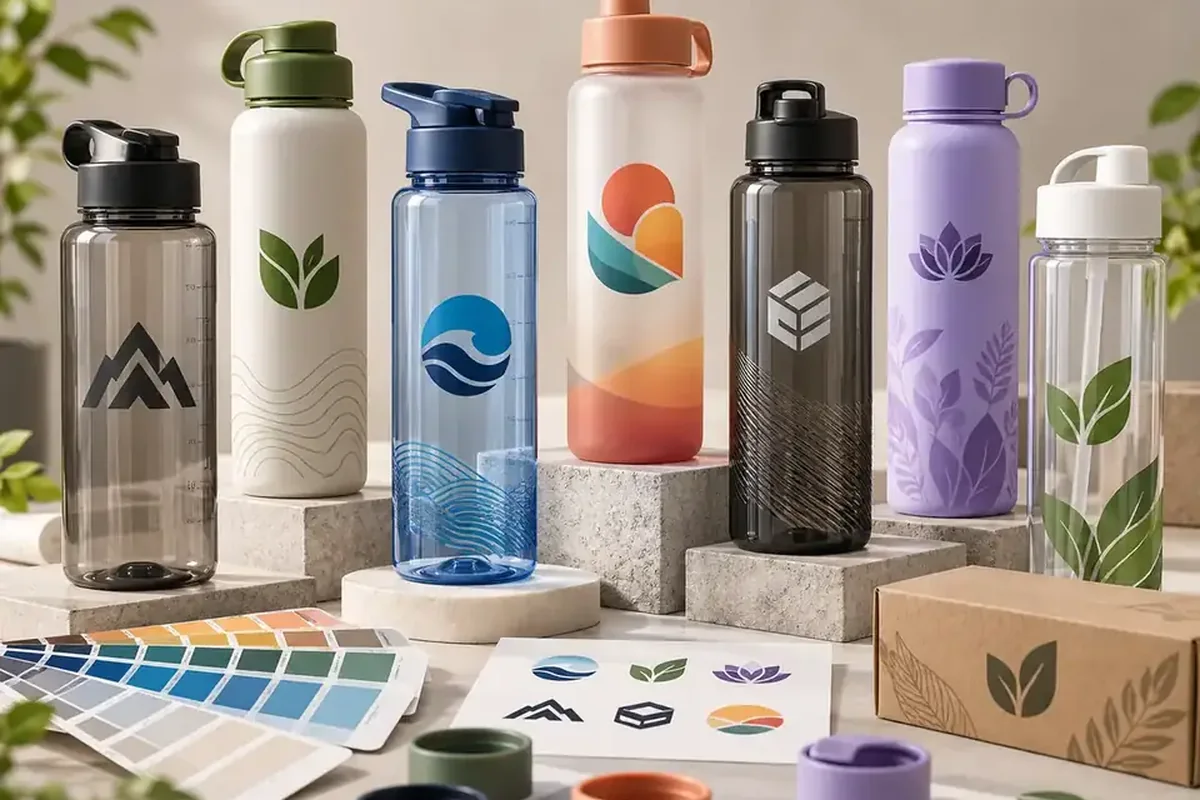
Nonprofits may use branded bottles as event merchandise, sponsor thank-you gifts or donor incentives, but each purpose has a different budget and inventory risk. This guide helps campaign managers compare real products, define artwork ownership, plan sample approval, measure net fundraising proceeds and manage event deadlines without inventing charitable-impact or factory claims.
- Define paid merchandise, registration gift or donor-incentive use.
- Obtain approval of logos, sponsor names and campaign language.
- Select and sample one clear SKU and component set.
Choose whether the bottle is merchandise or a donor benefit
Start by identifying the role of the bottle: direct retail sale, registration gift, sponsor recognition item, staff supply or incentive linked to an approved donation campaign. Those choices change the target cost, quantity and packaging. A fundraiser selling bottles needs a credible contribution margin after transaction costs, whereas a free donor gift has a capped program budget. Do not estimate quantity only from historic attendee counts; use ticket sales, expected conversion and existing inventory as separate inputs. Obtain internal approval for the use of the organization's name and donor messaging. Keep the proposed bottle itself separate from claims about how much each sale contributes to a cause. Marketing promises and tax treatment should be reviewed by the organization's own advisors; the factory quotation confirms a product supply, not charitable compliance.
Sample models before agreeing on the campaign format
A bottle intended for a crowded walk or charity auction has different practical requirements from one included in a formal donor pack. Compare catalog models for physical size, cap access, carry comfort, package footprint and available printing area. Handle real samples instead of assigning suitability from marketing images. Include the precise model and components in the quote, and ask which material, color and decoration configurations can actually be supplied. Do not assume identical lids fit across models or that an item marketed as reusable passes a specific performance test. For a first campaign, one well-approved SKU may be more manageable than several sizes that divide stock and increase artwork setup expense. Give every variant a unique identifier and an owner-approved use case. Use Model 2400 · 380 ml catalog bottle as a compact-size comparison; confirm the actual cap, decoration area and packaging configuration before the quotation.
Secure permission for charity, partner and sponsor artwork
Fundraisers commonly involve nonprofit logos, sponsor names, event dates and co-branded campaigns. Confirm rights to reproduce every mark on a physical product and who can approve final artwork; a committee approval in an email thread may not be enough for a licensed logo. Provide vector files, approved colors, logo hierarchy, print area and the required legal or event message. Ask the manufacturer what can be produced on the selected body and request a dated sample or production-representative proof. If multiple sponsors share one design, check legibility at actual bottle size and establish a deadline for revisions. A digital visualization is not evidence of color durability or final print quality. Keep a design release file and prevent unauthorized late changes after production confirmation.
Calculate net proceeds and compare quotes consistently
For a paid merchandise program, build a simple per-unit worksheet: factory item price, printing setup, decorated sample, packaging, freight, duties where applicable, payment processing, event staffing and expected unsold stock. Do not confuse gross revenue with funds available for the cause. If bottles are offered in exchange for contributions, let the nonprofit's accounting or legal team establish proper recognition and disclosures. Compare quotes only when model, quantity, customization, shipment basis and destination match. Ask suppliers to specify which costs are estimates and which are confirmed, including whether a new sponsor logo counts as a separate setup. Measure the break-even quantity before placing an order, and do not use a claimed guaranteed margin unless the underlying assumptions are documented. Compare the different form factor of sports bottle model 2516 before assigning a second SKU to regional offices.
Plan deliveries around real event and fulfillment dates
Event organizers often need stock across a main venue, volunteer registration desks, sponsor tables and a post-event warehouse. Create a receiving schedule with named contacts, exact addresses, quantity per site, carton labels and a contingency for delayed deliveries. If the order is split among destinations, ask whether there are additional packing and courier charges. Confirm carton size, weight and labeling rules so volunteers can separate paid merchandise from gift stock without opening every box. Reconcile artwork approval, production release, shipment and event setup before publishing availability claims. Do not assume a fast shipping method can compensate for a late sample approval or customs delay. Maintain a fallback merchandising plan in case the approved bottles arrive after a campaign milestone.
Define sample inspection and responsibility for problems
Before the deposit, record the acceptable bottle body, cap, printed design, colors, accessories and packaging. Agree which cosmetic issues are acceptable and which defects block distribution, such as visibly wrong sponsor names, cracks, missing caps, incorrect event year or heavily damaged cartons. Select a sampling plan appropriate to the order size and allow enough receiving time to photograph and report damage. Keep the final approved proof and representative sample available to the event team. Do not treat a mock-up as a physical quality test or claim independent certification not tied to the proposed SKU. Reconcile ordered, received and saleable quantities before assigning stock to volunteer teams. For replacement or credit discussions, use itemized evidence from the delivery rather than a general complaint. A compact catalog reference such as sports bottle model 2095 can be assessed for desk and commuter use after exact material and closure checks.
Use campaign results to improve the next order
After the fundraiser, compare actual saleable stock, paid units, donor gifts, volunteer giveaways, remaining cartons and any damage against the original budget. Analyze which selling channels worked without assuming the bottle itself caused higher donations. Keep the exact model number, material confirmation, art version, supplier quote, logistics split and inspection notes in the procurement record. If sponsors or event themes change next year, create a separate artwork version and confirm setup charges again. Decide whether unsold stock can be used in an ongoing store or whether dated branding limits its value. Reorder based on observed demand and approved campaign goals, not a generic estimate of event attendance. This makes procurement reviewable by staff, directors and future volunteers.
Nonprofit drinkware purchasing gates
Document the business and artwork decisions before committing donor or campaign funds.
| Gate | Evidence to retain | Buyer decision |
|---|---|---|
| Purpose | Gift, retail or sponsor-recognition plan | Campaign role approved |
| Product | Named SKU and sample configuration | Use and fit reviewed |
| Rights | Brand permissions and final sponsor proof | Artwork released |
| Economics | Landed-cost and sales scenario sheet | Budget and break-even reviewed |
| Fulfillment | Venue split, carton labels and deadlines | Event stock plan approved |
| Quality | Retained sample and receiving checks | Distribution release documented |
Buyer decision criteria, not XUYI certification, published MOQ or guaranteed delivery times. Verify the exact model and market requirements.
Buyer checklist
- Define paid merchandise, registration gift or donor-incentive use.
- Obtain approval of logos, sponsor names and campaign language.
- Select and sample one clear SKU and component set.
- Verify model-specific materials and applicable market documentation.
- Approve dated production-representative artwork and packaging.
- Model gross revenue, landed cost and expected unsold stock separately.
- Label cartons for event locations and stock purposes.
- Agree realistic delivery dates tied to artwork approval.
- Set inspection, damage and correction procedures.
- Record actual sales, gifts and leftover stock for future orders.
Frequently asked questions
Is a nonprofit fundraising bottle order different from a corporate gift order?
The physical specification process is similar, but the nonprofit should also document gift versus merchandise treatment, sponsor permissions, fundraising economics and inventory accountability. Seek professional advice for charitable or tax rules.
Can a nonprofit add multiple sponsor logos to one bottle?
Possibly, depending on the SKU's usable print area and decoration method. Approve logo rights and hierarchy, request a production-representative proof and check the result at actual scale.
How should the nonprofit estimate order quantity?
Forecast paid sales and free distribution separately, compare with remaining stock and model the cost of unsold units. Confirm MOQ and price breaks for the selected artwork and product instead of using a universal minimum.
What information is essential for repeat campaign orders?
Keep model number, cap and material, approved artwork file and date, quantity by destination, carton specification, original quality acceptance and any changes required for the new sponsor or campaign.
Need a quote for a specific model?
Send the model, expected order quantity, logo requirements and destination market. XUYI can review confirmed material and customization options.
Request a Plastic Bottle Quote →