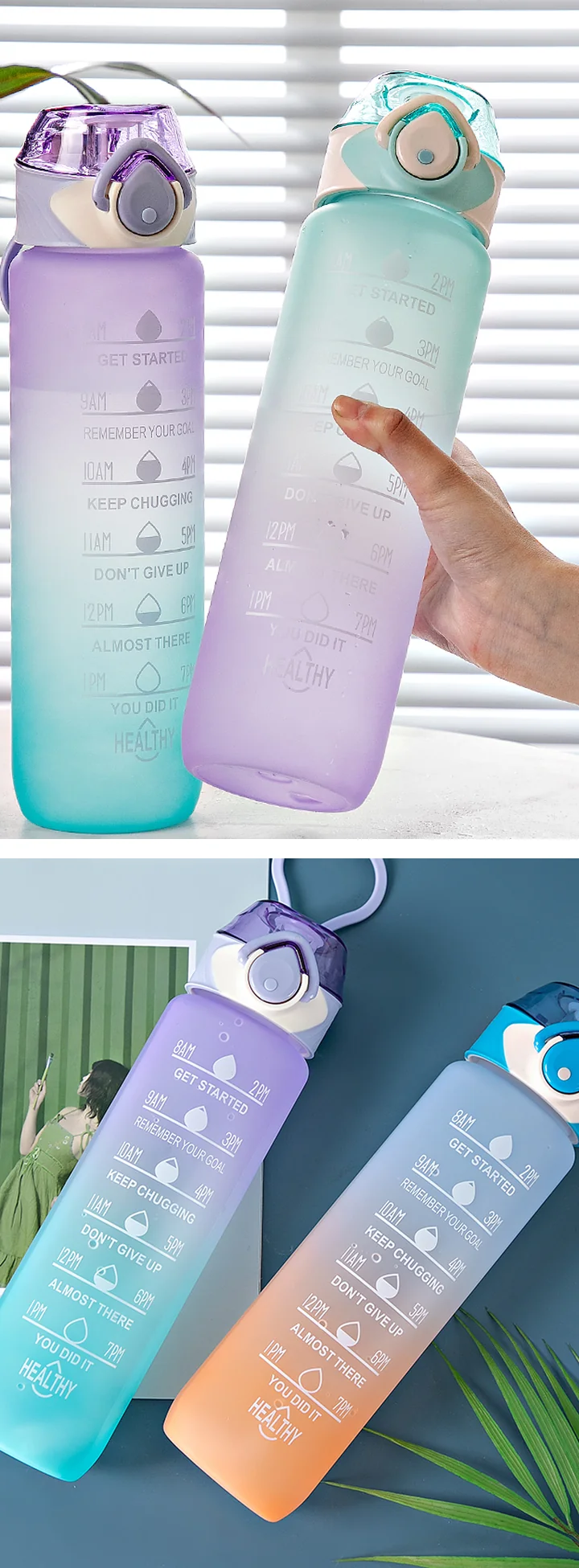
Trade show giveaways have an unusual purchasing constraint: the event date cannot move when a factory approval, print proof or customs handoff slips. Event agencies, exhibition contractors and conference organizers need more than a cheap unit price. They need an approved physical bottle, accurate attendee allocation, a documented production start, a clear delivery destination and a fallback plan that does not promise unsupported express shipping. This guide explains how to keep the bottle order tied to the actual event schedule without inventing lead times, freight rates or factory performance.
- Confirm event opening and venue receiving cut-off dates.
- Allocate time for artwork proof, production, inspection and freight.
- Choose body, capacity and closure with a real sample.
Start with the event date, not the factory quote
Write the opening date, exhibitor move-in window, warehouse receiving cut-off and venue access restrictions before submitting an RFQ. Work backward through transit, customs clearance where applicable, inspection, production, artwork proofing and any sample courier delivery. The factory should confirm its own lead times for the chosen body, color and printing process; no published generic lead-time promise is reliable for every configuration. Separate the latest acceptable arrival date from the event date itself and identify who can approve a design change. Make a second plan for failure scenarios: what happens if a print sample is rejected or a shipping route becomes unavailable? An approved order schedule must show decision owners, not just target dates.
Choose a bottle format around attendee movement
A standing conference guest may need a different capacity and carrying style from an outdoor sports-event participant or visitor collecting promotional merchandise. Decide whether attendees will carry the bottle all day, use refill stations or pack it into a conference bag. Compare real product samples for fit and perceived usefulness, without assuming every lid is leakproof or every plastic material has special certification. A compact sports-format catalog item such as a selected XUYI reference is only a starting point for a physical trial. Ask for the exact model code, actual volume in milliliters, approved components, and unit packing dimensions. If the event targets families or children, handle intended-user and market requirements separately rather than treating it as a simple color variant. For a compact event format, test sports bottle 2095 with the actual sample bag, carrying needs and verified specification rather than treating an image as approval.
Approve artwork for the actual production method
Provide vector logos, print dimensions, brand colors, placement boundaries, the number of artwork versions and the exact text approved by the organizer. A digital mock-up can communicate layout but cannot prove final color, adhesion or appearance on a curved plastic surface. Request a physical or otherwise appropriately controlled print proof using the chosen production process. Record proof revision, ink or decoration limitations, any setup charges, minimums per artwork and rejection tolerances. Co-sponsored conferences may have several logos and additional licensing approvals; those approvals must be complete before production begins. Avoid rushing a corrected typo into the printing line through an undocumented message. A final purchase order should refer to one approved design version.
Forecast quantities by destination and audience group
Split expected quantities among speaker kits, exhibitor booths, VIP bags, staff, partner allocations and public giveaways instead of purchasing one ambiguous total. Confirm whether organizers require each sponsor's merchandise packed separately, or whether uniform cases are acceptable. Keep a modest, explicitly approved allowance for breakage or late changes only when the budget and capacity justify it. Compare a handled variant with a compact model by actual packed case rather than by website photograph; carton volume affects freight and storage even when unit prices appear similar. Lock how leftover bottles will be handled after the show. Do not multiply attendance estimates by an arbitrary giveaway conversion rate or invent demand to justify a larger factory minimum. When allocating stock across different event groups, compare a physically approved sports bottle 2516 version against the final logo artwork and real carton plan.
Control the receiving address, freight handoff and carton labels
Trade show venues often impose delivery appointments, loading-dock rules, handling charges and limits on storing freight before event setup. Confirm whether shipment goes first to a freight forwarder, an event contractor warehouse or the venue itself. Ask for real carton dimensions, gross weights, inner counts and marks that identify event, exhibitor and booth or delivery batch. State the agreed shipment responsibilities and documentation in the purchase terms, avoiding assumptions about customs charges. If several exhibitors order through one agency, segregate sponsor artwork at pack-out and provide a case-by-case allocation manifest. Decide in writing who will check damage, short shipments and delivery receipts before the stand is installed.
Inspect finished merchandise before it consumes the last shipping window
Quality acceptance must describe the exact body, lid, seals, printing, surface, accessories, polybag or other pack and carton marks. Compare real production samples with the approved proof before releasing freight, and select an inspection method suited to the batch size and defect risk. When a technical claim such as leak resistance or wash care is important, request valid product-level evidence; a decoration approval does not prove performance. Photograph wrong-color logos, cracked parts, missing lids and barcode or case-label errors with their model and lot codes. Agree how rework affects the shipping cut-off, who authorizes partial release, and who pays additional handling for verified faults. Inspection after venue delivery is too late to serve as the only control. A handled reference such as bottle LO-002 should pass its own closure and packing checks; a similar-looking lid does not prove compatibility.
Prepare a recovery plan and a repeatable event playbook
Create a short escalation list naming who decides between replacement, local relabeling, revised shipment allocation or a smaller giveaway quantity if a problem occurs. Do not promise last-minute airfreight without confirmed service and landed cost. Preserve the model code, approved print file, sample photos, actual cartons, delivery records and final defect outcomes for the next event. Calculate performance from units received, distributed and left over instead of relying only on impressions or attendance. Ask if optional compatible replacement caps are available for the selected product but do not assume interchangeability between models. The best reusable event purchasing process is a verified sample, an explicit cutoff, a documented contingency and a post-event quantity reconciliation.
Trade show giveaway release gates
Assign one responsible person and collect evidence at each gate.
| Purchase gate | Required evidence | Go/no-go rule |
|---|---|---|
| Event schedule | Venue cut-off and reverse plan | Approvals fit the window |
| Sample | Confirmed body and lid assembly | Physical format approved |
| Branding | Versioned printed proof | Sponsor signed off |
| Packing | Actual carton and case manifest | All allocations match |
| Inspection | Production sample and defect rule | Accept or correct |
| Logistics | Booking and consignee receipt plan | Delivery feasible |
Buyer decision criteria, not XUYI certification, published MOQ or guaranteed delivery times. Verify the exact model and market requirements.
Buyer checklist
- Confirm event opening and venue receiving cut-off dates.
- Allocate time for artwork proof, production, inspection and freight.
- Choose body, capacity and closure with a real sample.
- Approve the final vector logo and a numbered print proof.
- Separate quantities for booths, VIP, staff and public giveaways.
- Approve packed carton counts and each sponsor's case label.
- Identify actual consignee, delivery booking and transport responsibility.
- Define defects and inspection method before production release.
- Assign an escalation owner for missed deadlines or rejected print.
- Reconcile distributed and leftover stock for the next event.
Frequently asked questions
How early should agencies order trade show bottles?
There is no universal safe number of days. Work backward from venue receiving cut-offs through verified factory production, approval and shipping windows, allowing an approved contingency.
Can several sponsors share one wholesale order?
Only when minimums, separate print versions, samples, packing identification and approval responsibilities are documented for each sponsor.
Can we replace the bottle model after printing is approved?
Treat a new body or lid as a specification and artwork revision; ask for another sample and commercial approval rather than treating it as an invisible substitution.
Is express shipping the best emergency backup?
Not necessarily. Check actual service, customs requirements, costs, destination receipt times and whether a smaller allocation or local pack-out is more reliable.
Need a quote for a specific model?
Send the model, expected order quantity, logo requirements and destination market. XUYI can review confirmed material and customization options.
Request a Plastic Bottle Quote →