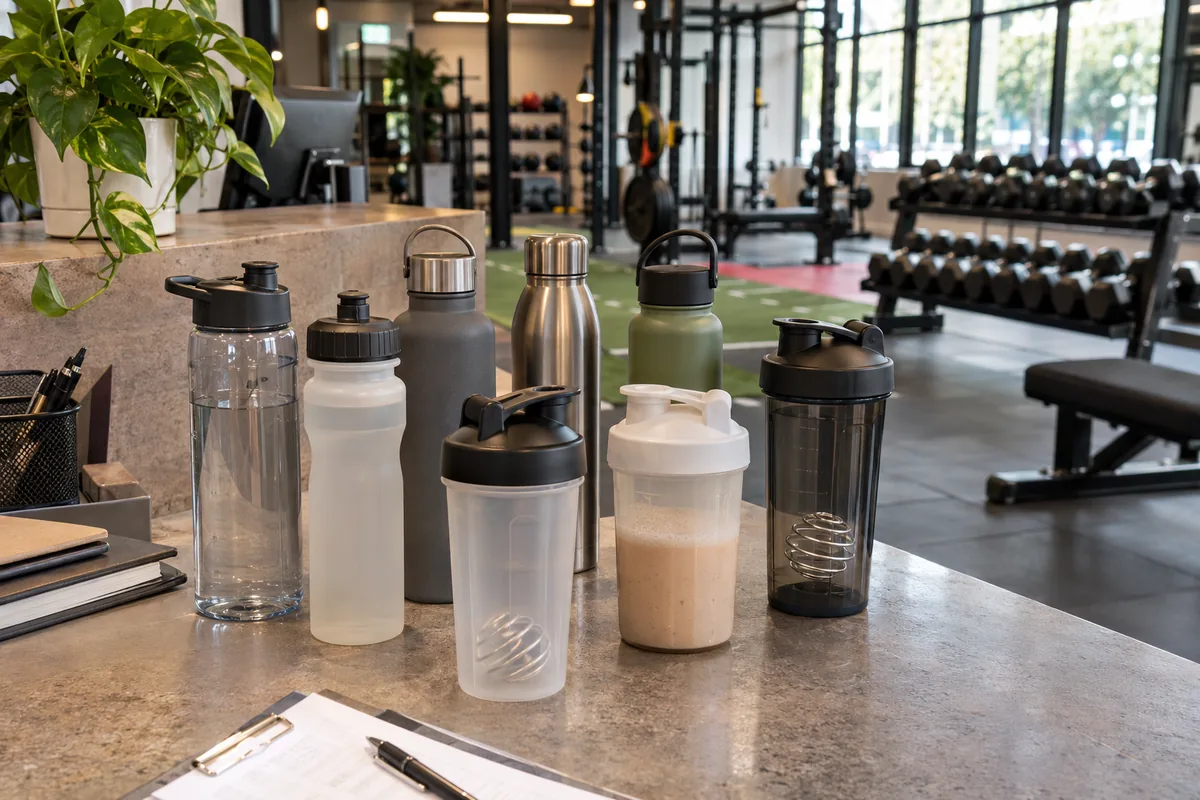
The best material is not chosen by clarity alone. A gym buyer must connect the material, closure, cleaning routine, decoration and member use case to one approved SKU.
- Define whether the bottle is for a membership kit, retail shelf, training challenge or refill station
- Record capacity in ml and approximate US fl oz class
- Confirm exact body, lid and seal material by SKU
Define the fitness program before comparing materials
A gym chain may need bottles for membership welcome packs, retail shelves, coach-led challenges or daily refill stations. Each use case changes the material conversation. A lightweight bottle may be convenient for a member kit, while a more rigid body may be preferred for a retail assortment or a bottle carried in a training bag. Start by recording the expected drink, use frequency, cleaning method, decoration area and replacement policy. Then ask the factory to compare materials on the same capacity and closure where possible. This prevents a buyer from choosing the clearest sample while ignoring odor, flex, grip, cap fit or the way a printed logo looks after handling. A private-label program also needs a repeatable model identity, because a visually similar replacement can create a different member experience and a different carton or artwork requirement. Review model 2030 as a physical reference before approving this variant; confirm its current product record rather than assuming the same material or cap configuration.
Compare material behavior, not only the word plastic
Plastic is a category, not a complete specification. Buyers may discuss PP, PET or a clear copolyester-style material, but the selected bottle body, lid and seal must be confirmed by SKU. Ask the supplier for the exact material name used in the production record, the intended contact use, available colors and any applicable test documentation. Compare weight, transparency, surface feel, resistance to flexing, odor after normal cleaning and compatibility with the planned drink. If the gym uses flavored powders or protein drinks, mention that in the RFQ because residue and cleaning access matter. If a supplier offers several materials, request a side-by-side sample set with the same cap family and decoration treatment. That makes the comparison useful for a purchasing decision rather than a collection of unrelated samples. Review model 2059 as a physical reference before approving this variant; confirm its current product record rather than assuming the same material or cap configuration.
Match the bottle to cleaning and member behavior
A gym bottle is often opened with one hand, carried in a bag, placed beside equipment and washed frequently. The buyer should examine the neck opening, cap parts, seal removal, grip and the places where liquid or powder could remain. Do not promise dishwasher safety, heat resistance or odor performance unless the exact model and test basis are confirmed. Instead, define the cleaning routine the member program expects and ask the factory what can be verified for that routine. A wide opening may make cleaning easier but can change the overall height and cap design. A sports lid can improve access during training but may add components that need separate inspection. Record the final closure and cleaning instructions in the artwork or product brief so customer-service and retail teams repeat the same message.
Check decoration on the selected surface and color
Private-label gym programs often combine a logo with a club color, event name or membership tier. The decoration must be judged on the same material, color and surface texture as the production order. Ask for the printable area, artwork limits, color reference, proofing steps and the handling or cleaning condition used for the sample. A transparent body can make a print look different from a matte or opaque body; a curved grip zone can also affect logo placement. Decide whether each gym location uses one fixed artwork or whether a common master logo will be adapted by region. Keep the approved artwork version, sample photo and model number together. This is especially important when the purchasing team changes or when a future reorder is placed by a distributor rather than the original brand manager.
Use a practical test plan before approving the private label
A material comparison becomes meaningful when the buyer writes down pass and fail conditions. Check the body for marks, warpage, color variation and sharp edges; check the cap for fit, opening force and seal placement; check the printed mark for position and legibility. Fill the bottle with the planned beverage or a representative test liquid, carry it in the intended bag and place it on a gym counter or equipment shelf. Record what happened instead of relying on a general statement such as “premium quality.” If a third-party test or food-contact document is requested, make sure the document identifies the relevant material and sample scope. The final approval should identify the model, capacity, color, material, cap, artwork, packing and test date so the factory and buyer are reviewing the same object.
Build the quote request around a comparable sample set
A useful RFQ lets the factory quote a real program instead of guessing what “custom gym bottle” means. Include the capacity in ml and approximate US fl oz class, target material or material options, cap preference, body color, logo method, quantity by color, packaging, destination and required sample date. Ask for separate pricing if the material changes, and ask which assumptions change the price. If you compare three materials, keep the body size and closure as constant as possible so the cost difference is interpretable. Request a table showing sample cost, tooling or artwork cost if any, unit price basis, packing and estimated production steps. Buyers do not need a complicated spreadsheet; they need enough fields to compare like with like and enough evidence to avoid approving one material while ordering another.
Protect the reorder with a model and material lock
After approval, the private-label program should have a short controlled specification: model number, body material, lid and seal material, capacity, approximate oz class, color, decoration file, packing and destination. Put the same identity on the purchase order, sample approval and carton mark. If the factory proposes a material substitution because of availability or price, require a written change review and a new sample before mass production. A small gym pilot can also create useful evidence about member handling, cleaning questions, cap loss and replacement demand. Use that feedback to improve the next order, but do not silently change the approved model. The purpose of a material lock is not to prevent improvement; it is to ensure that an improvement is reviewed before it becomes a different product in the market.
Private-label gym bottle material matrix
Compare the selected SKU and test evidence; do not treat a material name alone as a finished-product claim.
| Buyer question | Evidence to request | Program impact |
|---|---|---|
| Material | Exact body, lid and seal material by SKU | Use, cleaning and documentation |
| Member use | Drink, frequency, bag and refill scenario | Residue, weight and handling |
| Closure | Cap parts, seal and opening behavior | Leak control and replacement |
| Decoration | Surface proof, artwork and color | Brand consistency |
| Testing | Sample record and relevant documents | Approval confidence |
| Reorder | Model and material change control | Repeatability for distributors |
Buyer decision criteria, not XUYI certification, published MOQ or guaranteed delivery times. Verify the exact model and market requirements.
Buyer checklist
- Define whether the bottle is for a membership kit, retail shelf, training challenge or refill station
- Record capacity in ml and approximate US fl oz class
- Confirm exact body, lid and seal material by SKU
- Compare materials with the same cap and similar decoration where possible
- Document the real member cleaning and beverage routine
- Approve logo position and color on the selected surface
- Test filled carrying, cap fit, seal and visible defects
- Request documents that identify the actual material and sample scope
- Quote colors, quantities, packing and destination separately
- Lock the approved model and material before repeat production
Frequently asked questions
Is clear plastic always the best material for a gym bottle?
No. Clarity is only one buyer criterion. Compare the exact material, weight, flex, cleaning access, cap system, decoration and member use case on the selected SKU.
Can a factory offer different plastic materials for the same gym bottle shape?
It may be possible, but the body, cap, seal, color and decoration should be checked together. Request a comparable sample set and a model-specific quotation rather than assuming the materials are interchangeable.
What should a gym test with protein or flavored drinks?
Use the planned beverage or a representative test liquid to review residue, cleaning access, odor after normal washing, cap fit and the way the bottle is carried in a training bag. Confirm any special claim with the factory.
How do private-label buyers prevent material substitution?
Put the approved model, body material, cap, seal, capacity, color, artwork and packing in the purchase record. Require written change review and a new sample before accepting a substitution.
Need a quote for a specific model?
Send the model, expected order quantity, logo requirements and destination market. XUYI can review confirmed material and customization options.
Request a Plastic Bottle Quote →