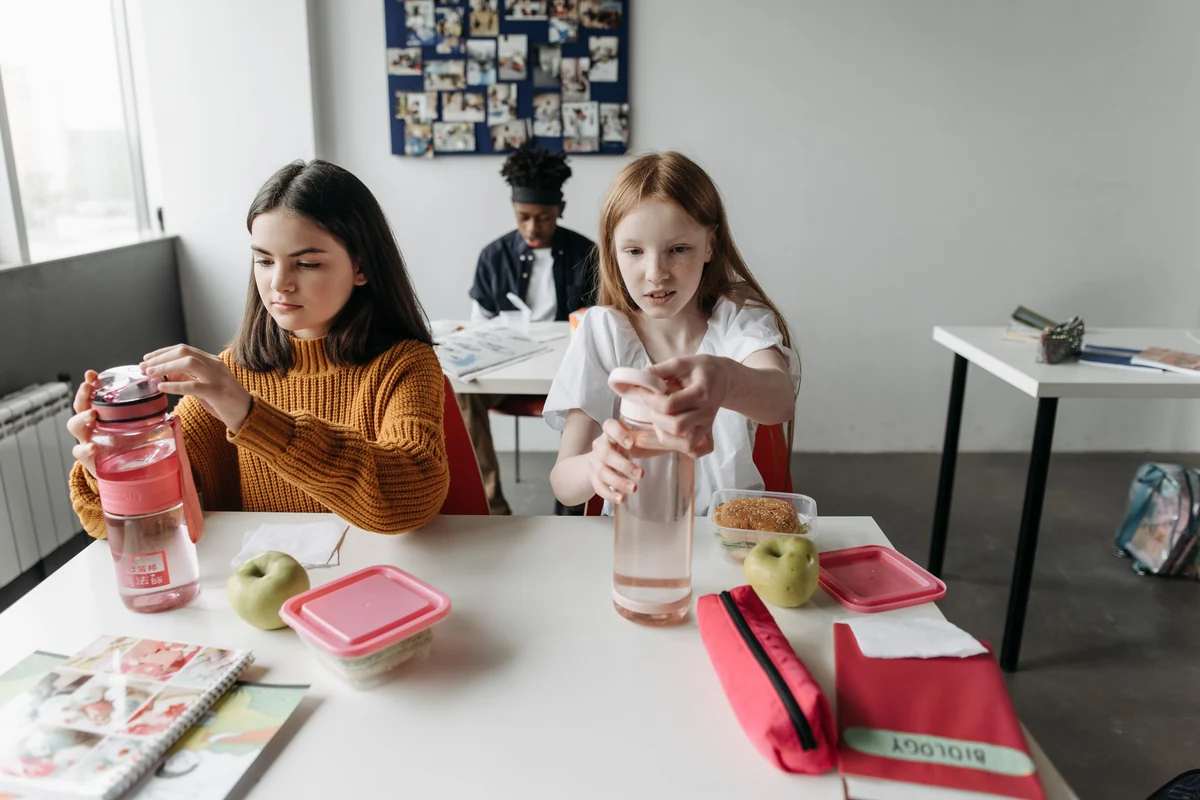
Schools often buy bottles for several different purposes: everyday student use, welcome packs, sports and after-school activities, field trips, and staff programs. Treating every need as one bulk order can create the wrong size mix, unclear allocation and avoidable leftover stock. This guide helps school administrators build a model-specific buying brief, approve samples and artwork, and plan delivery around the academic calendar without making unsupported claims about materials or performance.
- Separate daily student use, welcome packs, field trips, sports and staff quantities.
- Record the age groups and carrying routines for each program.
- Compare real model pages and confirm the exact dimensions and configuration.
1. Separate everyday student stock from event-specific bottle kits
A school may need bottles for daily student use, new-student welcome packs, sports days, field trips and staff activities. Those needs should not be combined into one rough quantity. Start by listing each program, its distribution date, the person responsible for receiving the order and whether the school, a parent group or an event sponsor is paying. Everyday stock may be replenished after the school sees actual usage, while a field-trip or welcome-pack order is tied to a fixed date and a confirmed participant count. Keep each allocation separate in the purchase brief, even if the same bottle model is used in more than one program. This makes it easier to identify which quantity is confirmed, which is still an estimate and which items should remain as reserve stock. It also prevents an event allocation from being counted twice when the school calculates its annual student requirement.
2. Define age groups and carrying routines before selecting models
A bottle selected for younger students may not be the best choice for older pupils, teachers or sports teams. Consider the age range, how the bottle will be carried, the school bag or backpack it must fit, the expected activity and whether the user needs a simple opening or a particular lid arrangement. Compare a real kids-bottle reference such as Model 2508 and check its dimensions and carrying fit for the intended age group. These links are starting points for model selection, not a claim that one model fits every student or activity. Check the exact dimensions, capacity, components and available documentation for the chosen model, then test a complete sample with the bag and age group it is intended for. Do not select only by color or the largest capacity shown in a catalog.
3. Approve the complete sample and the care instructions
A product image cannot show how a cap opens, how a seal sits or how removable parts are handled. Ask for a complete sample of the exact model and configuration being quoted. Have the school team check the opening, closure operation, grip, visible finish, assembly and the supplier's written cleaning instructions. If the bottle has a straw, insert or removable component, confirm that the intended users and caregivers can clean and reassemble it as directed. Record the model number and sample revision so that the approved item can be compared with the delivered goods. Claims such as leakproof, dishwasher-safe, BPA-free or suitable for a particular temperature should only be used when the supplier provides evidence for the exact assembled model and the relevant market. A school should not turn a general catalog description into a promise to parents without checking the supporting records first. A second kids-bottle reference, Model 2509, can be reviewed as a separate sample candidate; approval must still apply to the exact selected configuration.
4. Control school logos, names, colors and artwork versions
School-branded bottles can involve a crest, school name, house color, year group, event identity or sponsor mark. Before artwork begins, confirm who owns each logo and who is authorized to approve its use. Supply a clean logo file where available, specify the intended print area and color reference, and ask for a proof showing the design on the actual bottle shape. Approve each body color and logo combination separately; a proof on one color does not automatically approve another. If individual student names or class identifiers are requested, confirm whether variable printing is available, how the data will be supplied and whether the additional setup changes the quote or delivery plan. Keep the approved artwork, proof, sample and purchase order together. If the school changes a crest, sponsor or event date, issue a new version rather than relying on an old proof or a verbal instruction.
5. Forecast quantities around enrollment and the academic calendar
Work backward from the date when bottles must be handed to students, not simply from the date the purchase order is expected to be signed. List the sample approval date, artwork approval, quantity confirmation, supplier-confirmed production window, packing, export transit and receiving inspection. Ask the supplier to confirm the timing for the exact model, decoration and order quantity; an indicative lead time is not a delivery guarantee. For annual programs, use current enrollment and confirmed event registrations rather than copying last year's number without review. Separate confirmed quantities from possible late additions, and agree how changes will be handled before production starts. If the school has several campuses, decide whether all cartons should arrive at one receiving point or be split by an approved campus allocation. A clear schedule gives the purchasing team time to resolve proof changes or shipping questions before the first school distribution date.
6. Compare landed cost, carton details and receiving requirements
Compare supplier quotations only when the model, configuration, colors, decoration, packaging, quantity and destination are aligned. Separate the bottle price from printing or setup charges, individual packaging, carton configuration, freight, insurance, duties and local handling where applicable. Ask for the confirmed quantity per carton and outer-carton dimensions so the school can estimate storage space and receiving effort. If bottles are going into welcome packs, check whether each item needs a barcode, student-facing insert or separate campus label. A lower unit price may not be the lower total cost if it requires extra packing work or arrives in carton quantities that do not match the school's distribution plan. Record the quote assumptions and approved sample together so a later comparison does not mix different product specifications or packaging arrangements. For sports-day allocations, Model 2501 can be compared as a separate sports-bottle reference when its configuration matches the intended use.
7. Inspect delivery and build a controlled replacement and reorder process
When the order arrives, compare carton counts, model numbers, colors, artwork versions and visible condition with the approved purchase order and sample. Open a documented inspection sample before distributing the full shipment. Separate any damaged or mismatched items and photograph the issue before contacting the supplier. For recurring student programs, record how many bottles were issued, which models were used, what questions came from parents or staff and whether any recurring closure or cleaning concerns were reported. Use that information to plan the next order instead of repeating last year's quantity automatically. Keep a small, separately recorded reserve if the program requires replacements, and review the model and artwork again whenever the school changes its age group, logo or intended activity. This creates a repeatable purchasing process without assuming that every future order can use the same configuration.
School Water Bottle Procurement Approval Matrix
Use the same evidence standard for each program, but keep quantities, user groups and handout dates separate.
| Decision point | Evidence to keep | School approval |
|---|---|---|
| Daily use or event | Separate program, audience and handout date | Approve each allocation |
| Age and carrying fit | Measurements and intended school-bag test | Approve tested use |
| Complete sample | Cap, seal, components and care instructions | Approve exact configuration |
| School identity and artwork | Rights owner, proof and file revision | Approve each color and logo |
| Date and destination | Supplier schedule, cartons and receiving campus | Approve arrival plan |
| Cost and replenishment | Comparable quote, packing and stock forecast | Approve total cost |
Buyer decision criteria, not XUYI certification, published MOQ or guaranteed delivery times. Verify the exact model and market requirements.
Buyer checklist
- Separate daily student use, welcome packs, field trips, sports and staff quantities.
- Record the age groups and carrying routines for each program.
- Compare real model pages and confirm the exact dimensions and configuration.
- Test a complete sample with the intended school bag or carrying method.
- Review supplier cleaning instructions and component information.
- Approve each school logo, color and artwork version in writing.
- Confirm whether variable student-name printing is available before promising it.
- Work backward from the distribution date and confirm the supplier's actual schedule.
- Compare carton quantity, dimensions, packing work and landed cost.
- Inspect the delivery and record issue quantities, feedback and reorder needs.
Frequently asked questions
Should a school use one bottle model for every age group?
Not automatically. Compare the intended users, carrying method, opening and cleaning routine, then test a complete sample with the relevant age group before choosing one model or a small model range.
Is a product catalog page enough to approve a school bottle order?
No. Use the page to shortlist a model, then verify the complete sample, dimensions, component information, artwork and available documentation for the exact configuration being ordered.
Can a supplier print each student's name on the bottle?
Ask whether variable-name printing is available for the selected model and quantity. Confirm the data format, artwork proof, privacy handling, additional cost and effect on the delivery schedule before promising it.
When should a school place its bottle order?
Work backward from the actual handout date. Allow time for sample approval, artwork, quantity confirmation, production, packing, transit and receiving inspection, and obtain a supplier-confirmed schedule for the specific order.
Need a quote for a specific model?
Send the model, expected order quantity, logo requirements and destination market. XUYI can review confirmed material and customization options.
Request a Plastic Bottle Quote →