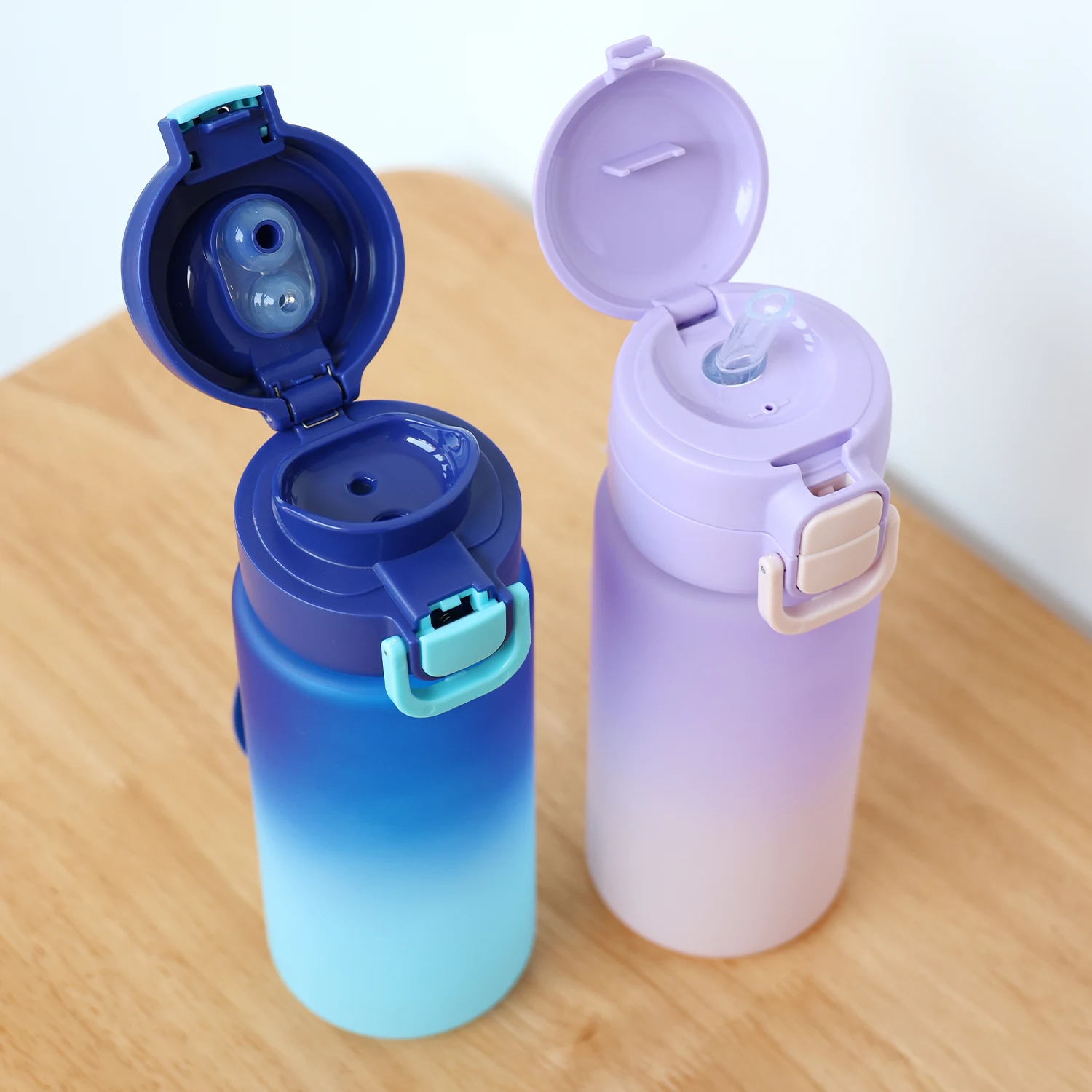
A multi-office promotional bottle project often fails at handoff rather than manufacturing. Headquarters approves one logo, a regional team requests a different message, employees move locations and the delivery company receives cartons with no usable office reference. For a useful bulk purchase, the corporate buyer must connect the chosen bottle assembly, a controlled artwork system, site-specific quantities and distribution ownership before production begins. This checklist focuses on practical steps for HR, marketing, procurement and fulfillment teams coordinating a branded employee gift or conference program.
- Appoint one corporate approval owner across functions.
- Describe end use and recipients before choosing product type.
- Obtain physical samples for each exact body and closure.
Who owns the scope of a multi-site bottle gift project?
Set a single program owner and identify the teams that can approve product, branding, cost and delivery: procurement, marketing, HR, regional office managers and fulfillment. Define whether the bottle is a staff welcome gift, client conference item, holiday campaign or resale merchandise, because quantity, pack presentation and compliance review may differ. Create one master SKU record for each product and decoration. A shared spreadsheet should have the same bottle body, cap type, color, printed message and sample revision as the supplier's purchase order. Individual offices can request allocation changes, but only the nominated owner should approve late substitutions or new art files. Without that approval process, small changes become expensive undocumented variants.
How should the company choose the right bottle for diverse recipients?
Build a short test list based on the actual program: employee desk use, commute, outdoor company event or a promotional kit. Ask the factory for exact catalog-model images, sample materials, closure, capacity in documented milliliters and care instructions. Different product categories serve different uses; a compact sports model should not be treated as interchangeable with a large handled water jug simply because both carry a logo. If hot beverages, child users or special handling are expected, validate those separately; do not assume the same model is suitable. Have a small cross-functional group handle the physical samples. Record the reasons for approving a specific format and avoid presenting unverified material or safety claims to employees. A compact catalog reference such as sports bottle model 2095 can be assessed for desk and commuter use after exact material and closure checks.
How can corporate brand teams prevent inconsistent artwork across offices?
Issue an approved vector logo pack with placement zones, print method, color references, regional-language policy and an identified design revision. Ask for a print proof on the actual bottle surface, not just a screen mock-up; curvature and background tint may affect perceived color. Decide whether all offices get the same design or whether localized campaigns are separate variants. Label each variant with a clear buyer SKU so that order lines, cases and receiving documents are consistent. Approve sample photographs alongside a retained physical proof. If revisions are requested after sign-off, require a change order showing cost, revised production slot and treatment of already-made inventory. A single print approval does not cover every polymer or color combination.
What should an office-by-office allocation sheet include?
Ask each location for recipient count, event date, building/receiving contact, delivery restrictions and whether gifts will be packed individually or assembled into kits locally. Reconcile totals with supplier MOQ and master-carton quantities, allowing a clearly identified buffer only where authorized. Split corporate headquarters stock, regional warehouse stock and direct-to-office deliveries into different rows. If a global rollout includes multiple countries, confirm import responsibilities and market-specific presentation separately instead of relying on one label. The fulfillment team should receive an exact model, color, logo version, cartons and dispatch reference for each destination. Protect personal recipient data by working at office-level quantities unless parcel-level names are genuinely necessary and lawfully handled. Compare the different form factor of sports bottle model 2516 before assigning a second SKU to regional offices.
How can procurement compare shipping and packaging choices?
Price both central receiving plus redistribution and supplier-arranged split shipment to multiple offices when those routes are available. Packaging might require individual gift boxes, protective inserts, or only bulk cartons; each has a different total cost and waste profile. Use actual carton measurements and confirmed freight quotations, then assign re-labeling, 3PL pick-and-pack, insurance and local delivery to the appropriate budget owner. Ask the receiving team about delivery appointments and loading restrictions before booking. Write the named Incoterms delivery place and handover responsibility in the contract. Never calculate landed costs using hypothetical universal duty rates or promise a fixed arrival date when customs or third-party carriers control part of the journey.
What are realistic quality and delivery acceptance gates?
Create a sequence: model sample approval, artwork proof, production reference unit, packing approval, pre-shipment inspection and confirmation of cartons allocated to each office. Record the agreed defect types: wrong printed artwork, missing lids, incorrect colorway, physical damage, mismatched labels and incomplete carton quantities. Photograph production samples and shipping cartons; retain reference units for comparing any dispute. The receiving office should count cartons against its allocation sheet and report exceptions with dated photos. If the project is tied to a conference date, define in advance whether late units should be rerouted to a central warehouse, held or shipped at additional approved cost. Do not force a partial shipment without considering whether it is operationally usable. A handled large-format reference such as large bottle LO-001 illustrates why carton size and gift-pack expectations must be verified independently.
How does a multi-site gift program prepare for reorders and staff changes?
After distribution, compare actual deliveries, breakage, surplus, recipient uptake and support requests by office. Retain the approved artwork, model code, color and packaging revision to ensure a repeat order matches the first wave. If a marketing department updates the corporate logo, the repeat is a new approved decoration variant, not an automatic substitution. Establish who owns leftover stock and whether unopened inventory can be reassigned to another office without changing labels or packaging claims. Ask whether replacement lids or compatible parts are available if the bottle is expected to be used over time. The most valuable learning may be that a narrow standard range is easier to support than many uncoordinated office-specific designs.
Multi-office gift purchase approval matrix
Assign one accountable party for each decision and record documentary evidence before releasing production.
| Workstream | Evidence required | Failure prevented |
|---|---|---|
| Product choice | Physical sample and documented assembly | One office gets wrong closure |
| Brand approval | Revision-coded printed reference | Old or localized logo printed |
| Allocation | Office-by-SKU case list | Cartons sent to wrong office |
| Delivery scope | Named place, freight and receiving contacts | Unexpected last-mile cost |
| Quality | Inspection photos and defect acceptance | Misprinted or damaged gifts shipped |
| Repeat ordering | Saved specification and lessons learned | Uncontrolled second batch changes |
Buyer decision criteria, not XUYI certification, published MOQ or guaranteed delivery times. Verify the exact model and market requirements.
Buyer checklist
- Appoint one corporate approval owner across functions.
- Describe end use and recipients before choosing product type.
- Obtain physical samples for each exact body and closure.
- Create version-controlled logo, color and print proofs.
- Create site allocation by SKU, color, artwork and case count.
- Verify each destination contact and delivery constraints.
- Compare split shipping with centralized fulfillment.
- Use documented packing and pre-shipment inspection gates.
- Agree corrective actions for damaged, wrong or late cartons.
- Retain approvals and office-level issue data for repeat orders.
Frequently asked questions
Can a manufacturer ship branded bottles directly to several offices?
It depends on the supplier's agreed logistics service, destination import requirements and each office's receiving capability. Quote the split shipments explicitly and verify allocation labels.
What happens if different regions want different logos?
Treat each artwork version as its own controlled SKU. Confirm printing setup cost, minimum quantities, approval samples and carton segregation.
Does one company-wide purchase order cover all destination compliance?
Not necessarily. Destination-specific product information, customs and taxes may vary. The importer and relevant professionals should validate each market's rules.
How do you keep a corporate gift program on schedule?
Define sample, artwork, production, inspection, booking and site receipt checkpoints with named owners, plus an exception plan for deadline-sensitive events.
Need a quote for a specific model?
Send the model, expected order quantity, logo requirements and destination market. XUYI can review confirmed material and customization options.
Request a Plastic Bottle Quote →