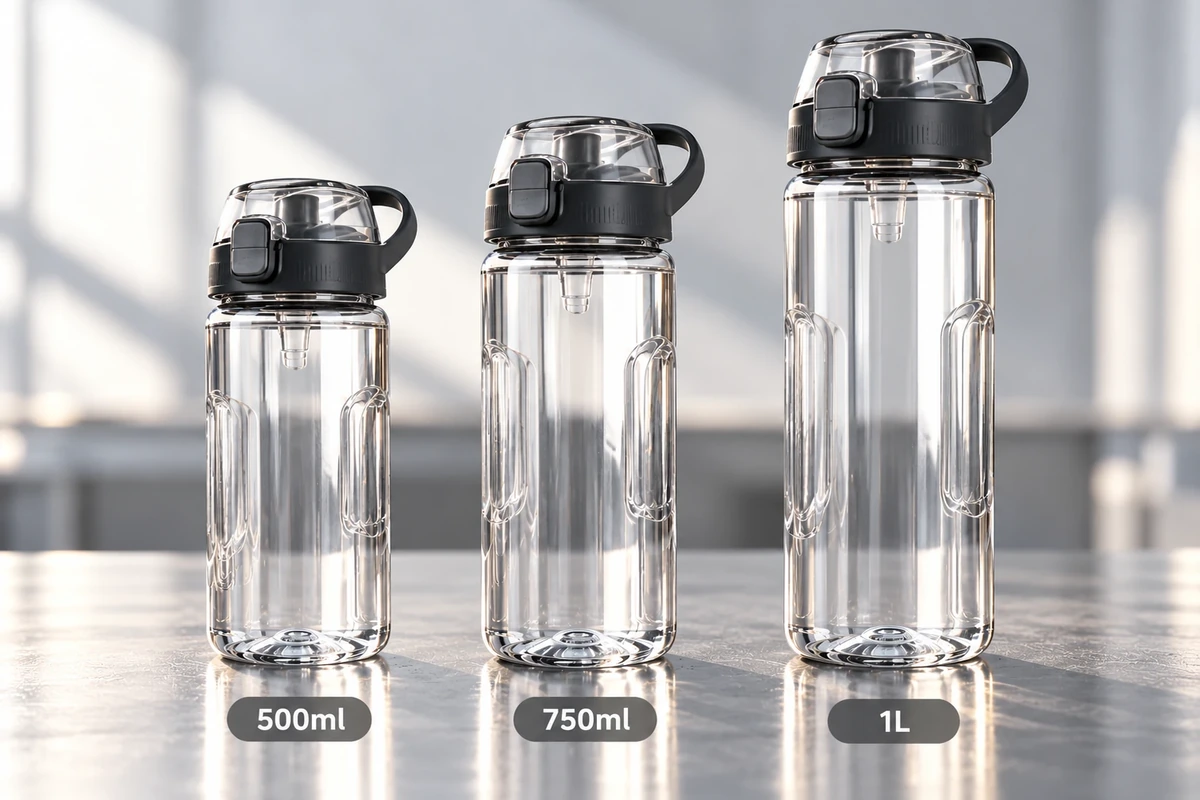
Ask what the program is trying to support and where the bottle will be carried. A desk giveaway, a commuting kit, a warehouse hydration program, a sports event and a retail-style employee benefit can have different capacity priorities. Write down recipient groups, refill access, expected carry distance, bag or cup-holder limits, event duration, decoration area and whether the bottle is a daily item or a campaign gift. The goal is not to prescribe medical intake or promise behavior change. It is to select a physical product people can carry, use and recognize. A written behavior brief lets purchasing compare 500ml, 750ml and larger options on the same assumptions instead of choosing from a product photo.
- Define the audience, use case, destination and buying decision before requesting a quote.
- Record the exact model, listed capacity and component assumptions in the RFQ.
- Request a complete physical sample before approving decoration, closure or packing.
1. Start with the program behavior, not the biggest number
Ask what the program is trying to support and where the bottle will be carried. A desk giveaway, a commuting kit, a warehouse hydration program, a sports event and a retail-style employee benefit can have different capacity priorities. Write down recipient groups, refill access, expected carry distance, bag or cup-holder limits, event duration, decoration area and whether the bottle is a daily item or a campaign gift. The goal is not to prescribe medical intake or promise behavior change. It is to select a physical product people can carry, use and recognize. A written behavior brief lets purchasing compare 500ml, 750ml and larger options on the same assumptions instead of choosing from a product photo. Review model lo-008 as a physical reference before approving this variant; confirm its current product record rather than assuming the same material or cap configuration.
2. Compare 500ml, 750ml and 1L-class options as trade-offs
A 500ml bottle is a compact class, roughly a 17 US fl oz class reference; 750ml is roughly a 25 US fl oz class; and 1000ml is roughly a 32 US fl oz class. These are approximate communication aids, not a substitute for listed metric capacity or exact filled dimensions. The smaller class may be easier to carry and pack, while the middle class can reduce refill frequency without the physical footprint of a larger jug. A 1L-class choice may suit a long session but can affect weight, bag fit, carton quantity and handling. Put metric capacity, approximate ounce class, actual height and diameter, filled weight and use-case notes in one comparison sheet so the internal decision is transparent. Review model 2511 as a physical reference before approving this variant; confirm its current product record rather than assuming the same material or cap configuration.
3. Test recipient fit before approving the program size
The right capacity is partly a fit question. Place the assembled sample in bags, desk spaces, vehicle holders, lockers or event kits that represent the audience. Record height, diameter, cap projection, handle clearance, filled weight and whether the bottle can be opened without interfering with nearby items. Ask a small internal group to handle each candidate and record practical comments, but do not turn a small trial into a universal market claim. If the program has several recipient groups, a two-size range may be more useful than forcing every person into one capacity; if it uses one SKU for simplicity, document the reason. Confirm model and listed capacity before artwork, carton labels and purchase-order release. XUYI model 2095 · 500ml plastic sports bottle is a catalogue reference; confirm the exact assembly on the sample.
4. Link capacity to refill, packing and landed-cost assumptions
Capacity changes more than the number printed on a product page. It can affect body dimensions, filled weight, units per carton, protective material, shelf or kit space and freight calculation. Ask for exact carton dimensions, gross weight, units per carton, individual packing and destination assumptions for each candidate. Do not invent a freight saving from a smaller bottle or a productivity benefit from a larger one; calculate with confirmed packing data and the buyer’s route. If comparing XUYI model 2095 at 500ml, model 2502 at 750ml or model 2505 at 800ml, keep model, material, lid, color split and carton configuration visible in the same cost file.
5. Decide whether one size or a small range is easier to maintain
One capacity can simplify artwork, purchase orders, storage, internal distribution and reorder control. A small range can improve fit for different teams, but creates more SKU, color, carton and sample decisions. Ask whether the program manager can keep variants separated and whether employees understand the difference. Confirm whether the logo area scales across models and whether the same lid, packing label or instruction can be used. If a size change is proposed after artwork approval, treat it as a new product configuration until body, capacity, decoration and carton plan are checked. The best program size is the one the organization can distribute and reorder without hidden operational work. XUYI model 2502 · 750ml plastic sports bottle is a catalogue reference; confirm the exact assembly on the sample.
6. Approve capacity with a complete model record
Before releasing a bulk order, save the product model, listed metric capacity, approximate ounce class used in marketing, measured dimensions, filled handling note, material direction, lid version, color split, logo proof, individual packing and master-carton data. Mark which values are catalogue references and which were measured or confirmed on the sample. Ask the supplier to identify any tolerance or component change that would require a new approval. Keep the capacity decision separate from claims about hydration, health or performance; a bottle size is a product attribute, not a guaranteed outcome. This record lets the wellness lead, buyer and warehouse team work from the same version and gives the next reorder a clear reference point.
7. Use a simple decision rule for the final bulk order
Choose the capacity that passes four questions: can the intended recipient carry it, can the program explain and distribute it, can the packing and landed-cost plan support it, and can the supplier reproduce the exact configuration? If one answer is no, return to the sample or comparison sheet instead of compensating with marketing language. A 500ml, 750ml or 1L-class option can all be reasonable in different programs. The defensible decision is supported by recipient fit, actual dimensions, metric capacity, approximate ounce communication, carton evidence and an approved model record. That is more useful to a procurement team than a generic claim that one size is always best. XUYI model 2505 · 800ml plastic sports bottle is a catalogue reference; confirm the exact assembly on the sample.
Corporate Wellness Bottle Capacity Planning Decision Matrix
Use the same evidence categories for every supplier and confirm the exact model before purchase.
| Decision point | Evidence to collect | Owner |
|---|---|---|
| Buyer need | Use case, audience and destination | Program owner |
| Exact product | Model, capacity, components and measurements | Product buyer |
| Sample gate | Complete sample, proof and test notes | Quality lead |
| Commercial basis | Quantity, packing, carton and freight assumptions | Purchasing |
| Change control | Approved version and new-sample triggers | Procurement manager |
| Reorder readiness | Saved evidence and repeatable instruction | Operations |
Buyer decision criteria, not XUYI certification, published MOQ or guaranteed delivery times. Verify the exact model and market requirements.
Buyer checklist
Use these points when comparing a factory sample, artwork approval and purchase quotation.
- Define the audience, use case, destination and buying decision before requesting a quote.
- Record the exact model, listed capacity and component assumptions in the RFQ.
- Request a complete physical sample before approving decoration, closure or packing.
- Separate catalogue facts from custom material, compliance and performance inquiries.
- Compare quantity, color, logo, packing, carton and freight assumptions together.
- Keep artwork, sample photos and test notes with the model record.
- Define who approves changes to the body, lid, seal, logo and carton.
- Use a dated inspection or test record tied to the exact assembled sample.
- Do not turn an illustration or catalogue statement into a universal claim.
- Save the final decision so the next reorder can use the same evidence.
Frequently asked questions
What should a B2B buyer confirm before placing a bulk bottle order?
Confirm the exact model, listed capacity, material direction, components, decoration or closure, sample result, packing, destination assumptions and change-control record. Keep open items visible rather than guessing.
Can a supplier promise the same result on every model?
Do not assume that. Surface, geometry, material, lid, capacity and packing can change the result. Ask for model-specific evidence and approve the assembled sample.
How should a buyer compare two wholesale quotations?
Put the same model, quantity, customization, packing, carton data, freight assumptions and evidence requirements into one table. A lower unit price is not comparable if the scope differs.
What should be saved for a reorder?
Save the approved model, product facts, artwork or component version, sample photos, carton instruction, test notes, open issues and the rule for when a new approval is required.
Need a quote for a specific model?
Send the intended model, material requirements, expected order quantity, artwork and destination market. We will review the options for that exact product rather than assume one specification fits every bottle.
Request a Plastic Bottle Quote →Related Buying Guides
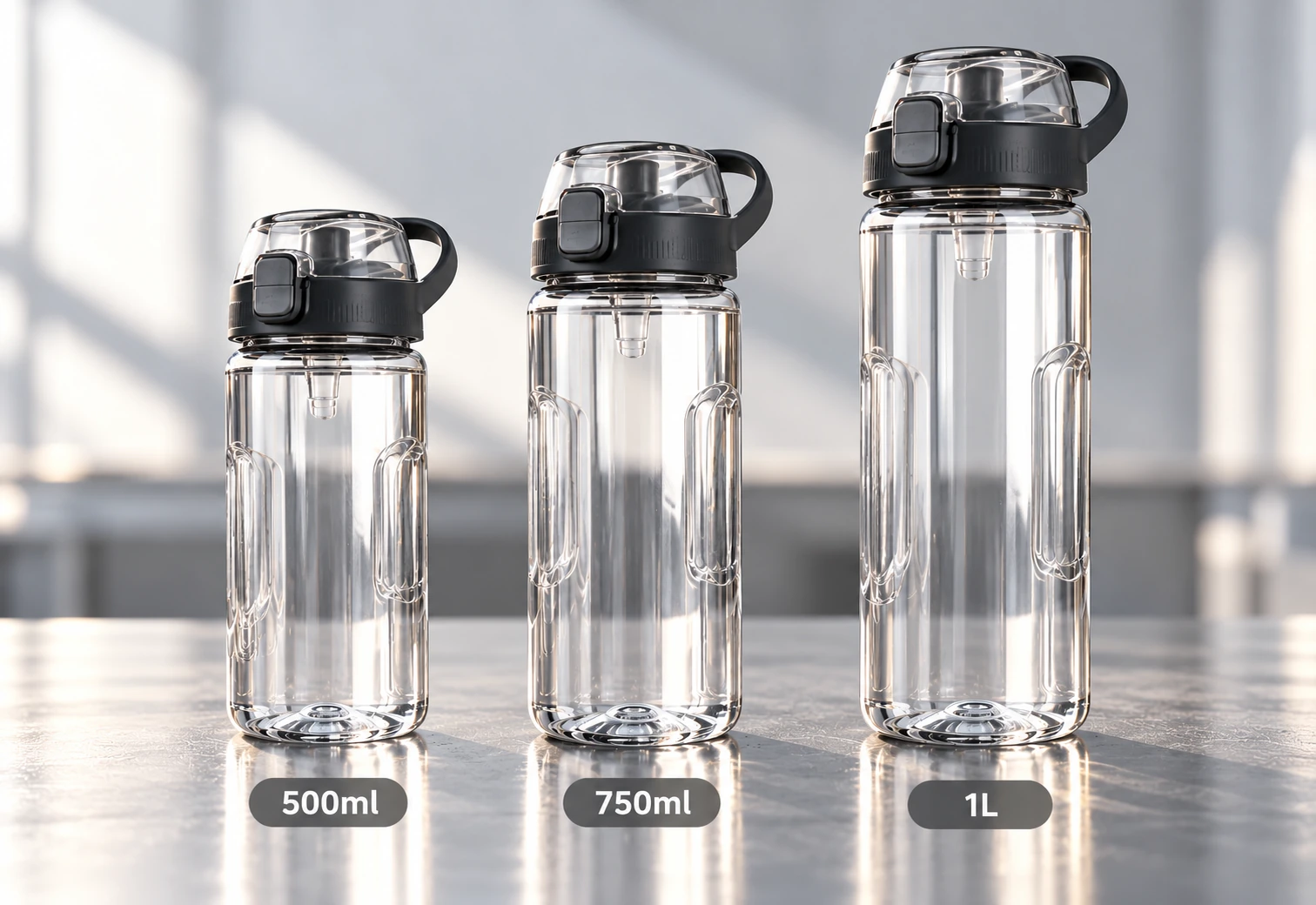 500ml vs 750ml vs 1L Water Bottles: Wholesale Size Guide
Compare 500ml, 750ml and 1L water bottles for wholesale programs. Choose by portability, drink habits, shipping volume and real factory capacity.
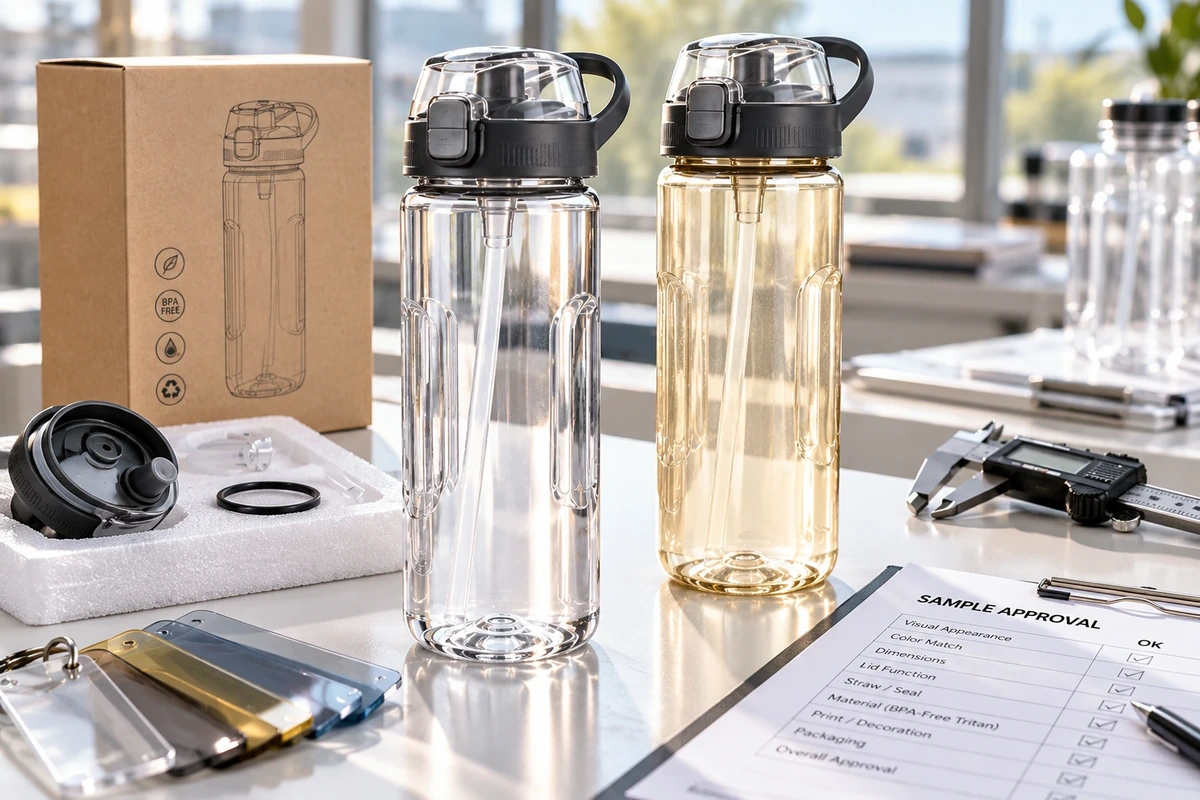 What Should a Wholesale Water Bottle RFQ Include Before You Ask for OEM Pricing?
A conversational B2B RFQ checklist for wholesale water bottles: define the model, capacity, material, colors, logo, packaging, destination and sample approval.
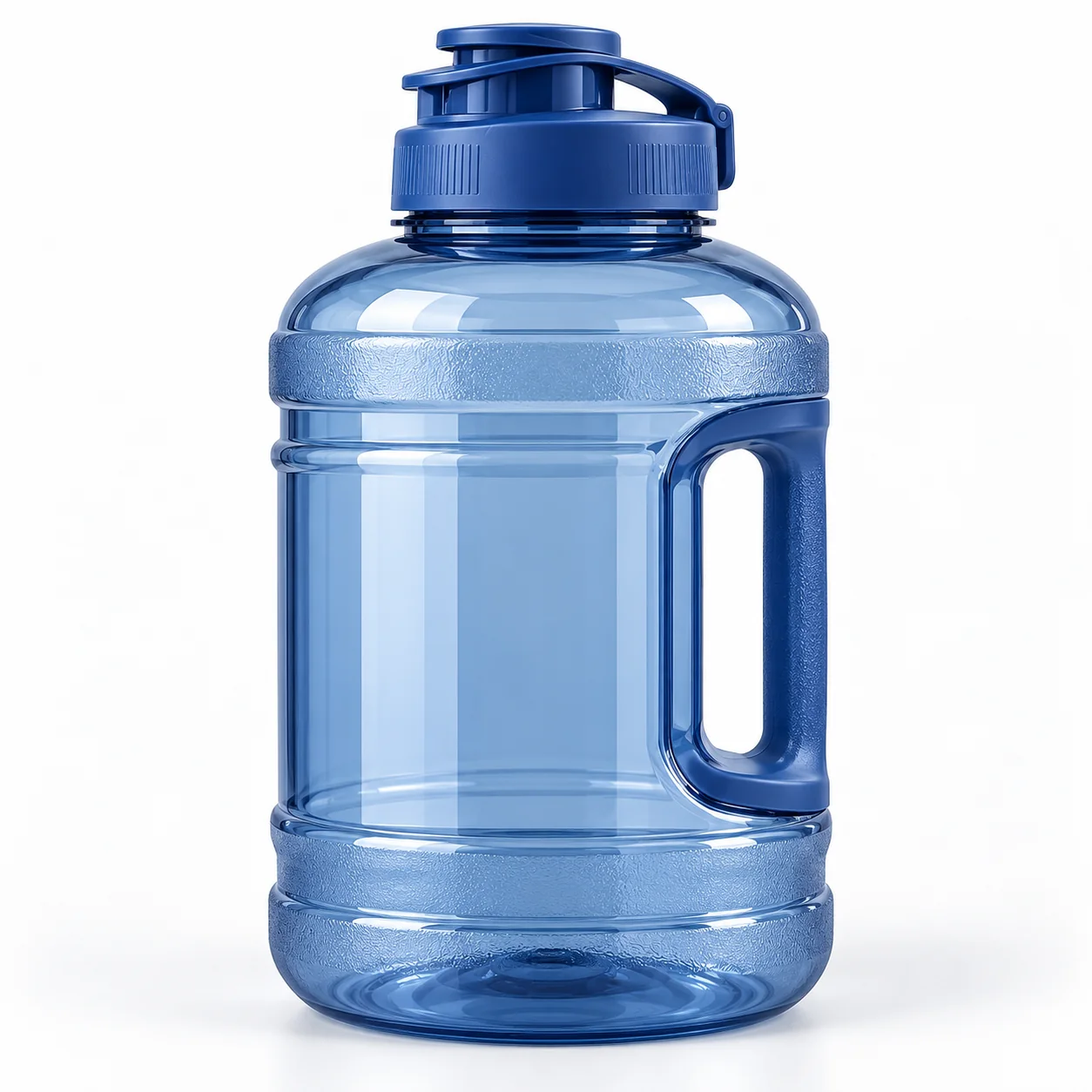 What Should a Wholesale Water Bottle Carton Label Include for a Retailer or 3PL?
A practical B2B carton-label and case-pack checklist for plastic drinkware importers: SKU variants, GTIN versus SSCC, scan tests, pallet records and warehouse receiving.