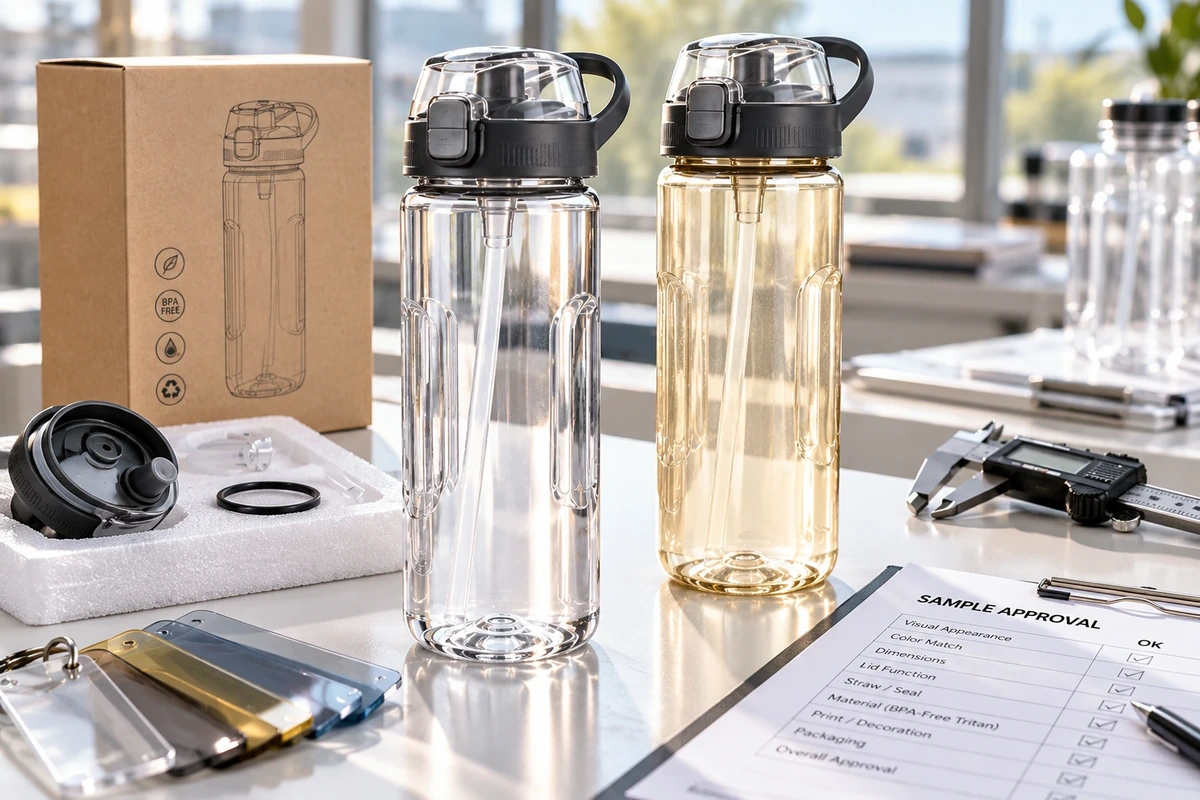
A supplier cannot give a useful OEM price when an RFQ only says “custom water bottle” and a quantity. Buyers get better answers when the request explains the product, the decoration, the packing and the delivery context in plain language. This guide turns a short message into a practical wholesale water bottle RFQ that a factory or manufacturer can answer without guessing.
- State the buying purpose, destination and required first-shipment window.
- List model, catalogue capacity and requested physical dimensions separately.
- Describe the exact body, lid, seal and custom-material questions.
1. Explain the commercial purpose before listing specifications
Start the RFQ with the buyer, selling channel and intended use. A distributor replenishing a retail assortment may need several colors and carton labels, while a company buying staff bottles may prioritize one logo and an easy reorder. Tell the supplier whether the request is for a stock model, private label, promotional campaign, marketplace launch or custom development. Add the target country or region and the date when the first shipment must be available. This does not guarantee a price or delivery promise, but it gives the manufacturer the context needed to ask useful follow-up questions. A conversational opening such as “We are comparing a 5,000-piece retail order for a European distributor” is more helpful than “Please send best price” because it sets a buying scenario without pretending that every detail is already fixed. Review model 2030 as a physical reference before approving this variant; confirm its current product record rather than assuming the same material or cap configuration.
2. Put model, capacity and physical dimensions in separate lines
The core of an RFQ should make it difficult to confuse one bottle with another. Give the model number if you have one, or attach a clear reference image and explain which features are essential. List the catalogue capacity in millilitres, then request the supplier's actual height, base diameter, lid projection and assembled weight for the quoted model. These details affect shelf fit, shipping, carrying comfort and packaging. XUYI model 2501 is listed as a 550ml plastic sports bottle; write that as a reference line rather than assuming the image proves the final dimensions. Ask the supplier to mark any value that still needs sample confirmation. If several capacities are acceptable, show them as separate quote lines so the buyer can compare the total order cost without mixing the options. Review model 2059 as a physical reference before approving this variant; confirm its current product record rather than assuming the same material or cap configuration. List XUYI model 2501 · 550ml plastic sports bottle as a catalogue reference at 550ml, then request the actual dimensions and sample confirmation in the RFQ.
3. Name the material direction and ask what is actually documented
Material questions should be specific without turning an RFQ into an unsupported certification claim. State whether the current catalogue direction is acceptable, whether the buyer wants a custom plastic material review, and which removable parts must be included in the quotation. Ask for the material of the body, lid, seal, straw or other parts for the exact model and request the applicable documentation for the destination market. XUYI model 2106 is listed as a 750ml kids plastic bottle with PC+PP in the catalogue; that is a product reference, not a blanket claim about every custom option. If the buyer wants Tritan, BPA-free or another resin direction, label it as a custom inquiry and ask for evidence covering the finished assembly. Do not ask a supplier to simply copy a compliance phrase into the product title. Use XUYI model 2106 · 750ml kids plastic bottle, listed at 750ml, to show how a quote should separate a catalogue SKU from custom material or decoration requests.
4. Describe color, logo and decoration as approval stages
An RFQ should tell the supplier what the brand needs to see before production. List the preferred body and lid colors, the acceptable color references, the logo files available, the approximate print area and the requested print method if known. Then ask for the artwork setup cost, proof format, physical sample requirement and any difference between one-color and multi-color decoration. If several colors or logos are needed, give the quantity split instead of only the total. A supplier may recommend a different print method for a curved surface, and the buyer should be able to compare that recommendation. Keep the request conversational: explain which colors are must-have, which are alternatives and who will sign the final proof. A logo shown on a flat computer mockup is not the same as an approved print on the actual bottle.
5. Make individual packing and master-carton data part of the price request
Packaging is a cost and operations decision, not a line to add after the bottle price. State whether each unit needs an OPP bag, color box, printed sleeve, barcode label, insert or another confirmed pack. Ask for units per master carton, outer carton dimensions, gross weight and any carton marking options. XUYI model 2305 is listed as a 1600ml large-capacity plastic water jug; a large format may require a different carton plan from a compact sports bottle, so the quote should not hide that assumption. Ask for a packing drawing or sample when the bottle will move through a warehouse, 3PL or retail distribution network. If the buyer needs mixed colors in one carton, say how the assortment should be counted and labeled. Comparable RFQs show packing details beside the unit price instead of treating them as an afterthought. Include XUYI model 2305 · 1600ml large-capacity plastic water jug, listed at 1600ml, as a separate packing line because a large-capacity format may need different carton assumptions.
6. Ask for a sample and a realistic approval sequence
A good RFQ tells the supplier what the buyer will approve and in what order. Ask for an unprinted sample when shape and handling are not yet confirmed, then a decorated proof when logo placement and color matter. Define who reviews the sample, what must be measured, which product facts need written confirmation and how changes will be recorded. Include the RFQ response date, the desired sample milestone and the first production window, but do not turn an estimate into a guaranteed lead time before the supplier confirms the model and quantity. The buyer should receive one numbered quotation, one approved sample reference and one artwork version that can be attached to the purchase order. That sequence reduces the chance that a sales image, a different lid or a revised color is treated as the approved product.
7. Request an itemized answer that you can compare and use
Finish the RFQ with a response table rather than an open request for a discount. Ask the supplier to return model, capacity, material, colors, logo method, sample cost, unit pricing by quantity, packing, carton data, Incoterm, shipping assumption, validity period and open questions in separate fields. Ask which values are fixed and which are subject to confirmation. When replies arrive, normalize the wording without changing the supplier's original assumptions. An itemized answer lets purchasing, finance, brand and logistics review the same quote. It also creates a clean bridge to a purchase order and makes a later reorder easier. If a supplier cannot answer a key line, record the gap and decide whether to clarify, sample or remove that option; do not fill the missing fact from a different model.
Wholesale Water Bottle RFQ Response Matrix
Keep every supplier response itemized so product, brand, logistics and finance review the same assumptions.
| RFQ line | What to request | Why it matters |
|---|---|---|
| Product identity | Model, reference image and catalogue capacity | Prevents the wrong SKU from entering the quote |
| Material scope | Body, lid, seals and custom-material questions | Separates facts from unsupported claims |
| Decoration | Colors, logo method, proof and quantity split | Makes branding cost comparable |
| Packing | Unit pack, units/carton, dimensions and weight | Supports warehouse and freight planning |
| Commercial terms | Quantity tiers, Incoterm, validity and open items | Creates a like-for-like comparison |
| Approval path | Sample stages, sign-off owner and change record | Protects the final purchase order |
Buyer decision criteria, not XUYI certification, published MOQ or guaranteed delivery times. Verify the exact model and market requirements.
Buyer checklist
Use these points when comparing a factory sample, artwork approval and purchase quotation.
- State the buying purpose, destination and required first-shipment window.
- List model, catalogue capacity and requested physical dimensions separately.
- Describe the exact body, lid, seal and custom-material questions.
- Give color splits, logo files, print area and proof expectations.
- Ask for individual packing, carton quantity, dimensions and weight.
- Separate stock, private-label and custom-development requirements.
- Request samples in a defined order before mass production approval.
- Ask suppliers to mark confirmed, estimated and open quotation fields.
- Compare itemized prices on the same quantity, packing and Incoterm basis.
- Attach the approved sample and artwork version to the purchase order.
Frequently asked questions
Can I request an OEM water bottle quote with only a reference photo?
You can start with a photo, but identify the intended capacity, use, quantity, decoration and destination. Ask the supplier to confirm the model and provide a complete sample before you compare or approve the final price.
Should capacity in an RFQ be written in ml or oz?
Use the factory or catalogue capacity in millilitres as the primary specification. If your market uses ounces, add a clearly marked approximate or size-class reference rather than presenting an unverified exact conversion.
What does a factory need to price custom plastic material?
The supplier needs the desired resin direction, finished assembly, components, quantity, color, use and destination market. Material and compliance evidence must be reviewed for the exact finished product.
How can I avoid receiving incomparable bottle quotations?
Use the same RFQ template for each supplier and require separate lines for model, capacity, decoration, packing, quantity tiers, carton data, Incoterm and open assumptions.
Need a quote for a specific model?
Send the intended model, material requirements, expected order quantity, artwork and destination market. We will review the options for that exact product rather than assume one specification fits every bottle.
Request a Plastic Bottle Quote →Related Buying Guides
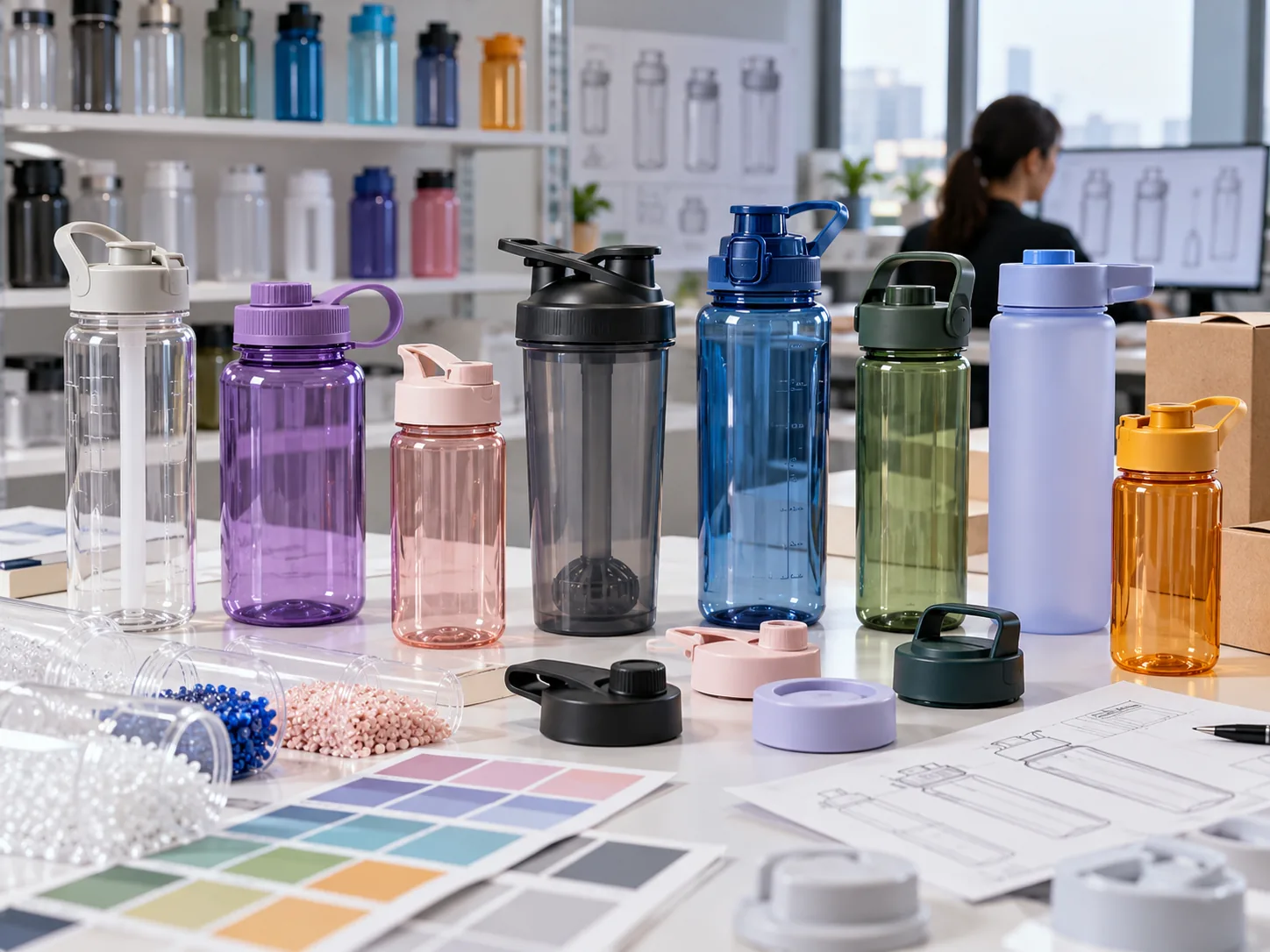 How Do You Verify a Plastic Water Bottle Factory Before a Bulk Order?
A practical factory-verification checklist for importers buying custom plastic water bottles: identity, samples, food-contact documents, quality systems and purchase terms.
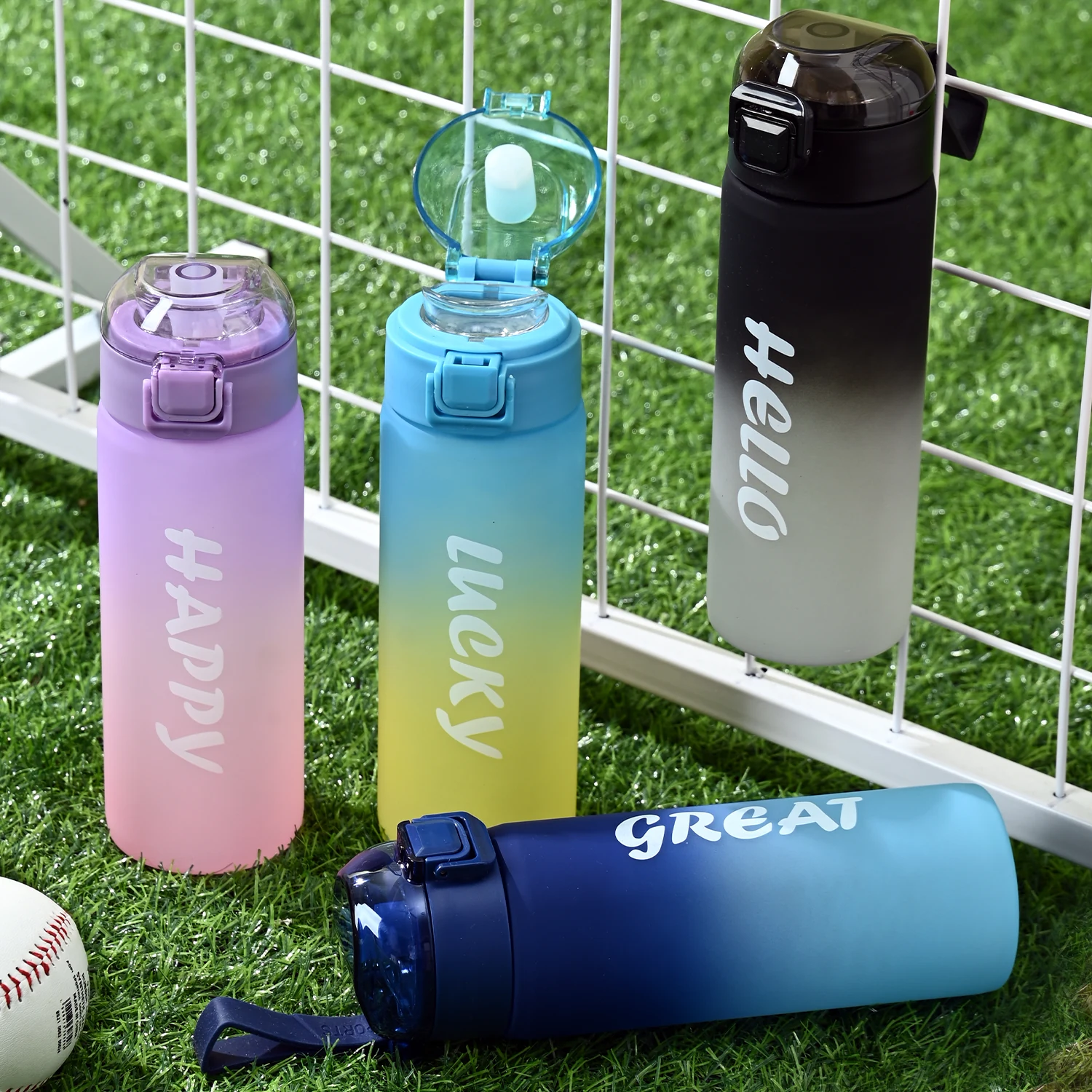 How Do You Compare OEM Water Bottle Factory Quotes Fairly?
A B2B quote-comparison worksheet for private-label plastic bottle buyers: specifications, decoration, case packs, Incoterms, samples, tooling and real landed-cost questions.
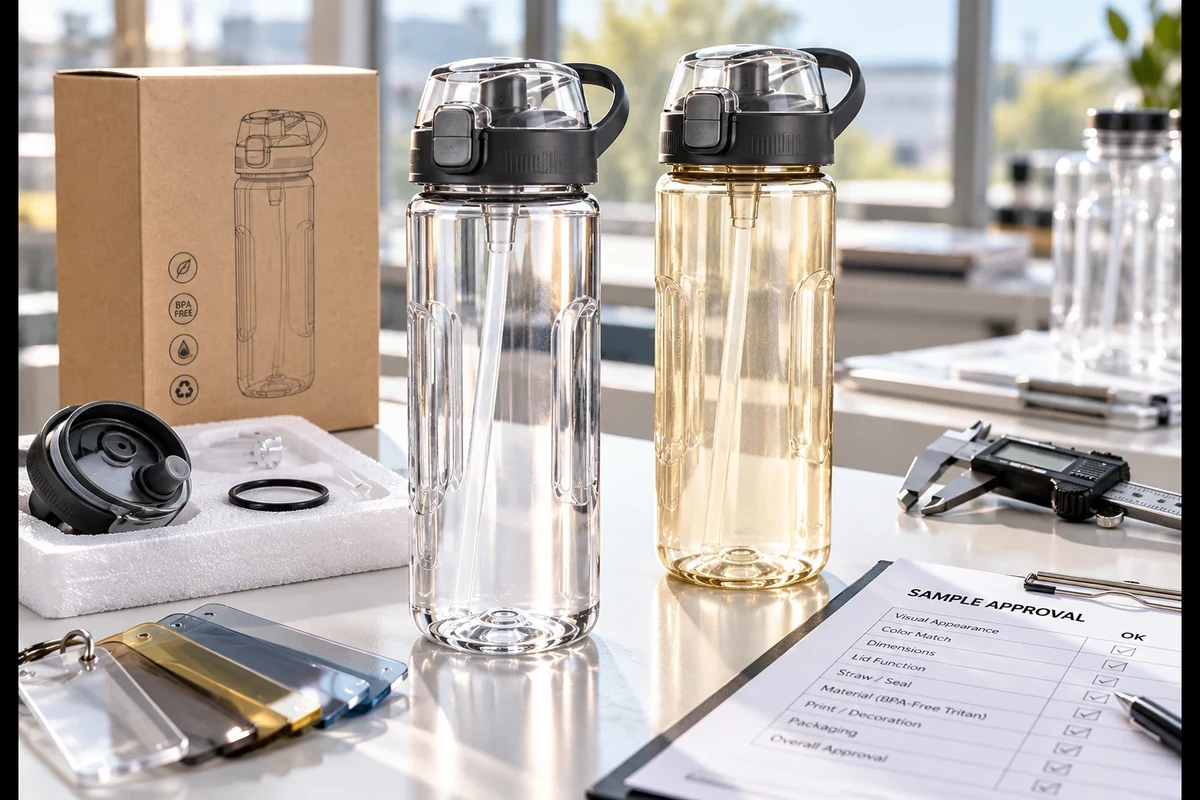 Water Bottle Sample Approval Checklist for Bulk Orders
Don't approve a bulk bottle order from photos alone. Learn how to check the body, lid, logo, packaging and golden sample before mass production.