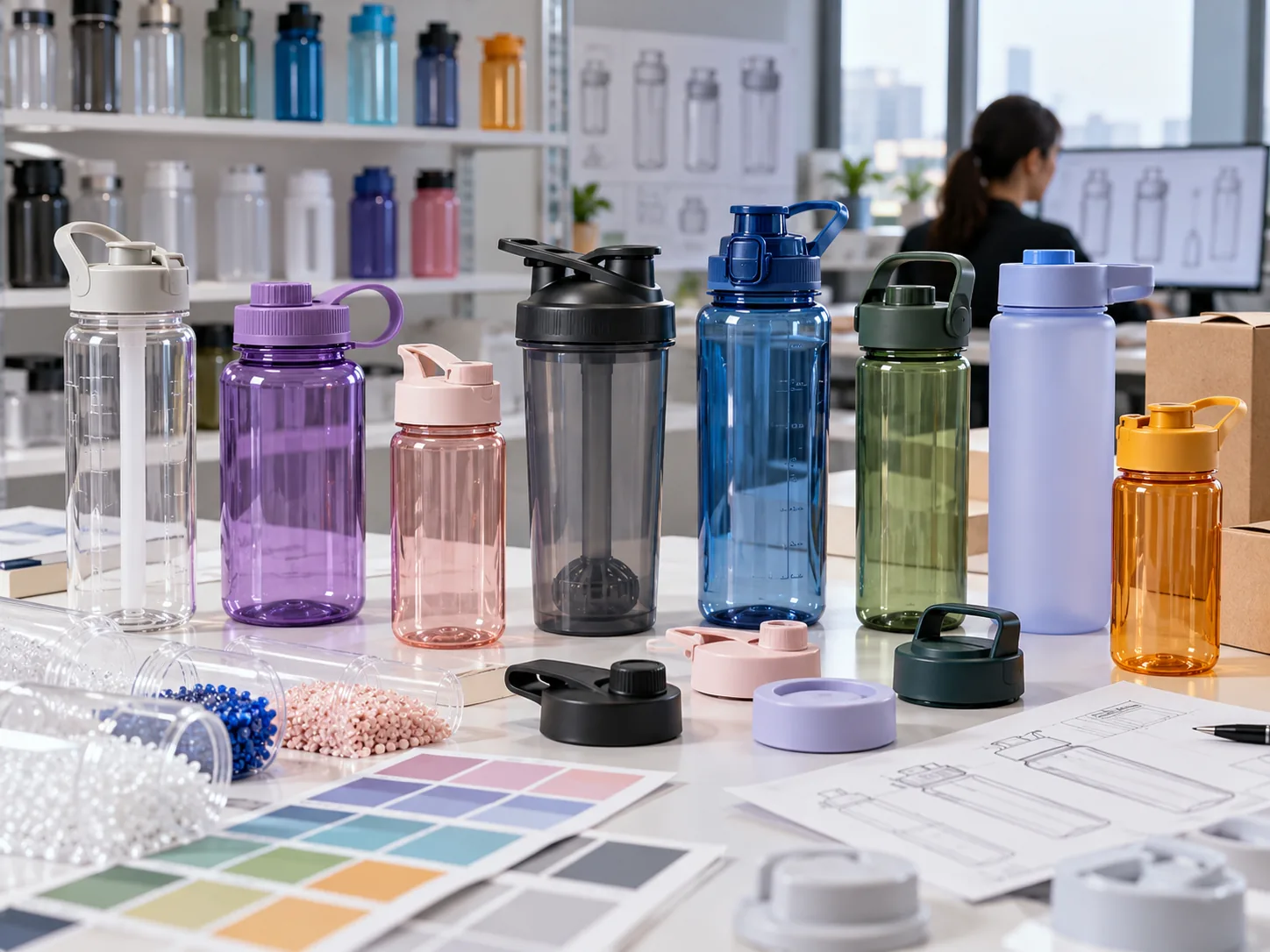
Before placing a wholesale water bottle order, a buyer needs more than a catalog photo, a factory address and a low unit price. Ask who actually makes the bottle, which components are produced or subcontracted, which exact materials and test reports cover your market, and who will approve the finished reference sample. A disciplined supplier check can be done remotely before travel, followed by independent verification when the risk or order value justifies it. This guide explains what evidence to request, what a supplier's answer does and does not prove, and how to turn the result into a purchase specification.
- Match factory, selling entity and beneficiary details before payment.
- List subcontracted production and decoration steps.
- Specify the exact bottle, lid, seal and straw materials.
Is the company you are speaking with the actual manufacturer?
Start with legal identity and operational scope, not an online badge. Ask for the trading entity's registered name, the manufacturing site address, the entity named on the quotation and commercial invoice, and an explanation of any subcontracted processes. A factory may produce some bottle bodies itself and procure lids, packaging, decoration or specialist processes from partners; that arrangement is not automatically wrong. What matters is naming who controls each operation and what changes require buyer approval. Request a recent dated facility overview, a live video walk-through where practical, and a named technical contact who can answer tooling and material questions. Cross-check the same company details on the proforma invoice and remittance instructions. Treat a photograph of machinery as a lead to investigate, not proof that the supplier owns that equipment.
Can the supplier identify the exact bottle materials and accessories?
A bottle is an assembly, not just one plastic resin. Ask for the model code, body resin, cap resin, gasket and straw materials where present, decoration method and intended use. Ask what is existing catalog stock, what is made to order and what requires a new mold. The right documentation depends on destination market and the exact finished configuration, including colorants and parts touching drinks. For example, compare a small sports bottle, a children's drinking configuration and a large jug only after the supplier specifies each lid and seal. An unverified claim of BPA-free, Tritan or FDA approval should not be promoted as a product fact. Request report identifiers, test scope and dates, and confirm whether samples represent the product actually being quoted. For a concrete adult sports-bottle reference, start with sports bottle model 2095 and request the exact cap and seal specification.
What sample evidence is more useful than beautiful product photos?
Request a sample against a written specification that states actual model, capacity, dimensions, materials, lid style, artwork, packing and expected use. Photograph its markings and inspect cap fit, sharp edges, visible contamination, finish defects and closure operation. If the program includes printing, approve real printed artwork and a color reference rather than a screen-only mockup. Agree in advance which dimensions and performance results are acceptance criteria; do not infer leakproof or dishwasher-safe performance just because a demonstration looked convincing. Retain a labeled approved sample, date, revision and any exceptions. The sample may not be representative of the final production lot without an agreed control process, so request a pre-shipment inspection and a change-notification rule. For a different drinking configuration, review kids bottle model 2106; ask for the target market's child-use and component requirements before making claims.
How do you check quality controls without believing every certificate?
Ask the supplier to explain incoming material checks, identification of resin batches, control of molds and molding settings, visual inspection, cap assembly checks, decoration curing, packing inspections and handling of rejects. An ISO certificate, if offered, needs its actual issuer, scope, site and validity checked; it never proves a particular water bottle meets food-contact rules. Ask what happens when a seal vendor changes or a mold cavity produces inconsistent parts. Decide whether your order requires independent sampling or laboratory testing and write who pays, how samples are selected, and what happens after a failed result. If you are sourcing multiple models, establish which checks are universal and which depend on each lid assembly.
Which water bottle models should you use to compare suppliers fairly?
Use three differently configured real models as a comparison framework: an everyday sports bottle, a children's model and a large-capacity jug. Compare material declarations, replacement parts, decoration zones, available carton data and destination-market documentation separately. These catalog examples establish possible design categories, not evidence of verified certifications or instant stock. Request that two suppliers quote the same model-equivalent specification and state every proposed substitution. If the price differs, first ask whether the material, lid, packaging, testing, order size or trade term differs. Do not compare a bottle-only ex-factory quote with a completed retail-packaged shipment price. Use large jug model 2305 to compare large-jug packing, handle and closure questions without assuming the same controls as a small bottle.
What should the first test purchase order include?
Before placing a pilot or first bulk purchase order, lock the model identifiers, quantities by variant, agreed artwork revision, carton packing, sample acceptance criteria, test responsibility, deposit milestones and delivery trade term with a named place. Request a schedule distinguishing sample approval, material procurement, molding or production, decoration, inspection and handover to the agreed carrier. Define a written change-control rule: no substitution of lid, resin, colorant, print location or box without approval. Include the receiving team's defect evidence requirements and a route for replacement parts or corrective action. A clear pilot can expose coordination risks without pretending to validate mass production by itself.
How do you decide whether a water bottle supplier is qualified?
Score evidence rather than presentation. Record whether legal identity is checked, exact component materials are known, the approved sample matches the offered configuration, market-specific documents are available or clearly pending, inspection terms are agreed, and a real person owns corrective actions. Classify each item as verified, unanswered or conditional; do not convert an unanswered question into a pass. If the order is for children's drinking products or a market with particular restrictions, involve a qualified compliance adviser for the applicable rules. A useful request to XUYI includes model code, estimated order quantity, customization scope, destination market and the evidence your purchasing team needs to see before supplier approval.
Supplier evidence matrix: request, proof and decision
Use a pass/conditional/pending evidence log to compare suppliers. This matrix is a procurement tool, not an independent certification of any XUYI product or site.
| Approval checkpoint | Evidence to obtain | What remains unresolved |
|---|---|---|
| Company and site | Legal name, invoice entity, facility address and named process contact | Subcontracted steps and beneficial ownership to verify |
| Material and components | Model-level body, lid, seal, straw and decoration bill of materials | Destination-market documentation for exact finished assembly |
| Approved sample | Dated physical sample, marked drawing, artwork and packaging | Difference between sample and production lots |
| Quality management | Incoming material checks, in-process controls and inspection instructions | Independence, scope and traceability of records |
| Commercial readiness | Itemized offer, trade term, shipment plan and change-approval terms | Unpriced options, tooling ownership or split-quantity constraints |
| Purchase decision | Signed risk register classifying items verified, conditional or missing | High-risk uncertainties requiring further inspection or expert advice |
Buyer decision criteria, not XUYI certification, published MOQ or guaranteed delivery times. Verify the exact model and market requirements.
Buyer checklist
- Match factory, selling entity and beneficiary details before payment.
- List subcontracted production and decoration steps.
- Specify the exact bottle, lid, seal and straw materials.
- Request applicable finished-configuration food-contact evidence for your market.
- Approve and label a representative physical sample.
- Record artwork version, color reference and packaging specification.
- Ask how material changes and manufacturing defects are controlled.
- Agree inspection sampling, defect disposition and retest responsibility.
- State Incoterm, named place and handover conditions in the purchase order.
- Keep a supplier risk log: verified, pending and rejected evidence.
Frequently asked questions
How can I verify a Chinese water bottle factory without visiting?
Check business and invoice identity, arrange a live facility walkthrough, request process-level records, verify sample consistency and use independent inspection or document checks where the order risk warrants it. Remote checks reduce uncertainty; they do not replace legal or on-site verification.
Is a factory video enough to prove food-contact compliance?
No. Images or videos cannot demonstrate finished-product compliance. Request evidence for the specific materials, components, intended use and destination market, and check the scope of any test report.
Should I reject a factory that outsources bottle lids or printing?
Not automatically. Ask the supplier to disclose which processes are outsourced, who controls specifications, and how changes, inspection and corrective actions are managed.
What should I ask before approving a first wholesale water bottle order?
Request one written specification with SKU variants, materials, approved sample, logo art, packaging, testing, inspection, price scope, trade term, schedule and change-control responsibilities.
Need a quote for a specific model?
Send the model, expected order quantity, logo requirements and destination market. XUYI can review confirmed material and customization options.
Request a Plastic Bottle Quote →