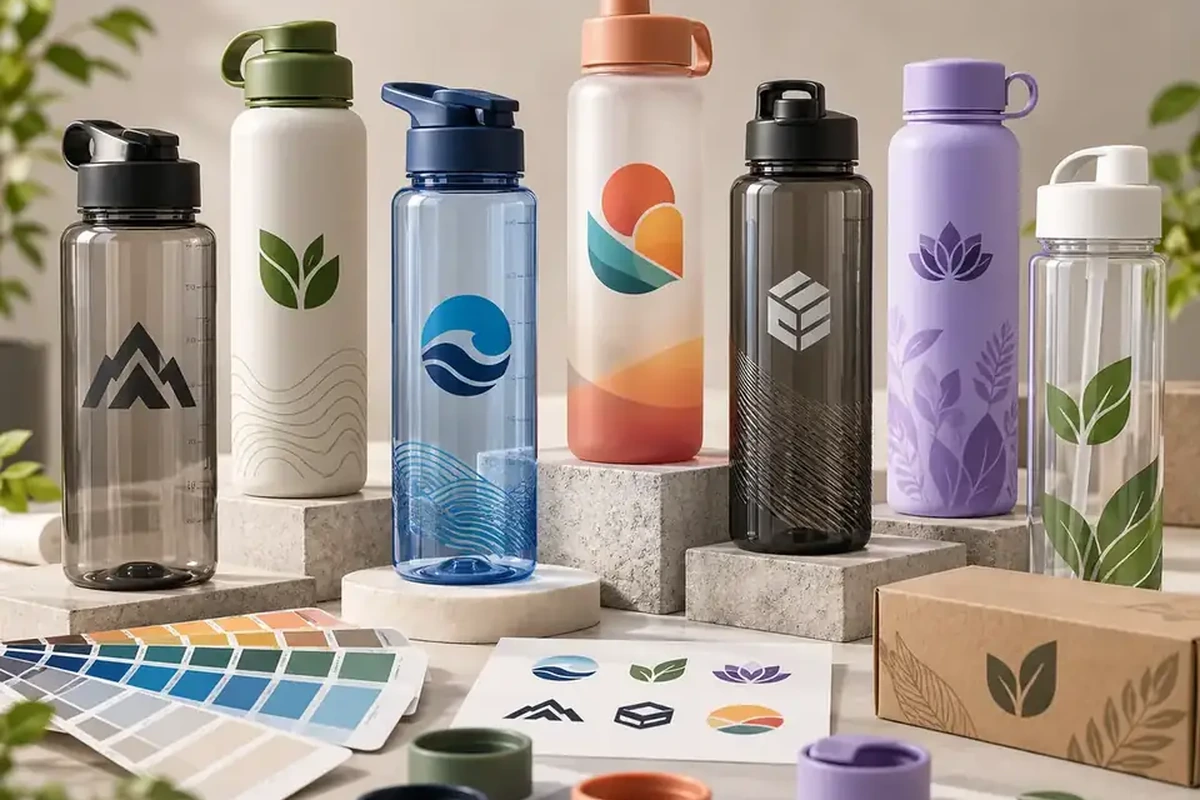
Start by describing where the bottle will be used and what the logo must communicate. A one-color mark on a smooth body, a multi-color event graphic, a small mark on a lid and a retail-ready package may need different decisions. Write down the recipient, expected handling, cleaning expectations, outdoor exposure, destination market and whether the bottle will be sold or distributed. Then identify the actual surfaces: body, lid, strap, sleeve, carton or label. The same artwork can look balanced on a 500ml-class bottle and crowded on a smaller panel. A useful RFQ asks the supplier to recommend a method for the exact model while keeping the buyer responsible for visual approval. This prevents a generic logo-available answer from being mistaken for a complete decoration specification.
- Define the audience, use case, destination and buying decision before requesting a quote.
- Record the exact model, listed capacity and component assumptions in the RFQ.
- Request a complete physical sample before approving decoration, closure or packing.
1. Start with the use case, surface and brand result
Start by describing where the bottle will be used and what the logo must communicate. A one-color mark on a smooth body, a multi-color event graphic, a small mark on a lid and a retail-ready package may need different decisions. Write down the recipient, expected handling, cleaning expectations, outdoor exposure, destination market and whether the bottle will be sold or distributed. Then identify the actual surfaces: body, lid, strap, sleeve, carton or label. The same artwork can look balanced on a 500ml-class bottle and crowded on a smaller panel. A useful RFQ asks the supplier to recommend a method for the exact model while keeping the buyer responsible for visual approval. This prevents a generic logo-available answer from being mistaken for a complete decoration specification. Review model 2030 as a physical reference before approving this variant; confirm its current product record rather than assuming the same material or cap configuration.
2. Compare decoration methods as a buyer decision
Ask the supplier to separate available decoration routes instead of putting every logo request into one vague line. Direct print may suit a defined artwork area, while a transfer, label or sleeve may be considered when the design needs more coverage; laser or another finish should be discussed only if the exact surface and material support it. Packaging print is a separate branding layer and is not proof that the bottle body can carry the same result. For each option, collect printable area, color limitations, setup or tooling charge, proof format, sample timing, minimum quantity and reorder reference. Do not assume that a method used on one material or shape transfers to another. The useful comparison is the complete approval path, not a list of technique names. Review model 2059 as a physical reference before approving this variant; confirm its current product record rather than assuming the same material or cap configuration.
3. Give artwork instructions that a factory can use
Send a clean artwork package with an editable vector file where available, a raster preview for visual comparison, intended colors, maximum print area, preferred orientation and the brand owner’s approval contact. Mark which colors are essential and which can be approximated only after a physical proof. Include a dimensioned placement sketch when the logo must align with a handle, seam, measurement mark or lid feature. Ask the supplier to return a proof showing the logo on the actual bottle outline, not only on a blank rectangle. If the artwork contains fine lines, small text, gradients or several colors, ask what can be held consistently at the proposed size. A dated artwork version and dated proof reduce the chance that a late email attachment becomes the untracked production file. XUYI model 2501 · 550ml plastic sports bottle is a catalogue reference; confirm the exact assembly on the sample.
4. Treat the decorated sample as the approval gate
A decorated sample should answer more than whether the logo is visible. Compare position, scale, orientation, edge quality, color appearance, contrast, adhesion or finish as appropriate to the method, and the way the logo sits beside the lid and other molded features. Handle and clean the sample according to the intended use where safe and relevant, while recording what was actually tested rather than promising a universal durability result. Check the assembled bottle because a cap or strap can change the visual center after production. Keep photos of the approved sample beside the model number, artwork version and packaging instruction. If a supplier offers only a digital mockup, mark the order as pending physical decoration approval.
5. Compare quote lines without hiding branding costs
Request a quote that separates bottle, decoration, artwork setup, sample, packaging print, labels, individual packing, master carton and freight assumptions. Ask whether the price changes with one color versus multiple colors, one position versus several, a split color order or revised artwork. A low unit price can be misleading when setup, proofing or printed packaging appears later as an unlisted charge. Put the quantity tier and destination on the same comparison sheet and record which items are estimates. If evaluating XUYI model 2501 at its listed 550ml capacity or model 2502 at 750ml, treat catalogue data as a reference and confirm the exact decoration area, component set and carton plan before comparing offers. XUYI model 2502 · 750ml plastic sports bottle is a catalogue reference; confirm the exact assembly on the sample.
6. Build quality checks around brand risk
Brand damage often comes from small inconsistencies that were never included in the inspection plan: an artwork version changed, a logo placed too close to a seam, a color judged under different light, a lid hiding part of the mark, or cartons mixed between variants. Write inspection points for model, capacity, body color, lid color, logo artwork version, position, orientation, visible defects, packing and carton labels. Define what evidence is required before release, such as first-unit photos, a production sample or a report tied to the purchase order. Keep material or compliance requests separate from decoration approval; a printed logo is not evidence that the finished assembly meets a destination requirement.
7. Choose the method that can survive a reorder
The best decoration method fits the current use case and can be repeated with controlled instructions. Save the final model, surface, artwork file name, color reference, placement dimensions, proof image, approved sample photos, packing instruction and change history. Ask what would force a new proof: body, material, lid, artwork, color split or market change. For a distributor or private-label buyer, this record is more valuable than a one-time promise because it lets the next team request the same result without guessing. If the program may expand to another capacity, approve each shape separately rather than assuming the logo scales automatically. A short documented approval path turns custom branding into a reliable B2B product line. XUYI model 2505 · 800ml plastic sports bottle is a catalogue reference; confirm the exact assembly on the sample.
Custom Bottle Branding and Logo Sourcing Decision Matrix
Use the same evidence categories for every supplier and confirm the exact model before purchase.
| Decision point | Evidence to collect | Owner |
|---|---|---|
| Buyer need | Use case, audience and destination | Program owner |
| Exact product | Model, capacity, components and measurements | Product buyer |
| Sample gate | Complete sample, proof and test notes | Quality lead |
| Commercial basis | Quantity, packing, carton and freight assumptions | Purchasing |
| Change control | Approved version and new-sample triggers | Procurement manager |
| Reorder readiness | Saved evidence and repeatable instruction | Operations |
Buyer decision criteria, not XUYI certification, published MOQ or guaranteed delivery times. Verify the exact model and market requirements.
Buyer checklist
Use these points when comparing a factory sample, artwork approval and purchase quotation.
- Define the audience, use case, destination and buying decision before requesting a quote.
- Record the exact model, listed capacity and component assumptions in the RFQ.
- Request a complete physical sample before approving decoration, closure or packing.
- Separate catalogue facts from custom material, compliance and performance inquiries.
- Compare quantity, color, logo, packing, carton and freight assumptions together.
- Keep artwork, sample photos and test notes with the model record.
- Define who approves changes to the body, lid, seal, logo and carton.
- Use a dated inspection or test record tied to the exact assembled sample.
- Do not turn an illustration or catalogue statement into a universal claim.
- Save the final decision so the next reorder can use the same evidence.
Frequently asked questions
What should a B2B buyer confirm before placing a bulk bottle order?
Confirm the exact model, listed capacity, material direction, components, decoration or closure, sample result, packing, destination assumptions and change-control record. Keep open items visible rather than guessing.
Can a supplier promise the same result on every model?
Do not assume that. Surface, geometry, material, lid, capacity and packing can change the result. Ask for model-specific evidence and approve the assembled sample.
How should a buyer compare two wholesale quotations?
Put the same model, quantity, customization, packing, carton data, freight assumptions and evidence requirements into one table. A lower unit price is not comparable if the scope differs.
What should be saved for a reorder?
Save the approved model, product facts, artwork or component version, sample photos, carton instruction, test notes, open issues and the rule for when a new approval is required.
Need a quote for a specific model?
Send the intended model, material requirements, expected order quantity, artwork and destination market. We will review the options for that exact product rather than assume one specification fits every bottle.
Request a Plastic Bottle Quote →Related Buying Guides
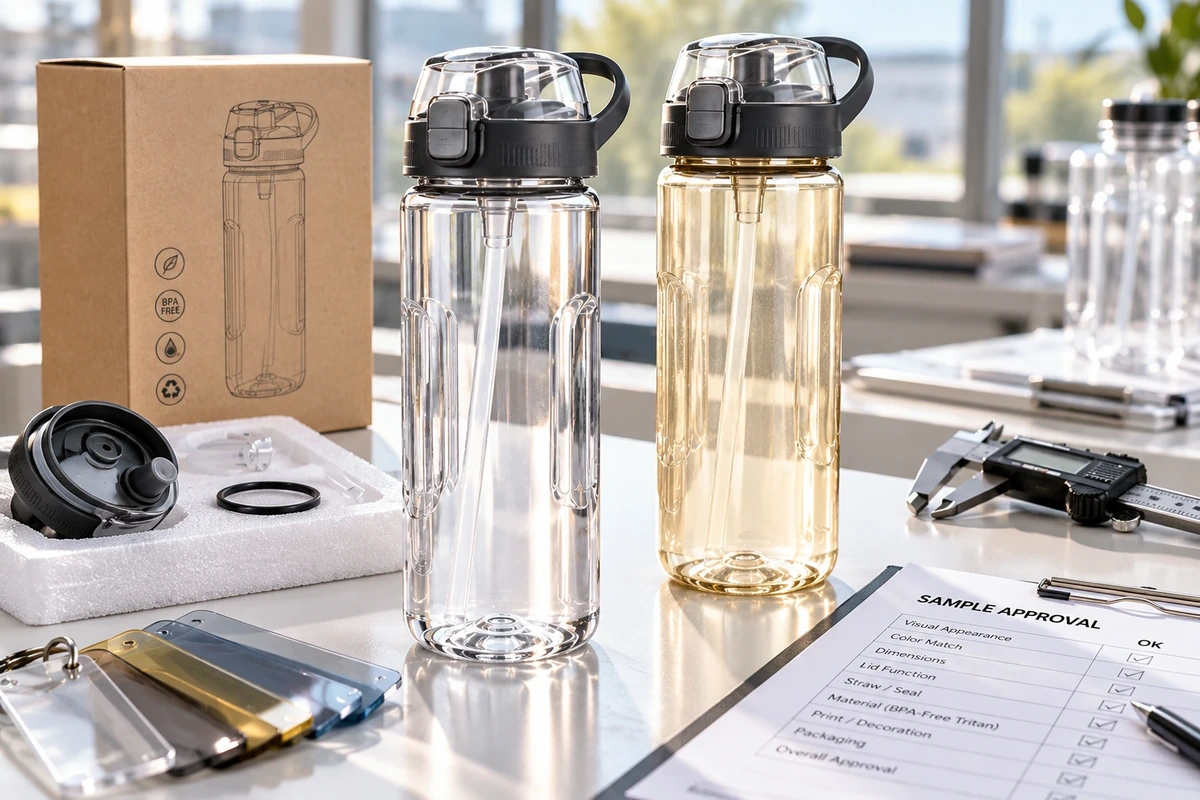 What Should a Wholesale Water Bottle RFQ Include Before You Ask for OEM Pricing?
A conversational B2B RFQ checklist for wholesale water bottles: define the model, capacity, material, colors, logo, packaging, destination and sample approval.
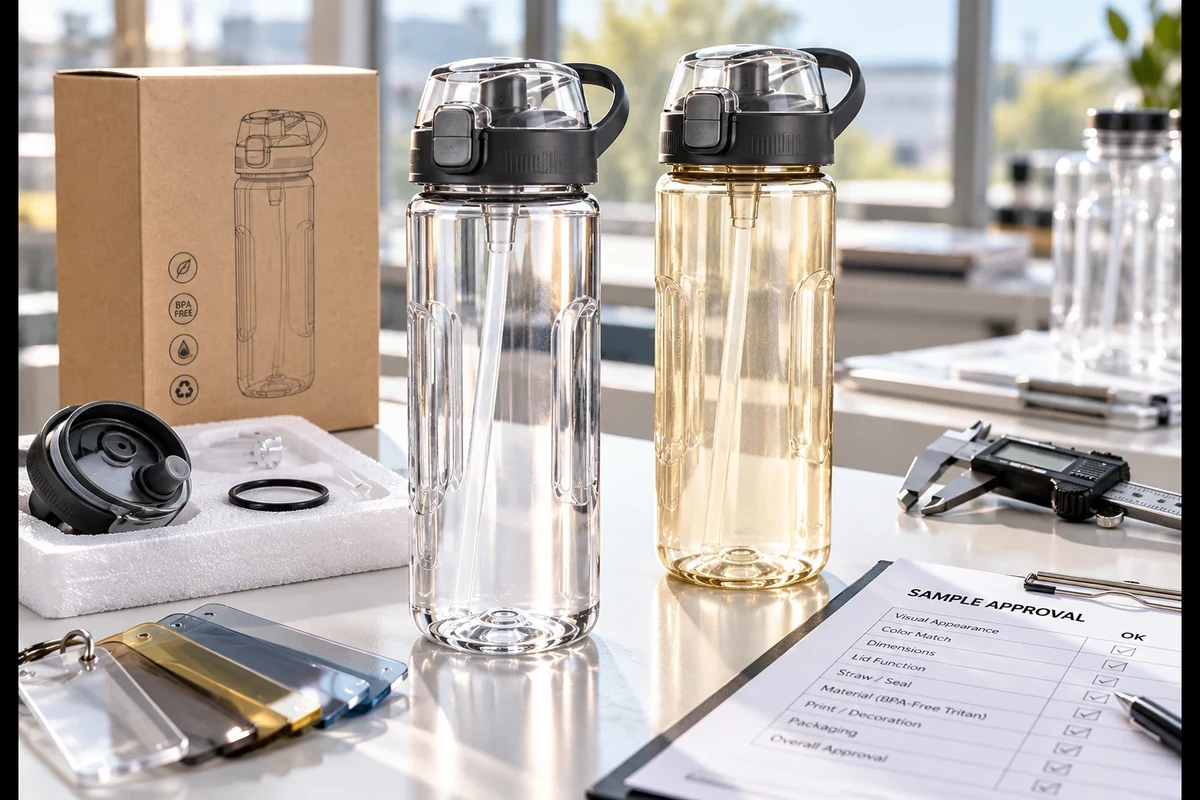 Water Bottle Sample Approval Checklist for Bulk Orders
Don't approve a bulk bottle order from photos alone. Learn how to check the body, lid, logo, packaging and golden sample before mass production.
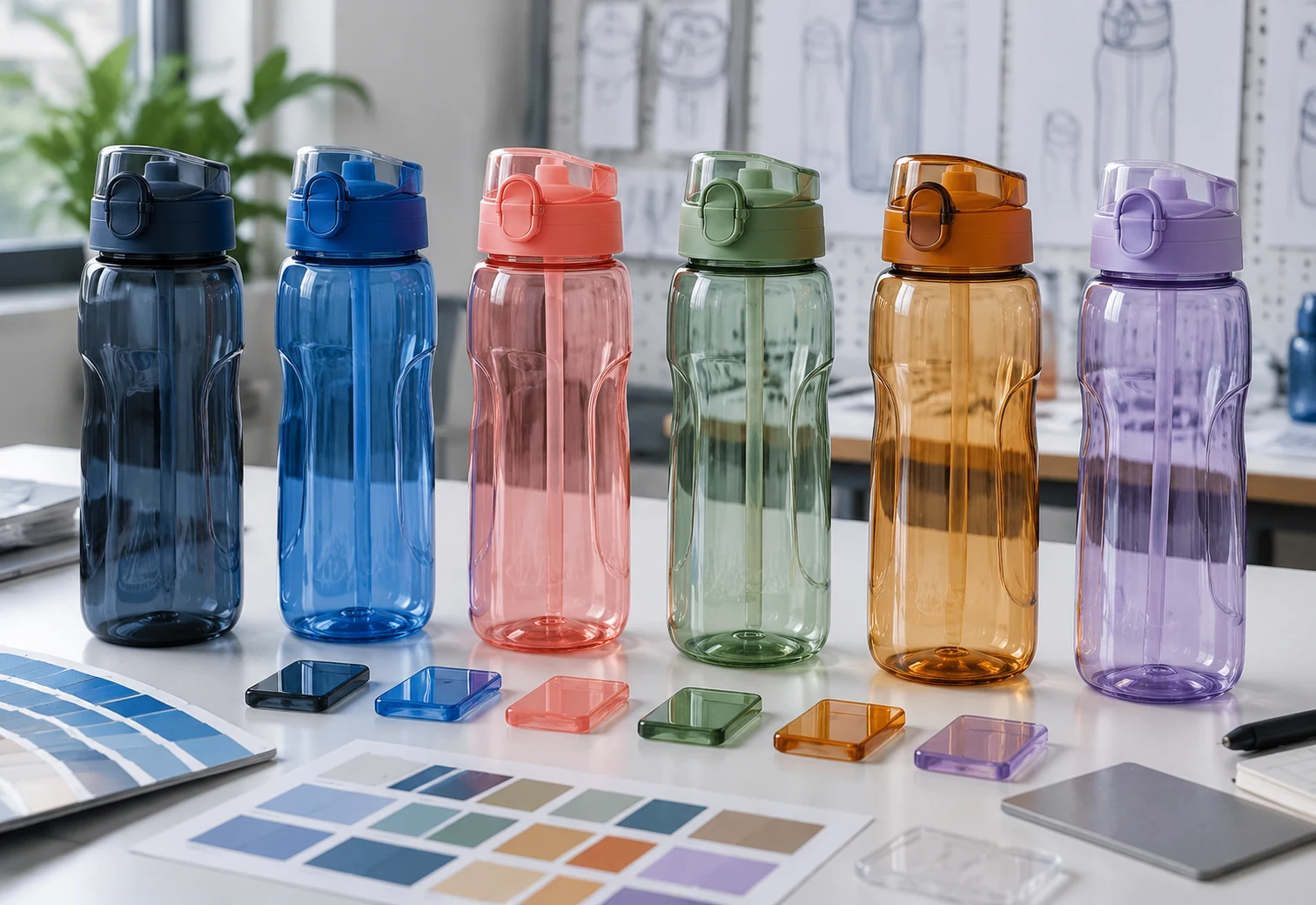 Custom Water Bottle Color Matching: Pantone, Samples and Production Control
Specify custom bottle colors more consistently with plastic color references, separate body and cap targets, physical samples, lighting and written tolerances.