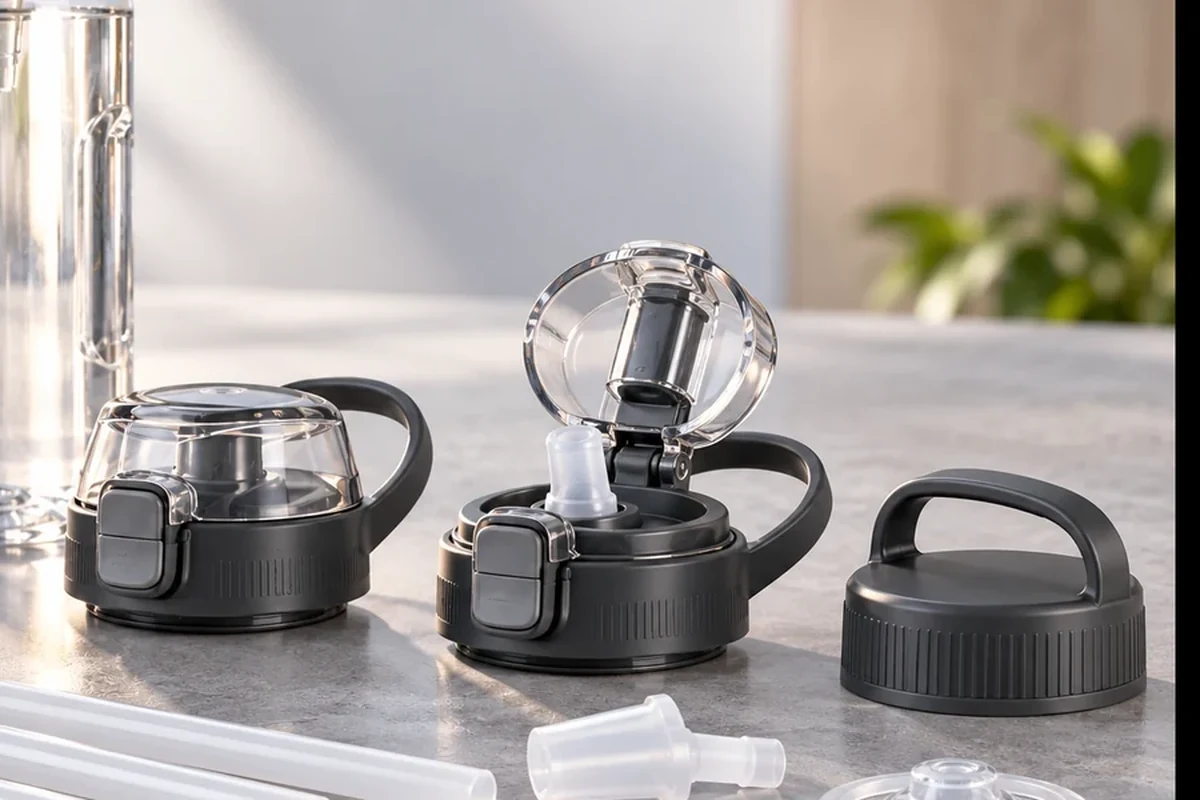
A supplier change notice does not tell a distributor whether the new bottle is commercially interchangeable. The change may affect the cap fit, seal, drinking opening, cleaning instructions, decoration area, packaging, food-contact documents or the way a customer uses the item. A disciplined review starts with the old approved configuration, isolates the changed component and then tests the complete assembled bottle. This guide gives distributors a practical sequence for deciding whether to approve, sample, relabel or pause a change before the replacement reaches a customer order.
- Save the last approved configuration before reviewing the new notice.
- Ask the supplier to name the changed part, reason, first lot and affected model.
- Map every body, lid, seal, straw, valve, handle and decoration component.
1. Freeze the old configuration before comparing the new one
Start by preserving the last configuration that the distributor actually sold or approved. Record the supplier model, listed capacity, bottle body, lid, seal, straw, valve, handle, decoration, package and the date of the last accepted sample. Save photos from several angles and identify any customer-facing claims or care instructions connected to the item. Without this baseline, the review becomes a visual conversation in which each person remembers a different version. The old record does not prove that every unit in stock is identical, but it gives the team a reference for the change notice. Ask the supplier to identify the exact affected part, the reason for the change, the first order or lot affected and whether the old part remains available. A vague notice such as updated lid is not enough to decide whether the distributor can use the same internal item code.
2. Map every component that touches the drink or user
A bottle change should be reviewed as an assembly rather than as a single replacement part. List the body, cap, gasket, straw, valve, mouthpiece, handle and any decoration or coating that can touch liquid, a user's mouth, a cleaning tool or the customer's packaging. Ask which part number or material specification changed and whether the mating dimensions changed with it. A new seal may alter opening force or leak behavior; a new straw may change cleaning access or the usable drinking path; a new lid may change the bottle height or the printable area. Use the supplier's change notice as a question list, not as final evidence. Product pages and catalogue references help identify the intended model, but the distributor still needs a representative assembled sample and component-level documentation for the actual revised configuration. Use Model 2400 · 380 ml / 12 oz class only as the named catalogue reference; the revised lid and assembly still need review.
3. Compare function under the buyer's real handling steps
The right test depends on how the distributor's customer uses the bottle, so write the steps before judging the result. Assemble and disassemble the revised sample, fill it using the buyer's normal process, close and reopen the lid, carry it in the expected orientation, inspect the seal and clean every removable part according to the proposed instructions. Record the water temperature, fill level, dwell time and pass or fail rule for any leak check; a generic word such as leakproof is not a reproducible method. Check that the revised part does not create a new pinch point, loose accessory, sharp edge, blocked opening or packing problem. If the destination market has specific food-contact or product-care requirements, treat the revised finished assembly as the item under review rather than transferring an old report without checking its scope.
4. Recheck dimensions, decoration and retail presentation
A component can be functionally acceptable and still create a commercial mismatch. Measure the revised assembled height, diameter, lid projection and any feature that affects a cup holder, shelf, bag, dispenser or carton. Compare the logo area, artwork position, body-to-lid color relationship and the way the bottle sits in individual packaging. If the revised lid hides a mark or changes the visual balance, the old artwork proof is no longer a complete approval. For a distributor, also compare the product photograph, barcode or internal item record, care copy, carton label and customer-facing description. Do not change a product identifier simply because a supplier sent a new photograph; first decide whether the sellable item is still the same product under the distributor's own system and market rules. Keep the decision and its evidence together. Compare the measured revised assembly with Model 2401 · 650 ml / 22 oz class; capacity alone does not prove component compatibility.
5. Match the new evidence to the destination market
A component change can change the evidence needed for a product claim. Request the current material description for the body, lid, straw, valve and seal, along with the intended use conditions and any document that the supplier says covers the revised finished article. A general factory certificate, an old body-only report or a material trade name does not automatically prove that the revised assembly meets a destination-market requirement. For the United States or European Union, ask which rules and conditions of use the supplier relied on, then have the responsible importer or compliance adviser verify applicability. Keep this review separate from visual approval: a sample can look correct while its documentation is incomplete, and a document can be genuine while describing a different revision. The safe decision is tied to the exact model, components and market.
6. Decide approve, approve with controls, or hold
Use a small decision record with three possible outcomes. Approve means the revised configuration, sample, documents, customer copy and internal item record are aligned. Approve with controls means the buyer accepts a defined change but adds a condition such as a new care instruction, separate lot identification, revised packing or a limited customer notice. Hold means the distributor cannot release the revised item until the missing sample, measurement, document or approval is supplied. Name the decision owner and record the effective order or lot boundary. Do not hide an unresolved issue in a general supplier score. If the revised part is available only for a future production run, keep current stock and revised stock traceable rather than mixing them under one informal label. This makes later complaint handling much more precise. Keep the evidence for Model 2470 · 800 ml / 28 oz class tied to the current revision and destination market before release.
7. Communicate the revision so the next order stays accurate
After the decision, update the controlled records that a future buyer will actually use: supplier model, internal variant code, approved sample photo, component list, artwork, care copy, packing, carton marks, customer description, evidence references and the date from which the revision applies. Tell sales, customer service, quality and warehouse teams what changed and what did not change. If the supplier later proposes another substitution, point back to the new baseline rather than reopening an old email chain. Keep an audit trail of the notice, questions, sample, test notes, documents and approval. A distributor does not need a complicated system; it needs one current record that prevents a changed lid or seal from being mistaken for the previously approved product. The purpose of change control is continuity with evidence, not paperwork for its own sake.
A component change must be checked against the complete finished assembly and its intended market
A component change must be checked against the complete finished assembly and its intended market. ISO sampling guidance can structure a buyer inspection plan, while food-contact authorities describe the need to consider the relevant components and conditions of use.
Practical next step: Ask for the changed part, revised assembly, exact material information and destination-market evidence. Keep the old and new revision records separate until the buyer has made a documented decision.
Primary references
- ISO 2859-1: sampling schemes indexed by acceptance quality limit ↗
- US FDA: food-contact material components ↗
- European Commission: Food Contact Materials legislation ↗
External regulations and standards are independent references, not product certification or proof of testing by XUYI. Confirm applicability and the latest rules for the exact product, destination and transaction date.
Component-change review: decide before release
A revised part is a new buyer decision when it can affect the assembled bottle, evidence, customer copy or packing.
| Review area | Record | Release decision |
|---|---|---|
| Baseline | Old sample, SKU, components and affected lots | What exactly is changing? |
| Assembly | Fit, seal, opening, cleaning and handling steps | Does the revised set work as tested? |
| Evidence | Materials, conditions, market and document scope | Does proof match the revision? |
| Presentation | Dimensions, artwork, colour, label and carton | Will the customer see a different item? |
| Stock | Current and revised lots, effective order and location | Can the versions be traced? |
| Approval | Owner, date, controls and next review | Approve, control or hold |
Buyer decision criteria, not XUYI certification, published MOQ or guaranteed delivery times. Verify the exact model and market requirements.
Buyer checklist
Use these points when comparing a factory sample, artwork approval and purchase quotation.
- Save the last approved configuration before reviewing the new notice.
- Ask the supplier to name the changed part, reason, first lot and affected model.
- Map every body, lid, seal, straw, valve, handle and decoration component.
- Test the revised assembled bottle using written buyer handling steps.
- Record fill level, temperature, orientation and pass criteria for functional checks.
- Recheck dimensions, artwork area, packing, labels and customer-facing copy.
- Request current evidence for the revised assembly and destination market.
- Choose approve, approve with controls or hold; do not leave a silent fourth option.
- Separate current and revised stock by lot or internal revision where necessary.
- Update the controlled reorder record and brief sales, warehouse and service teams.
Frequently asked questions
Does a new bottle lid require a new sample?
If the lid can affect fit, sealing, drinking, cleaning, dimensions, decoration or customer instructions, request a representative assembled sample and record the change before release.
Can an old food-contact report cover a revised bottle?
Not automatically. Check the document scope, body and component materials, intended use conditions, product revision and destination market.
What should a distributor do with current and revised stock?
Keep the lots traceable, record the effective revision and avoid mixing units when a component or customer-facing instruction differs.
What is the simplest change-control record?
Keep the supplier notice, old and new configuration, sample photos, test notes, document references, decision owner and effective order or lot in one controlled record.
Need a quote for a specific model?
Send the intended model, material requirements, expected order quantity, artwork and destination market. We will review the options for that exact product rather than assume one specification fits every bottle.
Request a Plastic Bottle Quote →Related Buying Guides
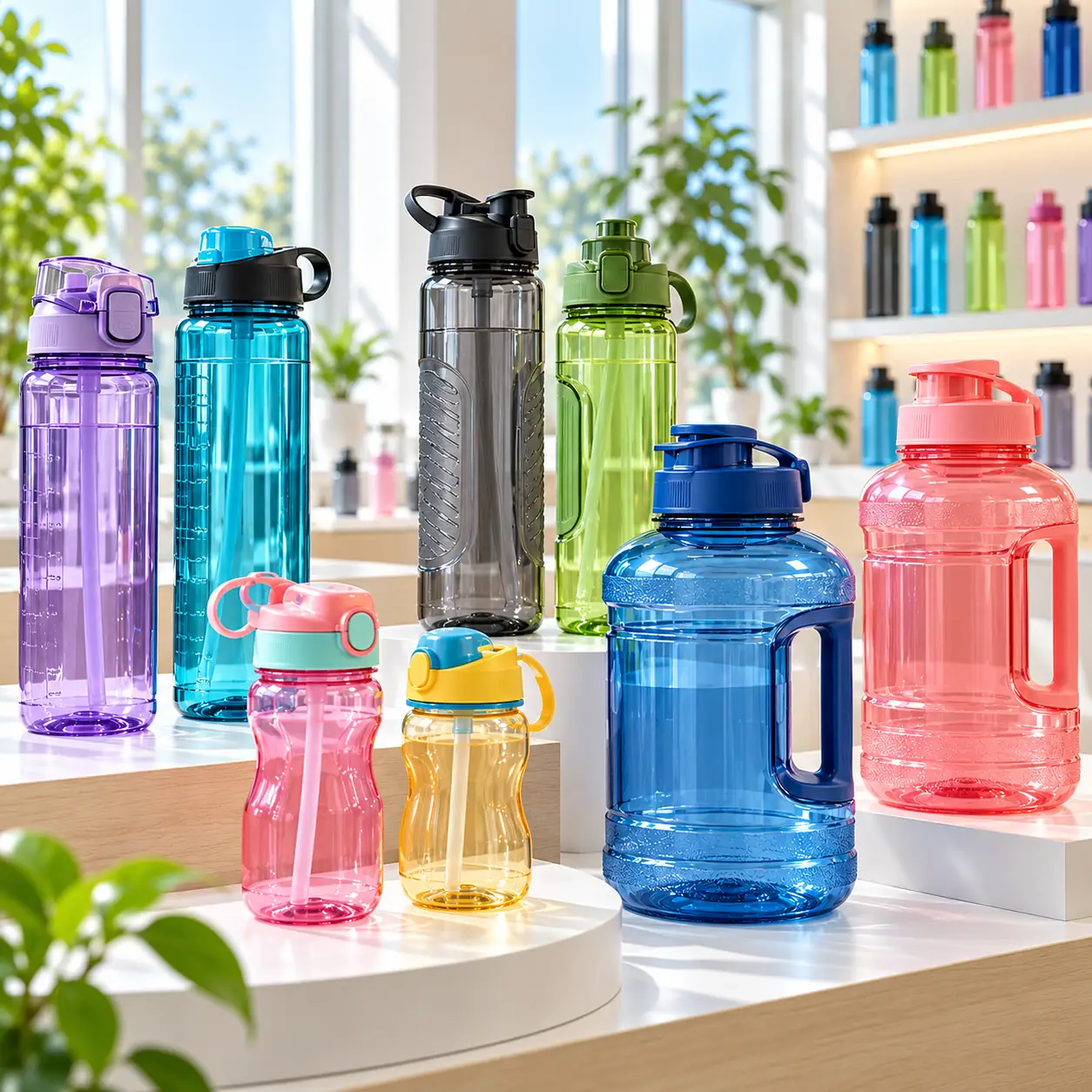 PC, Tritan, PP and PETG: Selecting Plastic Bottle Materials
A component-level material guide for reusable bottles, food-contact documents and BPA-free requests.
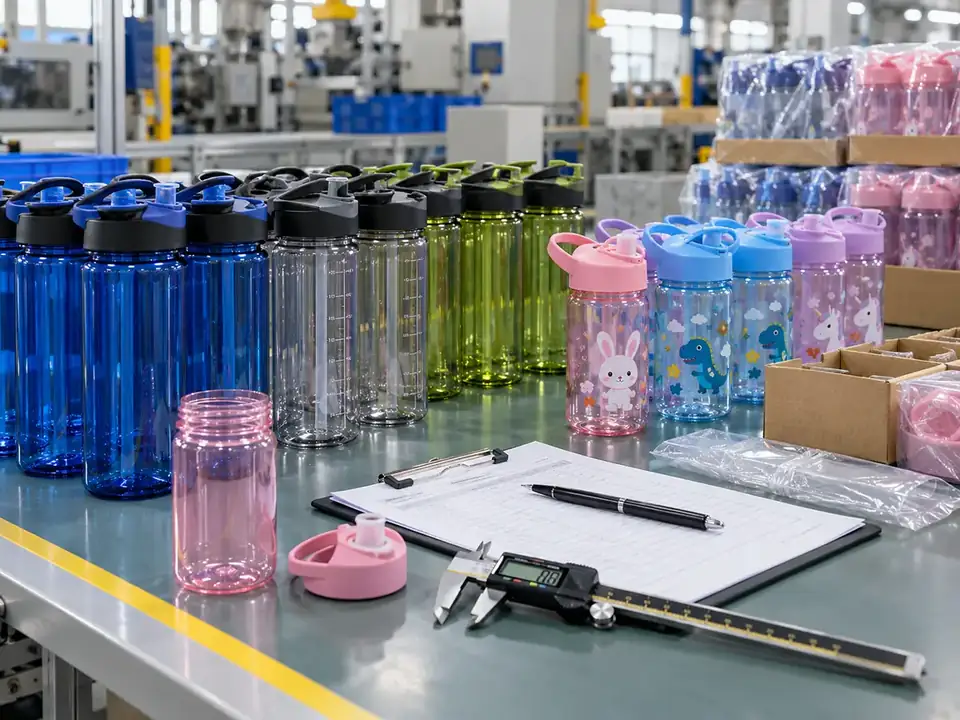 Plastic Water Bottle Quality Control Checklist for Bulk Orders
Build a model-specific QC plan covering visual finish, lid performance, materials, artwork, packing and pre-shipment inspection.
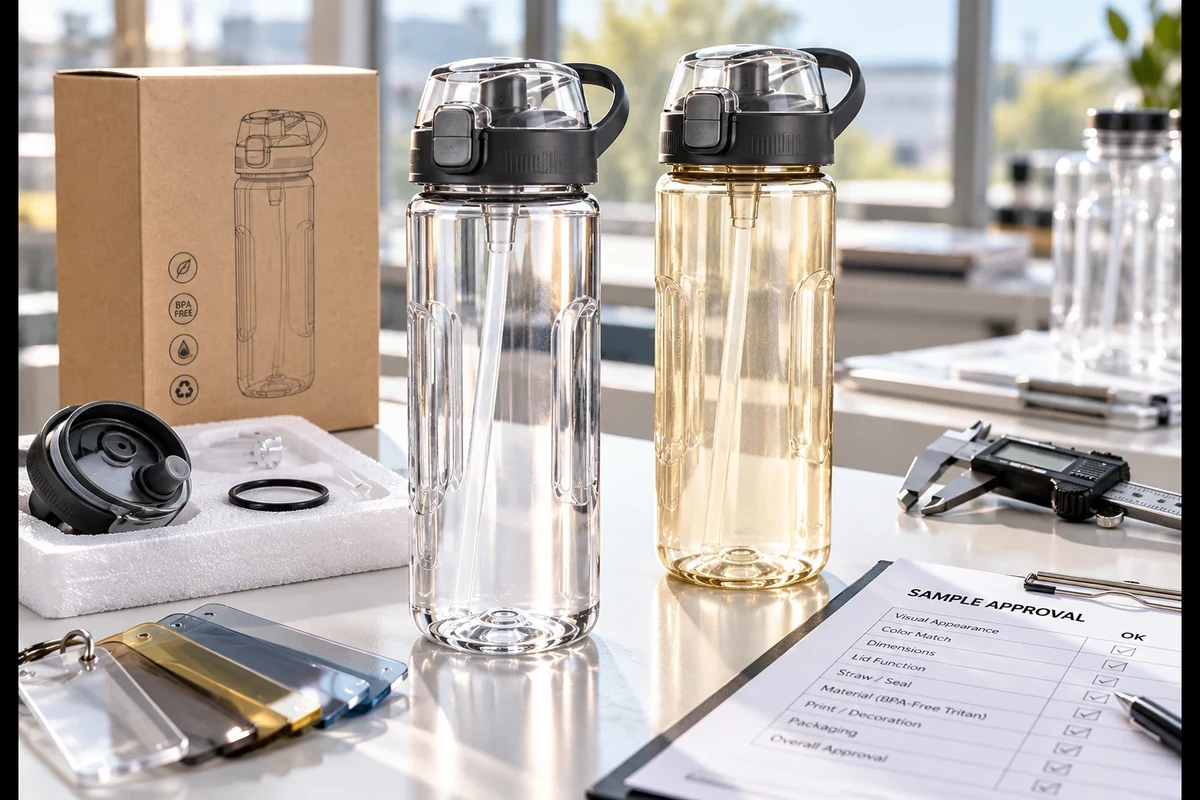 Water Bottle Sample Approval Checklist for Bulk Orders
Don't approve a bulk bottle order from photos alone. Learn how to check the body, lid, logo, packaging and golden sample before mass production.