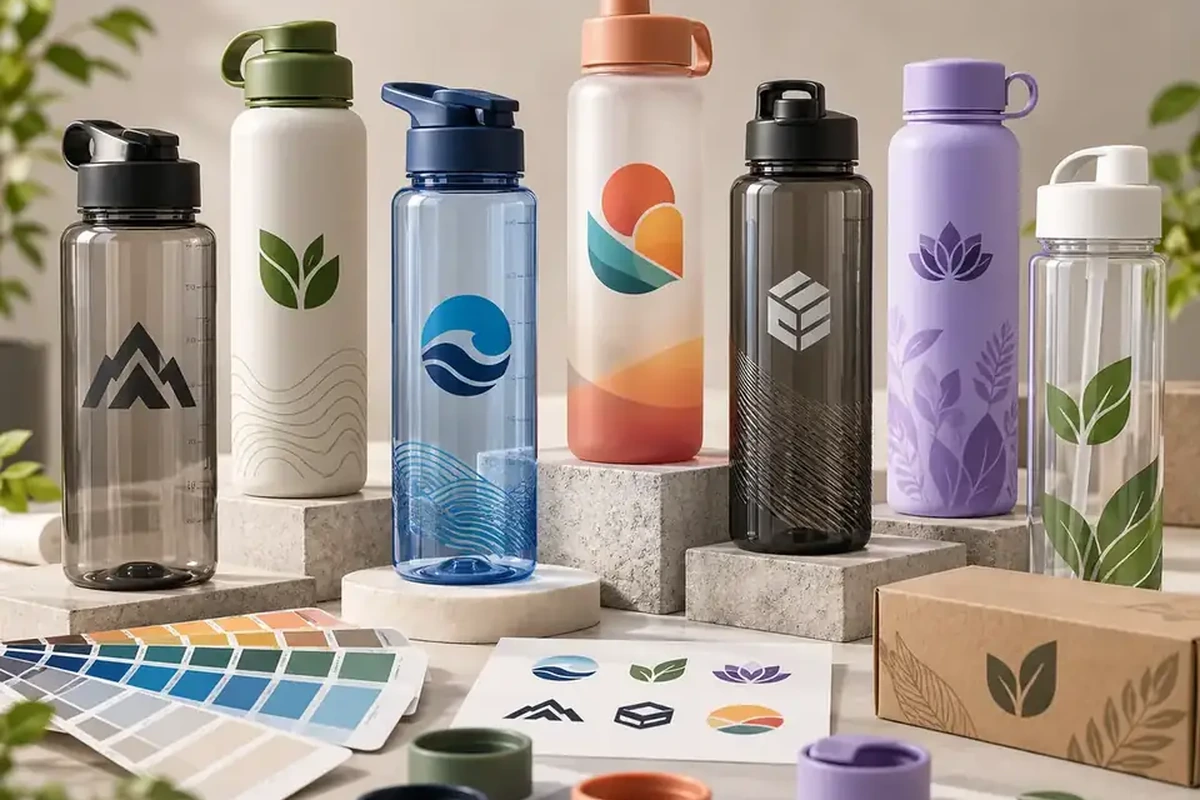
A custom bottle sample is not approved when the logo looks attractive in one photograph. Retail buyers need to confirm the material, color, decoration, closure and packing on the exact SKU that will be produced, then record what may and may not change.
- Visual and functional approval lists separated
- Model, capacity in ml and approximate US fl oz recorded
- Body, lid and seal materials confirmed for the exact SKU
Separate visual approval from functional approval
Begin the review with two lists. Visual approval covers body color, transparency, gradient, surface finish, logo position, artwork version and overall appearance. Functional approval covers capacity, dimensions, cap fit, seal, opening, cleaning access and packing. A sample can pass one list and fail the other: a color may be correct while the cap leaks, or a logo may be centered while the bottle does not fit the planned shelf tray. Record both results by model and SKU. Include capacity in ml and approximate US fl oz class so a retail team does not approve a photograph of one size and receive another. This separation makes the sample meeting shorter and gives the factory a clear action list instead of a general comment such as “please improve the quality.” Use model 2053 as a sample reference, then approve color, capacity, surface and decoration on the exact variant rather than on a catalog image.
Check material and color on the production surface
Color is judged through the material and surface, not in isolation. Confirm whether the body is clear, translucent, opaque, matte, glossy, gradient or textured, and record the exact material for the body, lid and soft parts. A color reference can guide the discussion, but the finished plastic surface, thickness and lighting may change how it appears. Compare the sample under the store, warehouse and normal indoor lighting that matter to the buyer. Check the cap and body together, because a matching color on two different plastics may not look identical. If the supplier changes resin, wall thickness, surface finish or color masterbatch, request a new color review. Keep the approved sample photo, color reference, material and model identity in one record rather than approving “blue bottle” as a permanent specification.
Approve logo position, size and decoration method with a real sample
The artwork review should show the logo on the same body shape, color, material and curvature as production. Confirm print area, distance from the cap and base, orientation, artwork version, number of colors, edge quality and whether the logo remains readable at the intended shelf distance. Ask which decoration method is included and what setup, proof or plate cost is separate. A logo that looks correct on a flat artwork proof can move or distort on a curved bottle, and a clear body can change the perceived color of an ink. Photograph the approved sample from the front, side and normal retail viewing distance. If there are multiple capacities or colors, mark whether the same artwork position is approved for all or whether each variant needs its own sample. Review model 2401 for the actual body curvature and cap relationship before fixing the logo position, print area and artwork version.
Inspect the closure, capacity and dimensions before calling the sample final
Retail presentation does not replace a product check. Measure or confirm the finished height, diameter, capacity, cap clearance and packed size for the exact sample. Open and close the cap using the intended hand motion, inspect the gasket or seal, check the drinking opening and record any removable parts that affect cleaning or replacement. Use the planned fill level and a simple inversion or movement check when leak performance matters, but write the condition and result instead of using an unqualified “leakproof” promise. If the sample is 550ml, record the approximate 18.6 US fl oz class; if it is 800ml, record about 27 US fl oz. These details affect shelf planning, carton data, customer copy and the reorder record.
Review packaging, labels and the retail receiving path
A decorated bottle can be approved and still arrive with scuffed print or mixed variants if packing is not part of the sample. Review the individual protection, cap position, divider or bag, inner-carton quantity, master-carton quantity, carton dimensions, barcode or model label and the way different colors are separated. Ask for a packed sample or packing photo that uses the same surface and decoration as the production item. Confirm that the carton mark identifies model, capacity, color, quantity and destination, and that the label matches the purchase order. For retail or 3PL receiving, define how one carton is counted and how a damaged unit or wrong color is recorded. Store the packaging approval with the visual sample, not in a separate conversation. Use model 2511 to confirm how the selected color and decoration should be protected inside the approved carton and retail receiving process.
Write the acceptance record with evidence and open points
The approval record should be easy for procurement, quality and the supplier to read months later. Include date, model, capacity in ml and approximate oz, body and lid materials, color reference, artwork file and version, decoration method, closure, dimensions, packing, photos, test condition, pass or fail result and open questions. Mark each item as approved, conditional or not checked. If a supplier says a change is minor, identify the changed component and decide whether it affects color, fit, decoration, packing or customer instructions. Do not delete the old sample record; link the new one to the change reason. This creates traceability for complaints and gives the next buyer a reliable starting point.
Lock the approved combination before mass production and reorders
The final approval should identify a complete combination rather than a generic product name. Lock model, capacity, body material, lid and seal, body color, cap color, artwork version, logo position, packing and destination. State that any change to resin, mold, cap, gasket, color, artwork or carton requires written review before production. On a reorder, compare the supplier confirmation with the previous record and request a new sample when a component or appearance changes. If a retail buyer wants an improvement, treat it as a controlled revision and record the new approval date. This prevents a visually similar but technically different bottle from entering the assortment under the same SKU and makes quality conversations evidence-based.
Reference points
A custom sample is evidence only when visual, functional and packing conditions are tied to the exact model, material, color and artwork version.
Practical next step: Ask the supplier to sign off the same SKU-level approval record that procurement will attach to the purchase order.
Primary references
The checklist supports buyer verification; it does not certify color tolerance, logo durability, material compliance or performance outside the recorded condition.
Custom bottle sample approval matrix
Review appearance, function and packing as one controlled SKU-level decision.
| Review area | What to confirm | Evidence to save |
|---|---|---|
| Material and color | Body, lid, seal, surface, color reference and lighting | Sample photo, material and color record |
| Logo | Artwork version, method, position, size and readability | Approved proof and front/side photos |
| Function | Capacity, dimensions, cap, seal, opening and test condition | Measurements and pass/fail notes |
| Packing | Protection, carton quantity, label and mixed-variant rule | Packed sample and carton map |
| Change control | What requires a new review or sample | Change notice and linked approval |
| Reorder | Same model, materials, color, artwork and packing | Supplier confirmation against prior record |
Buyer decision criteria, not XUYI certification, published MOQ or guaranteed delivery times. Verify the exact model and market requirements.
Buyer checklist
- Visual and functional approval lists separated
- Model, capacity in ml and approximate US fl oz recorded
- Body, lid and seal materials confirmed for the exact SKU
- Color reference and production surface compared under relevant lighting
- Logo artwork version, position, size and method approved
- Cap, seal, opening, dimensions and simple test condition checked
- Packed sample, carton quantity, labels and mixed-color rule reviewed
- Photos, measurements and open points saved with the approval record
- Change to resin, mold, cap, color, artwork or carton requires review
- Reorder confirmation compared with the approved model identity
Frequently asked questions
Is a logo photograph enough to approve a custom bottle?
No. The buyer should review the same body shape, material, color, surface and decoration method that will be produced, then check position, readability, closure, capacity and packing.
Why can the approved color look different in production?
Material, wall thickness, surface finish, lighting and color masterbatch can change the appearance. Record the material and production surface, compare under relevant light and request a new review after a material or finish change.
What should be included in a pre-production sample record?
Include model, ml and approximate oz, body and lid materials, colors, artwork version, logo method and position, closure, dimensions, packing, photos, test condition and open points.
Does a new color require a new sample?
If the color, surface, material, cap or decoration appearance changes the retail decision, treat it as a new approval combination. Do not carry a result from one variant into another without review.
Need a quote for a specific model?
Send the model, expected order quantity, logo requirements and destination market. XUYI can review confirmed material and customization options.
Request a Plastic Bottle Quote →