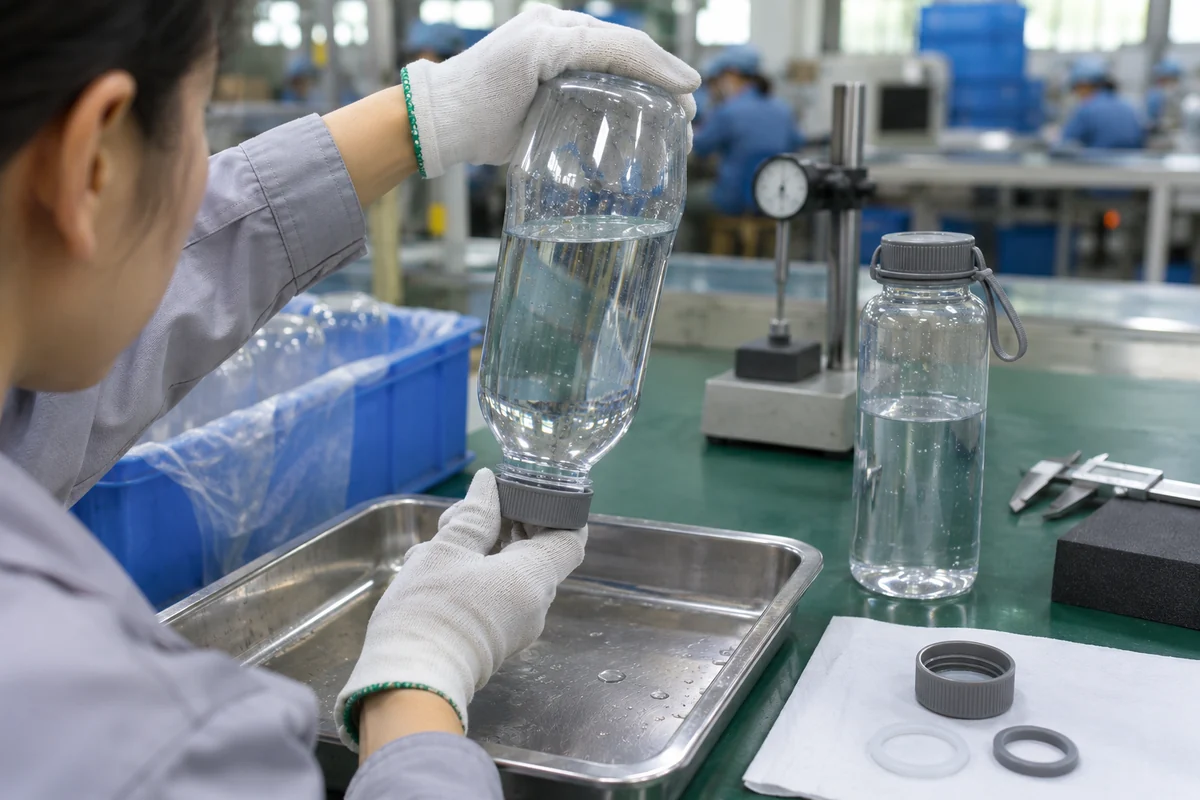
A sample approval is a production decision, not a quick photo reply. Buyers need to tie visual, functional and packing checks to the exact model, capacity, material, color, closure and artwork version before mass production starts.
- Sample record has date, model, supplier and revision
- Capacity recorded in ml and approximate US fl oz
- Body, lid, seal and accessory materials checked
Create one sample record before anyone says approved
Give the sample a traceable record with date, supplier, model or SKU, capacity in ml and approximate US fl oz, body and lid materials, color reference, closure, decoration file and version, packing assumption and destination. Add clear photos of the full bottle, lid, base, logo, label and packed condition. A short message such as looks good is not enough because it cannot show which size, material or artwork was reviewed. Mark each field as approved, conditional or still open. If the supplier sends multiple variants in one carton, label each one before inspection. This record becomes the reference for the purchase order, production sample and repeat order, so another team member can understand the decision without relying on a chat history. Review 2290 by the exact model, capacity, lid and color shown in the sample record; do not approve from a generic product name.
Check the body, lid, seal and accessories as separate components
Plastic drinkware is a system, not just a bottle body. Confirm the exact material for the body, lid, gasket, straw, valve, handle and any sleeve or accessory that contacts the drink or affects use. Compare the sample with the quoted construction for clarity, rigidity, surface, color, odor, edges and removable parts. Write down whether the sample uses the same resin, component supplier or finish intended for production, and ask for a new review if the factory proposes a substitution. A lid that looks similar may have a different thread, seal, height or spare-parts requirement. Separating components helps the buyer identify a change before it becomes a mass-production complaint.
Verify capacity, dimensions and closure performance under a stated condition
Record nominal capacity and, when relevant, usable fill level in ml and approximate US fl oz. Measure or confirm height, widest diameter, opening, cap height and packed size because those numbers affect shelves, cartons and customer descriptions. Open and close the exact lid using the expected movement; inspect thread engagement, gasket seating, valve or straw fit and removable parts. For a basic leak check, define fill level, orientation, time and movement, then record pass or fail. Do not turn an unrecorded demonstration into a lifetime leak guarantee. If the buyer changes the lid, seal, body thickness or fill level after approval, repeat the relevant check instead of carrying the old result forward. Use 2106 to record the actual capacity, opening, closure and packed dimensions that the buyer will compare with the quotation.
Approve logo, color and surface on the actual production shape
A flat artwork proof or catalog photograph cannot prove how a logo will look on a curved, transparent, frosted, matte or textured bottle. Review the artwork file and version, decoration method, print area, orientation, distance from the lid and base, size, color count, edge quality and readability from normal retail distance. Compare body and lid colors under the lighting used by the buyer, warehouse and store; note whether the color reference is a physical standard, Pantone reference or supplier sample. If the body, material, surface, color or decoration method changes, treat the result as a new approval combination. Save front, side and close-up photos with the record.
Inspect the packed sample and the receiving label, not only the empty bottle
Packaging affects product protection, counting and the customer's first impression. Review individual protection, lid position, divider, inner carton, master carton, carton quantity, label, barcode or model mark and the rule for mixed colors. Ask for a packed sample or clear photos of the exact decorated variant. Confirm that the carton identifies model, capacity, color and units in a way the warehouse or 3PL can count. Check whether the proposed carton dimensions and gross weight match the freight quote. A bottle can pass the visual sample check and still fail the receiving process if the wrong carton or label is used. Keep the photos, measurements, test condition and supplier confirmation beside the purchase order. This gives procurement and quality teams the same reference when the first production pieces arrive and prevents a general product name from replacing the approved configuration. For 502, photograph the decorated bottle inside the proposed carton and confirm the label can identify model, capacity, color and units at receiving.
Write a conditional approval when an open point remains
Not every sample review has to stop the project, but every open point must be visible. Separate approved items from conditional items such as a final color match, a revised logo file, a pending seal test, a carton label or a compliance document. Assign an owner and due date, and state whether production may start before closure. If the supplier says the change is minor, record which component changes and whether it affects capacity, fit, color, decoration, packing, cleaning instructions or customer claims. Do not delete the earlier record; link the new sample or revision to it. Conditional approval is safe only when the condition can be checked before the irreversible production step.
Lock the approved identity and compare the first production run against it
Before releasing mass production, repeat the approved identity in the purchase order: model, capacity, materials, colors, finish, closure, seal, logo file and method, position, packing, quantity per variant and destination. State what requires written approval and a new sample. When the first production sample arrives, compare it with the approved record using the same photos, measurements and basic checks. On a repeat order, ask the supplier to confirm that mold, resin, lid, gasket, color, decoration and packing remain unchanged. The purpose of approval is not to create paperwork; it is to stop a visually similar substitute from entering the same SKU and to give procurement evidence for a fair claim if the delivered product differs.
Reference points
A sample becomes useful production evidence only when the visual, functional and packing conditions are tied to the exact SKU and revision.
Practical next step: Attach the same sample record to the purchase order and ask the supplier to confirm it before mass production and every repeat order.
Primary references
The checklist supports buyer verification under recorded conditions; it does not certify performance outside those conditions.
Wholesale sample approval matrix
Keep visual, functional and packing evidence together so the approved sample can control production and reorders.
| Review area | What to confirm | Evidence to save |
|---|---|---|
| Identity | Model, ml, approximate oz and revision | Dated sample record and photos |
| Materials | Body, lid, seal and accessory construction | Material record and change note |
| Function | Closure, fill level, dimensions and test condition | Measurements and pass/fail result |
| Appearance | Color, surface, logo file, position and method | Proof, close-ups and normal-distance photo |
| Packing | Protection, carton quantity, label and mix rule | Packed sample and carton map |
| Release | Open points, owner, due date and change triggers | Signed approval and change log |
Buyer decision criteria, not XUYI certification, published MOQ or guaranteed delivery times. Verify the exact model and market requirements.
Buyer checklist
- Sample record has date, model, supplier and revision
- Capacity recorded in ml and approximate US fl oz
- Body, lid, seal and accessory materials checked
- Dimensions, opening and usable fill level confirmed
- Closure, gasket and basic leak condition recorded
- Color, surface and decoration viewed on the real shape
- Artwork version, position and method approved
- Packed sample, carton quantity and label inspected
- Open points have owner, due date and release rule
- First production or repeat order compared with the approved record
Frequently asked questions
Is a product photo enough to approve a wholesale bottle?
No. The buyer should approve the exact model, capacity, materials, color, closure, decoration and packing condition, with a record that another person can audit.
What should a basic leak check record?
Record the bottle and cap identity, fill level, orientation, time, movement or handling condition and result. It is evidence for that condition, not an automatic lifetime guarantee.
Does a new lid require a new sample?
Treat a new lid, thread, seal, valve or closure height as a new approval point because it can change fit, leak behavior, packed size, spare parts and customer use.
Can a buyer approve the color before the logo is applied?
A preliminary color check is possible, but final approval should use the same body material, surface, color, decoration and shape that will reach production.
Need a quote for a specific model?
Send the model, expected order quantity, logo requirements and destination market. XUYI can review confirmed material and customization options.
Request a Plastic Bottle Quote →