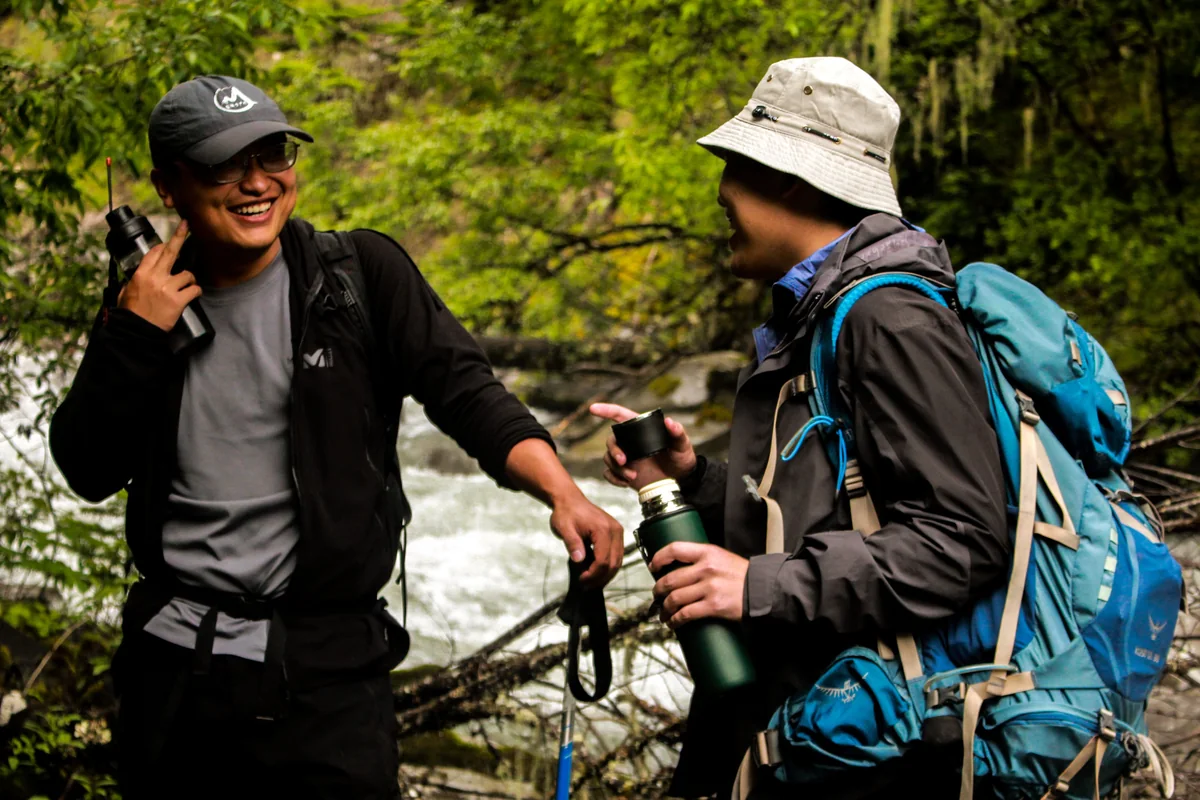
Outdoor shops serve customers with very different routes, pack designs and carrying habits. A bottle that looks right on a shelf can still be too tall for a side pocket, awkward to clean or difficult to replenish by color. Build assortment decisions around real pack tests and clearly defined customer use cases, not generic hydration claims. Compare 800 ml (27 fl oz) as a practical day-trip reference, then check the bottle, lid, carry point and backpack fit as one assembled product. For a wholesale or private-label program, request a factory quote that separates capacity, color, logo and packaging decisions.
- Define the customer groups and trip types each SKU is intended to serve.
- Compare supplier dimensions with real backpack side pockets and closures.
- Test samples in loaded packs and record the pack models checked.
1. Segment day hikers, trail guides and family day trips
An outdoor retailer rarely serves one single hydration use case. A local day hiker may want a compact bottle that fits a familiar pack pocket, while a trail guide may prefer a larger capacity for a longer shift and a family buyer may need several sizes for different users. Start by reviewing the shop's customer profile, local route length, seasonality and the packs or accessories already sold. Use those observations to create a small number of clear assortment roles rather than stocking many similar bottles without a reason. Record which role each proposed SKU serves, its expected shelf price and the customer question it answers. This makes the buying decision easier to explain to staff and reduces the risk of choosing capacity based only on a product photograph. Keep the assortment narrow until sales and fit feedback show which sizes deserve more shelf space. Use 800 ml (27 fl oz) as a reference only after checking the actual customer routine. Ask the plastic bottle factory for a complete assembled sample, dimensions, backpack-fit notes and customization options before fixing the retail range. Review model 2030 as a physical reference before approving this variant; confirm its current product record rather than assuming the same material or cap configuration.
2. Test capacity and dimensions against actual backpack pockets
Capacity does not tell a buyer whether a bottle will fit a backpack. Compare the supplier's stated height and base diameter with the side pockets, stretch panels and closures used by the shop's target customers. Test a complete sample in several representative packs, including a loaded pack rather than an empty display bag. Check whether the bottle can be inserted and removed while the pack is worn, whether the cap catches on fabric, and whether the base remains secure when the user bends or walks. An 800 ml, 1,000 ml or 1,200 ml model can serve different preferences, but none should be advertised as universally pack-compatible without specific testing. Keep the measurements and pack models in the sample approval record. If the sample only fits one pack type, state that limitation instead of making a broad claim. Review model 2059 as a physical reference before approving this variant; confirm its current product record rather than assuming the same material or cap configuration. Use XUYI model 2209 · 800 ml as a catalog reference only. Request the complete assembled sample and test its dimensions, cap handling and fit in the target backpack before approving the outdoor retail range.
3. Check the complete cap, seal and cleaning routine
Outdoor use exposes small design inconveniences quickly, so review the assembled bottle rather than evaluating the body alone. Confirm how the cap opens, whether any straw or insert is removable, how the seal is seated and what cleaning steps the supplier documents. Ask staff to fill, close, carry, open and clean the sample using the instructions supplied for that exact model. Inspect threads and contact points after repeated handling, and note any parts that could be misplaced during cleaning. Do not assume a cap is leakproof, one-handed, dishwasher-safe or suitable for hot liquids unless the supplier provides model-specific evidence. A retailer should describe the actual tested features and avoid turning a general outdoor lifestyle image into a performance claim. Save the approved sample and instructions so seasonal staff can answer questions consistently.
4. Keep material and outdoor-performance claims evidence-based
Outdoor customers often ask whether a bottle is BPA-free, impact-resistant, insulated, UV-resistant or suitable for a particular temperature. Those claims must be checked against documentation for the exact body, lid, seal and finished assembly. Do not infer material composition from appearance, a color name or a supplier's broad category description. If a buyer needs a specific declaration or test report, request it before creating shelf labels, product pages or packaging copy. Where the evidence is not available, describe only the verified product facts, such as the catalogued material or measured capacity, and leave the unsupported claim out. This protects the retailer from promising performance that has not been established for the selected model. Keep claims review separate from creative merchandising approval so attractive copy does not bypass technical checks. Use XUYI model 2212 · 1,000 ml as a catalog reference only. Request the complete assembled sample and test its dimensions, cap handling and fit in the target backpack before approving the outdoor retail range.
5. Build a useful shelf assortment and packaging plan
A good outdoor assortment should make comparison simple. Group products by capacity, carrying style and intended trip length, while keeping model numbers and colors visible to the staff who replenish the shelf. Review how each item is packed, whether individual packaging protects the finish, and whether carton quantities create awkward back-room stock. Ask for actual product and carton dimensions before allocating shelf space or planning a seasonal display. If the shop uses its own labels or private-label packaging, approve the wording and artwork against the verified product information. Avoid vague environmental, safety or performance symbols unless the supplier has supplied evidence that supports them. Record the approved packaging version and carton count so a later order does not arrive with an unreviewed presentation.
6. Compare landed cost and seasonal inventory exposure
Compare quotations only when the model, capacity, color mix, packaging, quantity and destination are aligned. Separate the unit price from logo or label charges, cartons, freight, insurance, duties and local handling. Ask the supplier to confirm carton quantity and outer dimensions so the buyer can estimate storage and shipping requirements. Then compare the full landed cost with the shop's planned retail price and margin, not just the factory price. Outdoor demand can be seasonal and weather-sensitive, so avoid committing all available budget to one large opening order before seeing sell-through. Use a smaller tested assortment, a realistic replenishment window and a reserve for best-selling variants. Revisit the forecast when local season dates or customer demand change. Use XUYI model 2517 · 1,200 ml as a catalog reference only. Request the complete assembled sample and test its dimensions, cap handling and fit in the target backpack before approving the outdoor retail range.
7. Reorder by sell-through, returns and pack-fit feedback
After launch, record sales by model and color, customer questions about fit, returns and any recurring cleaning or closure complaints. Ask shop staff which packs customers use most often and whether the selected capacities match those packs. Keep the approved sample and supplier documents linked to each SKU so a later reorder can be compared with the original. When a color or model changes, request a new sample rather than assuming the previous approval covers it. Reorder when the remaining stock and confirmed lead time justify it, and keep slow-moving variants out of the next forecast. This creates a repeatable category review instead of buying again from memory. Use the same feedback loop for online product descriptions so customer expectations match the product actually supplied.
Outdoor Retail Bottle Assortment Approval Matrix
A sample and a written record should support every capacity, fit, material and commercial decision.
| Buying question | Evidence to collect | Retail sign-off |
|---|---|---|
| Customer use case | Shop customer profile and trip type | Approve assortment role |
| Pack compatibility | Bottle measurements and loaded-pack test | Approve tested fit only |
| Cap and cleaning | Complete sample and care instructions | Approve handling routine |
| Material claims | Component details and supplier documents | Approve supported wording |
| Shelf and carton plan | Product photos, dimensions and carton data | Approve space allocation |
| Seasonal reorder | Sell-through, returns and confirmed lead time | Approve reorder quantity |
Buyer decision criteria, not XUYI certification, published MOQ or guaranteed delivery times. Verify the exact model and market requirements.
Buyer checklist
Use these points when comparing a factory sample, artwork approval and purchase quotation.
- Define the customer groups and trip types each SKU is intended to serve.
- Compare supplier dimensions with real backpack side pockets and closures.
- Test samples in loaded packs and record the pack models checked.
- Review cap opening, seal seating, removable parts and cleaning instructions.
- Request evidence before making material, safety or outdoor-performance claims.
- Group shelf stock by clear capacity and model identifiers.
- Confirm individual packaging and carton dimensions before ordering.
- Compare equivalent landed cost, not only the factory unit price.
- Track sales, returns and customer pack-fit feedback by SKU.
- Reorder only after checking stock, lead time and seasonal demand.
Frequently asked questions
Is an 800 ml or 1,000 ml bottle automatically suitable for hiking backpacks?
No. Pack pocket dimensions and closures differ. Test the complete sample in the packs your customers actually use before describing a fit.
Can an outdoor retailer advertise a bottle as impact-resistant or leakproof?
Only when the supplier provides reliable evidence for the exact assembled model and the claim matches the tested conditions. Do not infer performance from the category name.
Should a shop stock only large-capacity bottles?
Not necessarily. Build a small assortment around observed customer types and pack sizes, then use sales and return data to adjust the capacity mix.
Does the cover photograph show an XUYI model or outdoor retailer?
No. It is an independently licensed Pexels editorial photograph of hikers with bottles and backpacks. It is not an XUYI product test, customer or retail partnership.
Need a quote for a specific model?
Send the intended model, material requirements, expected order quantity, artwork and destination market. We will review the options for that exact product rather than assume one specification fits every bottle.
Request a Plastic Bottle Quote →Related Buying Guides
 What Should Bicycle Shops Check Before Buying Water Bottles for Retail?
Bicycle Store Bottle Merchandising: a practical B2B buying guide covering correct bottle samples, allocation, branding, delivered costs, inspection and reorders.
 How Should Outdoor Tour Operators Buy Reusable Water Bottles for Group Activities?
Outdoor tour and adventure group bottle sourcing: user scenarios, carrying formats, verified materials, guide distribution, cleaning policies, group packing, contingency spares and replenishment.
 How Can Airport and Rail-Station Shops Source Reusable Water Bottles Wholesale?
Travel retail reusable water bottle wholesale: terminal assortment, sample review, packaging labels, shelf fit, case packs, margin, compliance and reorders.