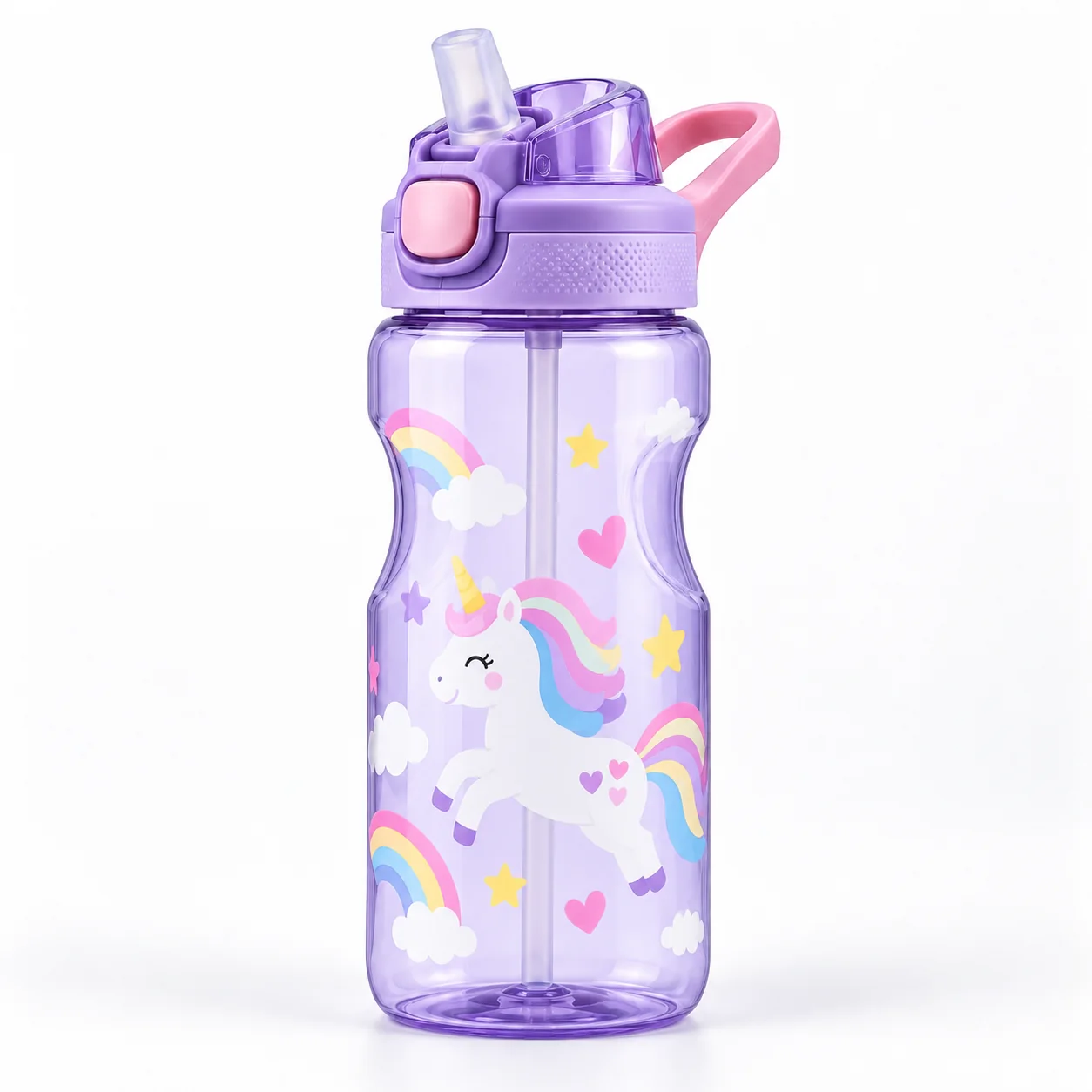
School supply distributors and institutional buyers have a different sourcing problem from ordinary corporate giveaway purchasers. Students must be able to open, carry, clean and identify their bottles; teachers and caregivers need usable instructions; procurement officers need evidence appropriate to the destination market and intended age group. The product should be selected through a written specification and observed physical sample, not a generalized claim that every colorful catalog bottle is child-safe. This article sets out a practical due-diligence and logistics plan without asserting any specific XUYI model has been certified for a particular age group or jurisdiction.
- Identify student age groups and actual school-use environment.
- Approve exact body, closure, seal and removable components.
- Review destination- and age-appropriate requirements with qualified parties.
How do age group and school use change the buying specification?
Start with the actual users and supervision environment: younger pupils, older students, sports club attendees or staff. Establish the school's requirements for capacity, carried weight when filled, ease of opening, refill station clearance, classroom storage and the ability to recognize an individual bottle. A body size that works for an adult office worker may be impractical for a younger child, while a straw arrangement can introduce extra cleaning steps. Create separate specifications where grades or school systems have materially different needs. Never describe an unverified catalog model as universally age-safe. Consult the applicable regulations and institutional policies for the actual destination, rather than using the supplier's marketing category as a legal determination. For a catalog starting point, kids bottle model 2106 is listed as a kids-format model, but suitability and age-market evidence must be checked for the actual school contract.
Which components and foreseeable use conditions need review?
Obtain a precise model and bill of materials covering body, cap, spout, any straw, seals, handles and detachable components. Inspect sample fit and retention under realistic opening, carrying and dropping scenarios appropriate to the school's own risk assessment. Ask whether small removable components are present and how their use is addressed for the intended age range. Require evidence from the relevant tested configuration for material, mechanical or other regulated requirements where applicable; a generic resin label is not enough to establish compliance. Do not replace institutional safety reviews with an unsupported claim that a product is '100% safe', non-toxic or unbreakable. Keep dated sample and material-revision records for supplier accountability.
How can children and school staff actually clean the selected bottle?
Ask the product team and school operations to examine whether hands can reach the interior surfaces, whether seals or straws are removable, and whether pieces are likely to be lost. Obtain the manufacturer's verified cleaning instructions and compare them with the school's routine and available washing facilities. A model sold as a plastic water bottle is not necessarily suitable for boiling water, high-temperature sanitation or dishwashers; those claims require evidence for the specific body, lid, gaskets and decorations. Request an accessible care card in the appropriate language when needed. If a school uses shared filling stations, plan how bottles are labeled, stored and kept from being mixed up; this is an operational procedure, not a product-level antimicrobial claim. A sports-format alternative such as sports bottle model 2095 helps compare care and closure differences without assuming an age approval.
How should labeling and personalization be approved?
Decide whether the school wants its emblem, a class color or a blank name field, and check who can authorize the use of trademarks and student information. Keep graphics simple enough to remain identifiable after normal handling, then approve a physical printed sample on the chosen body color. Ask for a print durability acceptance method reflecting the actual care instructions. Avoid printing student names on cartons or making personal information visible to logistics providers without a genuine operational need and an appropriate privacy basis. For wholesale school supplies, distinguish the factory model code from the institution's procurement SKU and include carton quantities, variant colors and the purchase order reference. Separately assess any legally required market labeling.
What should distributors ask for before quoting institutional quantities?
Request a model-by-model variant matrix: exact body and closure, number of colors, ordered units, pack format, logo revision, and any required replacement accessories. Ask whether MOQ applies per total order, per model or per color batch. Include sample fee, artwork setup, packing and inspection within the comparison rather than assuming the lowest advertised unit price covers all. Estimate demand from confirmed school or distributor orders and an agreed contingency, not from a speculative universal student-use rate. Where deliveries split by district or campus, provide site-specific case allocation and receiving details. Avoid overbuying slow-moving colors or sizes just to reach a cheaper price tier without calculating storage and surplus risk.
What is a sensible inspection and acceptance process for school orders?
Define inspection criteria before production: correct model, body and cap assembly, intended detachable parts, agreed color, printing quality, sharp visible defects, package completeness and the approved carton labels. Include any documented regulatory evidence required by the buyer's market and institutional policy, and clarify which party arranges testing. Verify actual samples from finished lots using agreed procedures; certification documents alone cannot catch every packing or decoration error. Record batch identification and any corrective action if the supplier changes components. On receipt, campus or distributor staff should reconcile counted cartons against their purchase order and photograph exceptions. Do not claim a single inspection eliminates all safety risks or replaces professional compliance assessment. A carry-loop sports reference such as sports bottle LO-002 still requires an exact lid and cleaning assessment before being offered to students.
How do schools and distributors manage repairs and repeat supply?
Ask which lids, seals, straws or carrying pieces can be ordered separately and whether their exact part codes remain stable between production versions. Before buying spare components, obtain sample evidence that they fit the specific approved model; visual similarity does not prove interchangeability. Create a complaints and defects log that links model, date and batch so a quality issue can be isolated without guessing. If the school plans annual replenishment, keep the original physical sample and review whether student needs, site policies or destination laws have changed. Any substitute material, new lid revision or different closure must be approved before use. Clear cleaning, ownership and lost-parts procedures may improve the experience more than an inflated catalog claim.
School procurement and acceptance matrix
This is a procurement worksheet, not a declaration of any model's child-safety certification.
| Decision point | Buyer evidence | Acceptance gate |
|---|---|---|
| Age/use setting | School's written purpose and supervision | User group specified |
| Actual parts | Body, closure and detachable-parts list | Physical sample approved |
| Materials and claims | Appropriate supporting documentation | Unsupported claims excluded |
| Cleaning plan | Verified care instructions | School routine compatible |
| Packing and sites | SKU, label and campus allocations | Campus receiving reconciles |
| After-sales | Batch traceability and compatible spare parts | Corrective-action contact identified |
Buyer decision criteria, not XUYI certification, published MOQ or guaranteed delivery times. Verify the exact model and market requirements.
Buyer checklist
- Identify student age groups and actual school-use environment.
- Approve exact body, closure, seal and removable components.
- Review destination- and age-appropriate requirements with qualified parties.
- Obtain relevant evidence for the finished configuration.
- Validate verified care instructions against school cleaning routines.
- Approve physical labels and artwork without unnecessary student data.
- Separate order quantities by site, SKU and color.
- Specify acceptance checks, packing and traceable lots.
- Confirm availability and compatibility of replacement parts.
- Retain sample records and feedback for annual reorders.
Frequently asked questions
Are all catalog children's bottles suitable for nursery-age pupils?
No. Suitability depends on the actual intended age, components, physical design and applicable market requirements. A buyer should not infer compliance merely from a children's product category.
Can a school print names or logos on bottles?
The design and process should be approved on the real body, and institutions should protect student information. Ask the supplier about printing method, durability and individual packing requirements.
Can school staff sterilize plastic bottles in boiling water?
Only if the manufacturer has verified that method for the exact assembly and artwork. Do not infer high-temperature suitability from a generic plastic material name.
Should distributors buy spare lids and straws?
Evaluate actual model-specific service needs and request part numbers, compatibility confirmation and separate pricing. Avoid assuming accessories fit across bottle models.
Need a quote for a specific model?
Send the model, expected order quantity, logo requirements and destination market. XUYI can review confirmed material and customization options.
Request a Plastic Bottle Quote →