Sustainability-focused shops need more than a green-colored product and a reusable label. Buyers should verify the exact bottle materials, cap components, packaging and every environmental claim before merchandising. This guide explains how to build a credible assortment while avoiding promises that supplier records do not support. A 380 ml (12.8 fl oz) commuter bottle and an 800 ml (27 fl oz) day-use bottle serve different shelf and refill routines. Compare the complete plastic components, documented material information and custom packaging before making any environmental or safety statement.
- Define whether each bottle is sold for general use or recommended for a refill program.
- Identify body, cap, seal, straw and other component materials separately.
- Check that supplier documents match the exact model and destination market.
1. Separate refill-point use from ordinary retail sales
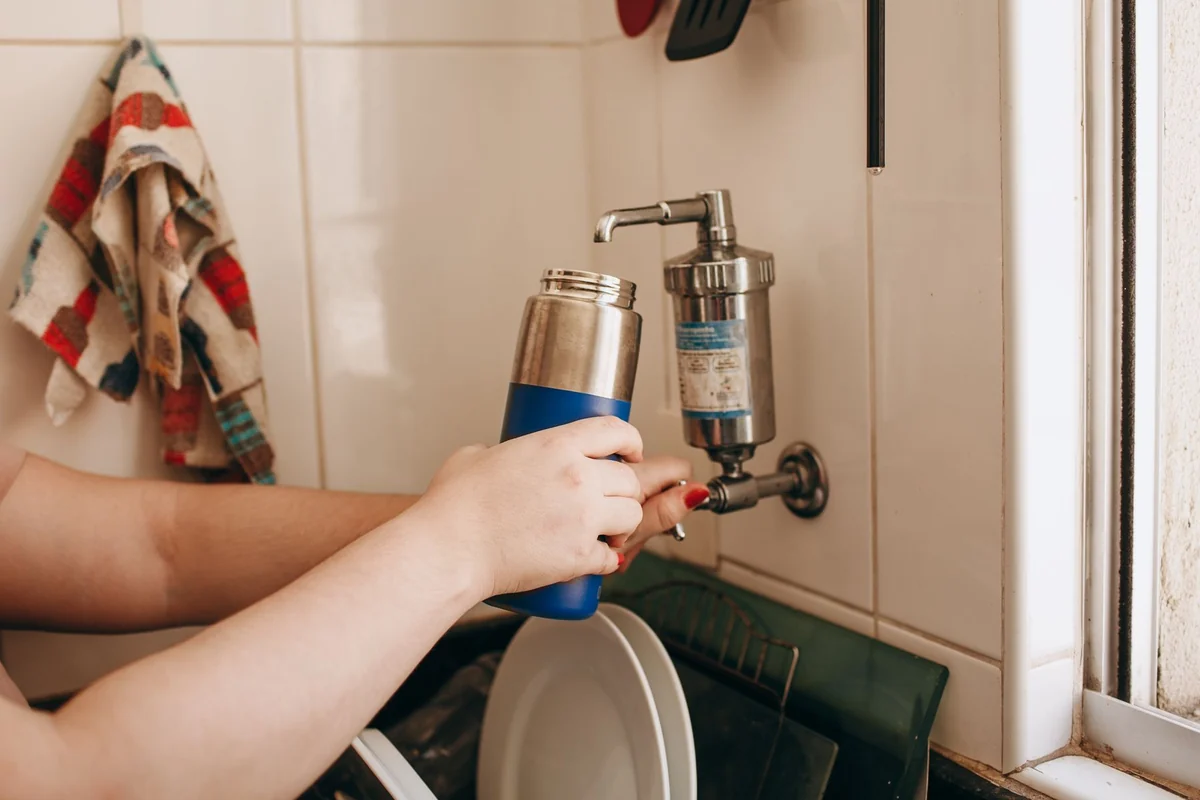
A shop that sells reusable bottles and operates a refill point has two related but different responsibilities. Retail merchandise must be easy for customers to compare, carry and understand, while a bottle promoted for repeated refill use must be assessed against the shop's actual cleaning, storage and refill procedures. Start by mapping where the bottle will be used, who will handle it and whether the shop is simply selling a product or making a specific refill-program recommendation. Confirm opening size, cap handling and the cleaning information supplied for the exact model. Do not imply that a bottle is approved for a particular refill station or hygiene procedure unless the compatibility and process have been checked. Keep the retail description separate from any instructions that apply only to the shop's own refill service. Separate compact 380 ml (12.8 fl oz) formats from larger 800 ml (27 fl oz) options in the assortment plan. A plastic bottle manufacturer should identify the body, lid and seal materials and show which custom colors, logos and packaging formats can actually be produced for the requested wholesale quantity. Review model 2030 as a physical reference before approving this variant; confirm its current product record rather than assuming the same material or cap configuration.
2. Verify the complete material construction, not just the body
A bottle is an assembled product, not a single piece of plastic. The body, cap, seal, straw, insert and any decorative component may use different materials, so ask the supplier to identify each component in the selected model. Check whether the documentation applies to the exact finished assembly and destination market, rather than relying on a broad statement about one resin or one product family. A catalogued material name does not by itself prove that the finished bottle is recyclable in a local collection system, contains recycled content or is free from a particular substance. Keep the supplier's written declarations and any applicable test records with the SKU file before using them in product descriptions. If a document covers only the body, do not extend its wording to the cap, seal or complete bottle. Review model 2059 as a physical reference before approving this variant; confirm its current product record rather than assuming the same material or cap configuration. Use XUYI model 2400 · 380 ml as a catalog reference only. Request the complete assembled sample and verify component materials, cleaning information and intended use before making any environmental or safety claim.
3. Match capacity and closure to the customer's daily routine
Customers of sustainable lifestyle stores may want a compact bottle for a handbag, a mid-size option for a commute or a larger model for longer days. Build the assortment around these use cases and test the complete sample for grip, opening, carrying and cleaning. Compare the stated capacity and dimensions with the shelf space and customer feedback the shop already has. A 380 ml, 650 ml or 800 ml model can create a clear size range, but the right mix depends on the store's audience and price points. Avoid calling a closure spillproof or suitable for every refill setup without testing the exact cap, seal and handling routine. Use customer questions and return reasons to decide whether a different capacity or closure deserves a place in the next order.
4. Substantiate environmental, safety and care claims before printing them
Words such as eco-friendly, zero-waste, BPA-free, recyclable, recycled, carbon-neutral, food-safe and dishwasher-safe can carry specific meanings and may require evidence. Do not place these claims on a shelf card, product page or private-label package merely because the shop's brand has a sustainability mission. Ask the supplier for the exact supporting document, check which component and model it covers, and confirm whether it applies to the destination market. If the evidence is incomplete, remove the claim and describe only verified facts. A reusable bottle can be part of a lower-disposable-use program, but that does not automatically establish its full lifecycle impact or local end-of-life outcome. Keep a record of who approved each claim and the document version used. Use XUYI model 2401 · 650 ml as a catalog reference only. Request the complete assembled sample and verify component materials, cleaning information and intended use before making any environmental or safety claim.
5. Reduce unnecessary packaging without weakening product protection
Retail buyers may want less packaging, but the selected format still needs to protect the bottle and keep the SKU identifiable through storage and shipping. Review the individual pack, carton quantity, outer-carton strength, labels and any inserts before agreeing to remove packaging. Ask whether a barcode, model code or material description is needed for the shop's receiving and point-of-sale process. Compare the environmental message with the actual packaging specification; do not describe a package as plastic-free, recyclable or compostable unless its components and destination conditions support that wording. Approve the final pack as part of the sample and artwork process, not as a last-minute change after the order is placed. Record packaging dimensions and materials so the receiving team can verify the same version on arrival.
6. Compare suppliers on evidence, consistency and landed cost
A credible supplier comparison includes product records as well as price. Ask each candidate to quote the same model, capacity, color mix, component materials, packaging, quantity and delivery destination. Request the available specifications, sample and supporting declarations before using a sustainability claim in marketing. Then compare unit cost, packaging, cartons, freight, duties and local handling on a consistent basis. Check how the supplier identifies production variants and whether the same approved specification can be repeated on a later order. A low quote is not useful if it omits the documents, sample checks or packaging details that the shop needs to make an accurate customer promise. Save the quote assumptions and evidence together so a future buyer can make a like-for-like comparison. Use XUYI model 2402 · 800 ml as a catalog reference only. Request the complete assembled sample and verify component materials, cleaning information and intended use before making any environmental or safety claim.
7. Track customer questions, returns and repeat-order performance
After the assortment launches, record which models sell, which sizes customers ask for, what packaging is discarded and what reasons are given for returns. Keep notes on cap handling, cleaning questions and any mismatch between shelf claims and supplier documentation. If the shop updates its environmental messaging, review the product file again before changing labels or web copy. For repeat orders, compare the new sample, component details, color and packaging with the approved version. Use real sales and feedback to adjust the assortment, and avoid treating the word reusable as a substitute for evidence about materials, care or environmental performance. A documented review protects the shop when product descriptions, supplier declarations or local recycling guidance change.
Sustainable Retail Bottle Claim and Buying Matrix
Separate verified product facts from environmental claims and keep the supporting records with the exact SKU.
| Decision area | Evidence to collect | Retail approval |
|---|---|---|
| Use and refill context | Shop process and sample handling test | Approve intended use |
| Component materials | Body, cap, seal and insert records | Approve material wording |
| Capacity and closure | Measurements and complete sample | Approve assortment role |
| Environmental claims | Model-specific evidence and market scope | Approve each claim |
| Packaging | Pack components, carton and SKU labels | Approve final pack |
| Supplier consistency | Repeat sample, records and landed quote | Approve reorder basis |
Buyer decision criteria, not XUYI certification, published MOQ or guaranteed delivery times. Verify the exact model and market requirements.
Buyer checklist
Use these points when comparing a factory sample, artwork approval and purchase quotation.
- Define whether each bottle is sold for general use or recommended for a refill program.
- Identify body, cap, seal, straw and other component materials separately.
- Check that supplier documents match the exact model and destination market.
- Do not infer recyclability, recycled content or BPA-free status from appearance.
- Substantiate every environmental, safety and care claim before publishing it.
- Test the complete sample for opening, handling, cleaning and storage.
- Review individual packaging, carton protection and SKU identification.
- Compare equivalent landed-cost quotations and documentation scope.
- Record customer questions, returns and packaging feedback after launch.
- Recheck the approved sample and records before each repeat order.
Frequently asked questions
Is a reusable bottle automatically an environmentally friendly product?
No. Reusability describes intended repeated use, not a complete lifecycle assessment. Make only claims supported by the product's materials, use information and relevant evidence.
Can a store label a bottle BPA-free or recyclable based on its body material?
No. Verify the complete assembly and the relevant market requirements. A statement about one resin does not establish a claim for the cap, seal or finished product.
Can the same bottle be recommended for every refill station?
Not without checking. Confirm opening, cleaning, handling and the refill point's own procedures before recommending a specific model for that use.
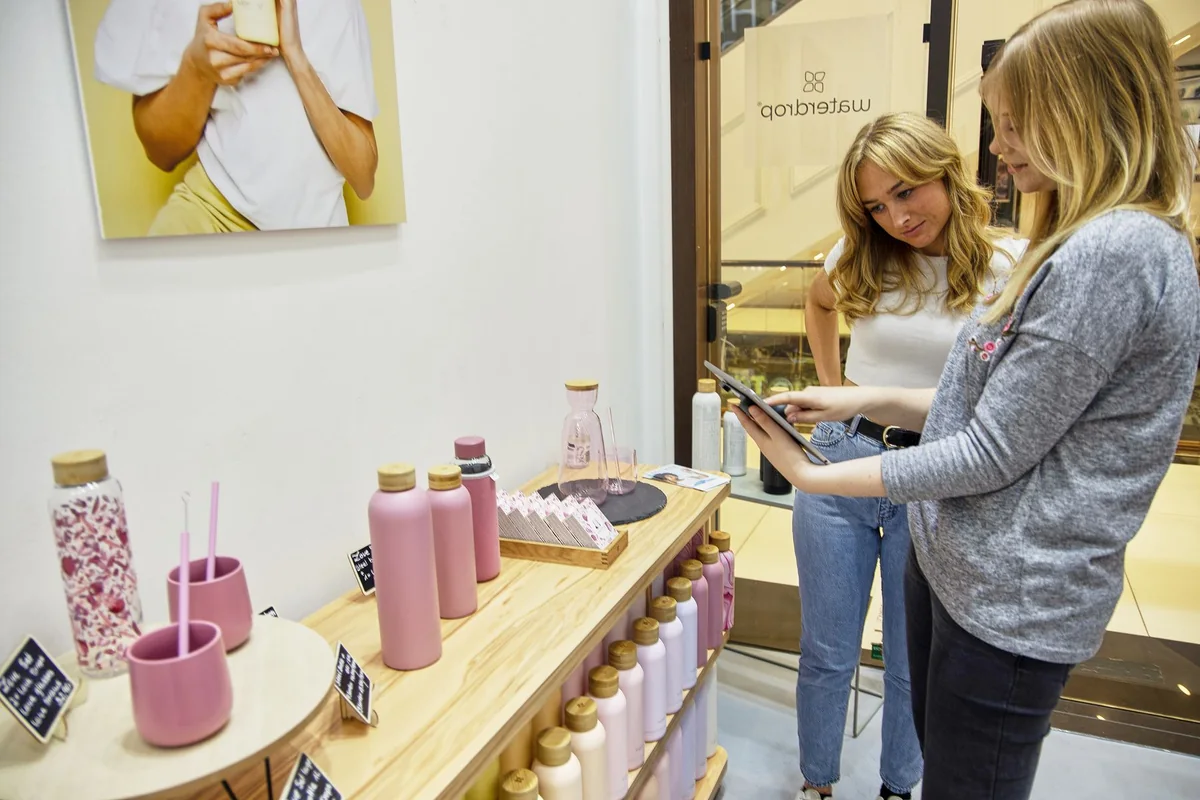
Does the cover photograph show an XUYI product or sustainable-store customer?
No. It is an independently licensed Pexels editorial photograph of shoppers comparing reusable bottles. It is not an XUYI product, customer, certification or environmental-performance test.
Need a quote for a specific model?
Send the intended model, material requirements, expected order quantity, artwork and destination market. We will review the options for that exact product rather than assume one specification fits every bottle.
Request a Plastic Bottle Quote →Related Buying Guides
 How Should Homeware Stores Buy Reusable Water Bottles for Retail Shelves?
A homeware retail buyer's B2B guide to reusable drinkware shelf assortments, sample approval, product labels, landed cost, replenishment and stock checks.
 How Can Museum Gift Shops Source Custom Water Bottles for Souvenir Retail?
A procurement checklist for museum souvenir bottles covering licensed artwork, shelf fit, retail barcodes, sample approval, cartons and reorders.
 How Can Distributors Build a Profitable Wholesale Water Bottle Assortment?
B2B buyer's guide to choosing a bottle distributor range: buyer segments, verified models, SKU complexity, cartons, demand signals, sampling and service parts.