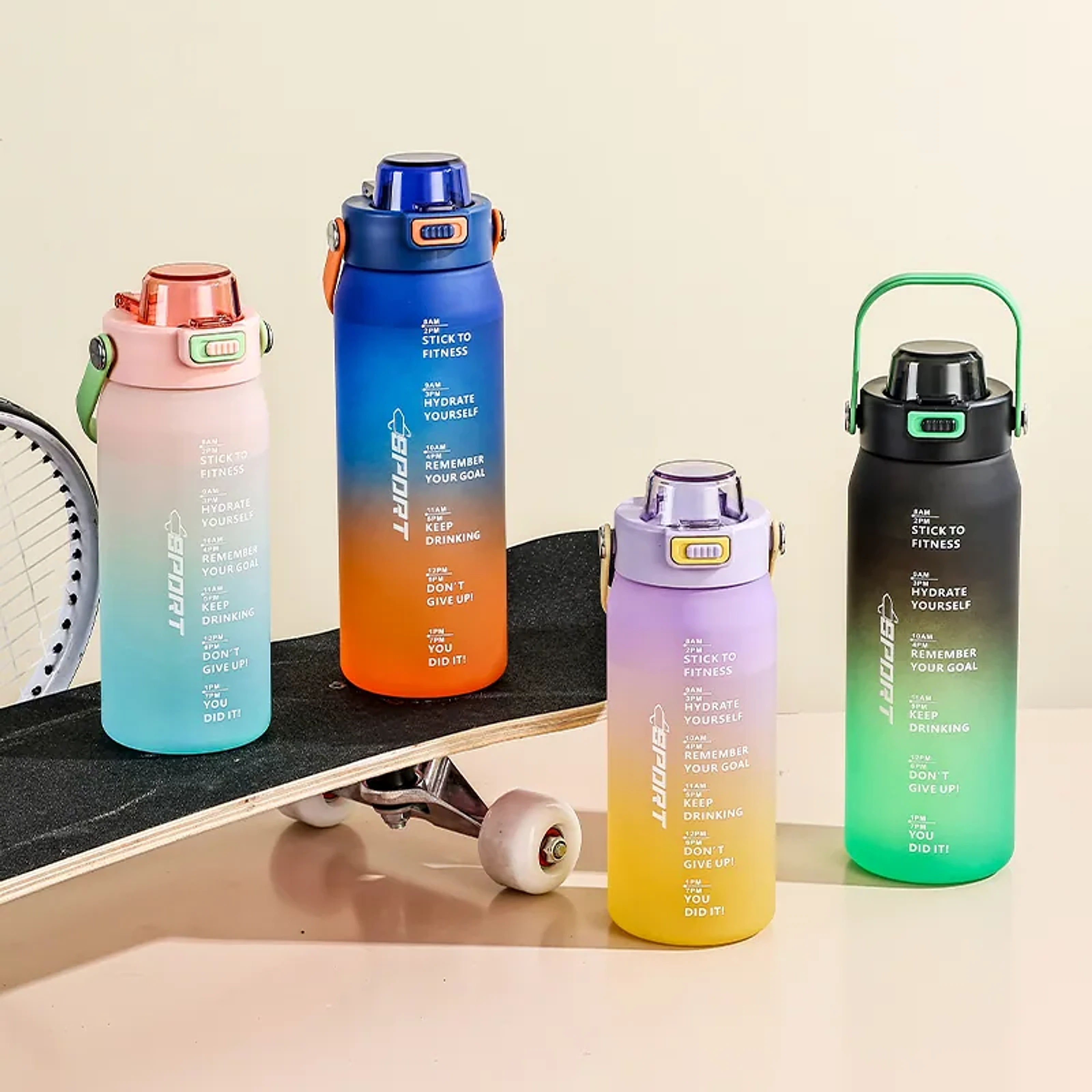
University bookstores sell reusable bottles to students, alumni, staff and visiting families, yet these groups do not buy the same format or logo. A campus buyer must coordinate trademark permissions, term dates, retail price tiers, actual bottle and closure samples, shelf fit and replenishment. This guide turns a broad custom-logo request into a model-specific wholesale order without pretending that a photograph proves material, safety performance or delivery dates.
- Define audiences and store versus event stock.
- Confirm logo licensing and permitted campus marks.
- Shortlist models with real sample and ml capacity.
Separate student, alumni and campus-event demand before building SKUs
Begin with a concise assortment brief rather than one bottle advertised for every audience. Identify which units belong on everyday bookstore shelves, which are alumni gift purchases, and which are committed to orientation or recruitment packs. Record the school term, venue hand-off and expected reorder window for each group. Compare small-format, everyday and larger hydration use cases based on real sample size rather than assuming a named capacity class converts exactly to fluid ounces. If a campus team has historical register data, segment it by model and replenishment week instead of guessing market demand. Ask how many individual retail barcodes, artwork variations, colors and case packs staff can reliably stock. Assign one accountable buyer who can approve substitutions when a model becomes unavailable; an unapproved 'similar' lid can change customer care instructions and return risk. Include storage space, shelf depth and customer service capacity in the initial commercial comparison.
Shortlist exact factory models and check the assembled sample
Request actual milliliter volume, material records, lid components, color options and packing dimensions for each shortlisted model. The buying team should handle the complete bottle with its selected closure, check whether it fits typical backpacks or retail shelves, and document assembly and care limitations. A campus product page can serve as a starting point, not the production acceptance standard. Select a compact format for counter displays only after checking actual height and closure, and evaluate any larger sports body independently: two bottles may share a nominal size class but require different shelf space and labels. Do not claim leakproof performance, food-contact compliance, Tritan composition or dishwasher tolerance without configuration-specific evidence. Retain dated photos of approved body, cap and logo position so new staff can compare later cartons with the same reference. For a compact shelf reference, inspect model 2095 with the approved closure and exact milliliter specification rather than ordering from photographs.
Secure university trademark authorization and artwork sign-off
A bookstore purchaser may be authorized to buy merchandise without holding permission for every campus seal, athletics mark or alumni design. Identify the campus licensing office, licensee, approved colors, use restrictions and any royalty or reporting terms before offering artwork to a supplier. Provide vector logos, allowed print zone, Pantone references when applicable, design variants and desired placement on the actual body curvature. Ask for a physical or controlled production-process print proof instead of approving colors solely from monitor images. Store one revision identifier per artwork and state who signs off when campus marketing, athletics and purchasing disagree. If the university changes an emblem or a department requests a new version, record the revision as a separate item rather than silently altering the standing purchase order. Confirm setup charges and minimum quantities by print version in writing; do not assume combined colors automatically share a factory minimum.
Price the retail-ready assortment, not only the blank bottle
Build a comparison table for the same verified bottle, decorated artwork, individual packaging, carton configuration, requested label and delivery terms. Students may compare shelf price, but a bookstore must compare received saleable units after freight and handling, damaged units and out-of-stock substitutions. Ask whether retail hangtags or shelf-ready cases are actually within the supplier's scope; an ordinary bulk export carton does not become a merchandising unit by default. A sampling plan should cover the most visually complex color and print combination as well as the main base model. If the team proposes a larger hydration option, ask for gross case mass and shelf-load implications before assigning shelf positions. Keep optional materials or closures clearly labeled as inquiries rather than approved product specifications. Evaluate gross margin by the store's actual retail price, known landed cost and expected sell-through rather than an invented industry benchmark. For larger everyday hydration stock, compare model 2516 by physical shelf fit, printed proof and carton dimensions, not just by advertised size.
Map semester receiving, inventory and campus allocation
Request the campus receiving rules, opening dates, orientation cutoff and bookstore warehouse appointments before setting the factory handoff date. Create a reverse plan that includes logo license approval, decorated sample review, manufacturing allocation, inspection, transport and inbound merchandising. For more than one campus or bookstore outlet, provide a packing list by location and barcode rather than a single undifferentiated total. Where staff will receive mixed-colored assortments, ask that case labels distinguish model, artwork, color, quantity and handling requirements. Confirm who is importer of record, who checks shortages and who carries delivery risk at the agreed handoff point. Leave schedule buffers as explicit planning allowances, not supplier guarantees. The order should show which buyer may authorize partial receipt if a smaller color lot is delayed.
Inspect production units against licensed proofs before shipment
Set an acceptance protocol based on the approved physical assembly, logo proof, color standard and unit presentation. Check visible scratches, cap fit, sealing components, missing parts, print alignment and carton marks at a sampling level appropriate to the order's risk. An image or design approval does not establish a functional performance result; where the school advertises a specific claim, request its test method and product-level evidence. For a larger bottle option, check cap parts and transport protection with the complete configured sample rather than borrowing a compact model's inspection result. Inspect one piece from each genuine artwork revision, and ensure rejected or reworked goods remain segregated. Photograph exceptions with model and batch identification, decide who signs release and tie any shipping decision to the bookstore receiving cutoff. Agree whether damaged cartons are accepted, reworked or held before the supplier books freight. If considering model lo-003 for a different campus promotion, approve its own lid, artwork and packed case instead of assuming parts interchange with other bottles.
Make student feedback and next-semester reorder data usable
After launch, record sell-through by actual model, color, logo revision and point-of-sale channel instead of simply aggregating 'water bottles'. Track returns for closure fit, image mismatch, damage and customer care questions separately; these causes lead to different corrective actions. Save the supplier's precise approved body and cap reference, logo vector files, last accepted sample and carton identification for future reorder quotations. A new semester may use a different campaign design, but should not silently receive a new lid if the existing stocking program requires continuity. Ask which parts are available as model-specific replacements without assuming cross-model interchangeability. Review aged inventory and shelf-space usage before adding more colors. An effective campus program is a set of approved, replenishable SKUs with documented licensing and product facts, not an ever-growing catalog of unsupported bottle claims.
Campus merchandise purchasing decision gates
Each retail SKU needs verified evidence and an accountable university approver.
| Gate | Evidence to keep | Release decision |
|---|---|---|
| Audience | Store, alumni or event allocation | Demand case defined |
| Licensing | Authorized marks and revision | Campus approved |
| Physical sample | Actual body, closure and capacity | Configuration accepted |
| Cost | Comparable delivered and decorated SKU | Margin reviewed |
| Packing | Barcode, case and branch manifest | Inbound ready |
| QC and reorder | Production sample and defect log | Reorder version traceable |
Buyer decision criteria, not XUYI certification, published MOQ or guaranteed delivery times. Verify the exact model and market requirements.
Buyer checklist
- Define audiences and store versus event stock.
- Confirm logo licensing and permitted campus marks.
- Shortlist models with real sample and ml capacity.
- Approve body, lid and care statements.
- Sign off one controlled print-proof revision.
- Break quotes down by artwork, case and label.
- Confirm barcode, case pack and shelf constraints.
- Book receiving before semester or orientation.
- Inspect production against licensed proofs.
- Review sell-through and exact-model reorders.
Frequently asked questions
Can a bookstore combine several campus logos in one MOQ?
Possibly, but ask for written minimums and setup charges per approved artwork, color and bottle model; never assume logo variants automatically share a minimum.
Is a digital logo mock-up enough to begin production?
Not for an unreviewed configuration. Approve a controlled production-method proof and verify body, ink color and placement with the authorized campus license holder.
Which size should a campus bookstore stock first?
Use actual sales history and physical sampling to compare smaller everyday and larger sports formats. The website capacity class is not a substitute for an exact ml specification.
What should be saved for a repeat-semester order?
Retain the approved SKU, cap version, logo revision, case and barcode specification, defect outcomes and receiving requirements; reconfirm current lead time and costs.
Need a quote for a specific model?
Send the model, expected order quantity, logo requirements and destination market. XUYI can review confirmed material and customization options.
Request a Plastic Bottle Quote →