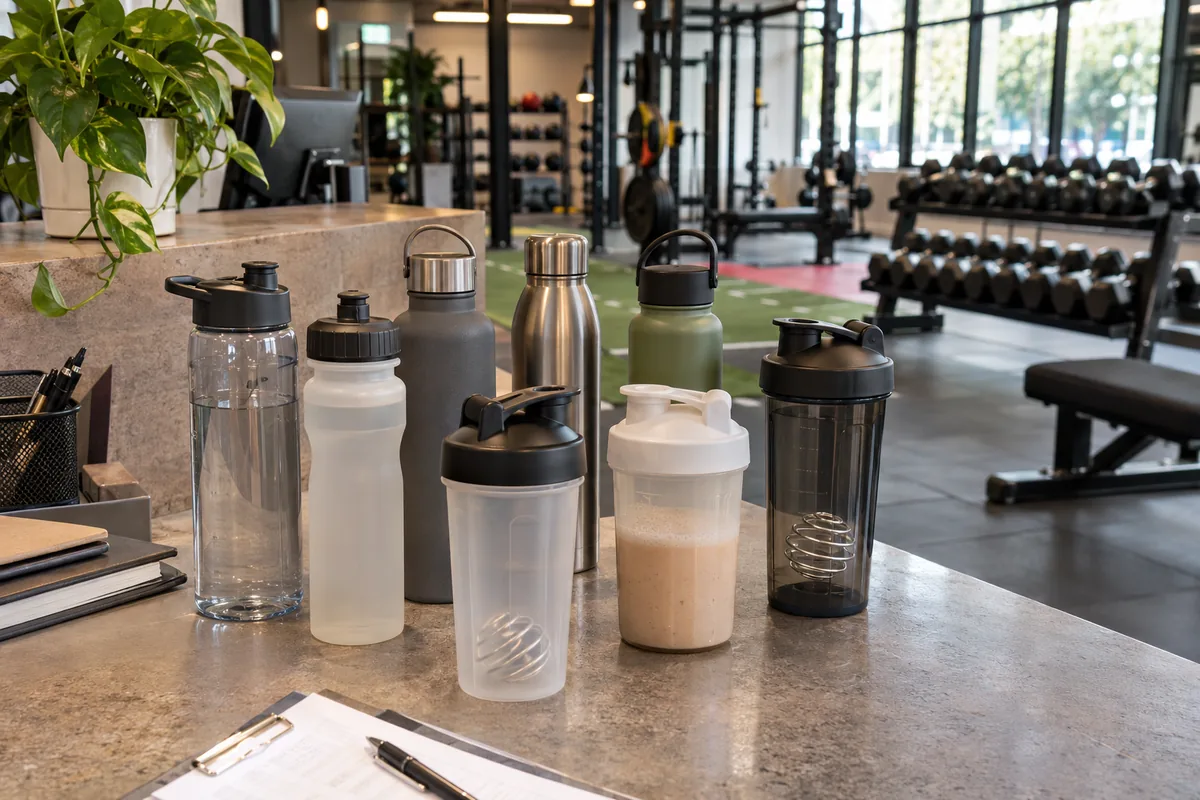
‘Dishwasher-safe’ is not a complete product specification. Buyers need to know which parts were evaluated, under what cycle and temperature, and whether the decoration, seal and lid use the same conditions. This guide helps importers turn a marketing claim into a written, reviewable requirement.
- Claim scope states body, lid, seal, straw, decoration or assembled product
- Material is identified for every part covered by the claim
- Temperature, rack position, cycle and detergent conditions recorded
Define exactly what the dishwasher claim covers
Before placing the claim in a catalogue or listing, state whether it applies to the bottle body, lid, gasket, straw, valve, decoration or the complete assembled product. A body may tolerate a cleaning cycle while a printed logo, soft seal or lid component changes appearance or fit. Ask the supplier to identify the tested parts and the parts that must be hand-washed. A short sentence such as ‘dishwasher-safe’ can create a large return problem if the buyer and factory are using different definitions. Keep the approved wording beside the model and variant record so an editor cannot accidentally apply a body-only result to the complete assembled bottle. Use model 2470 as the exact model reference, but confirm the current body, lid and decoration configuration before attaching any care claim.
Confirm material, temperature and cycle conditions
Request the material for each relevant part and the conditions used for the evaluation: rack position, water temperature, cycle type, detergent assumptions, drying stage and number of cycles. Do not infer performance from a material name alone. PP, PET, PC, ABS, copolyester and soft sealing materials can respond differently to heat, detergent and repeated mechanical movement. If the factory gives only a general statement, keep it as an open question and do not convert it into a universal consumer claim. A written condition is more useful than a broad adjective because it lets the importer compare a later sample, supplier statement and customer instruction on the same basis.
Review the lid, gasket and small components separately
The lid is often the commercial risk point because it contains threads, hinges, valves, silicone or other removable parts. Check whether the lid must be disassembled, placed on the top rack or kept away from high heat. Confirm how the gasket is removed and replaced, and whether repeated cleaning changes the seal or odor. If a straw, flip mechanism or carry handle is included, ask whether it was part of the same evaluation. A body-only result cannot be presented as an assembled-product result. Record the disassembly and placement instruction with the part list; this is especially important when the customer removes a gasket, straw or valve for cleaning. For model 2401, list the lid, seal and removable components separately in the care review instead of treating the bottle image as one tested object.
Check decoration, color and surface changes after cleaning
For a custom order, review the logo method, ink or coating, body finish and color before using a dishwasher statement. Heat and detergent can affect printed edges, matte surfaces, gradients and transparent bodies. Ask for before-and-after photos or a written acceptance rule for logo legibility, color shift, surface marks and label adhesion. A buyer may accept a minor visual change for an internal program but reject it for a retail shelf, so the commercial requirement should be written rather than assumed. Use the buyer's commercial acceptance level rather than a vague promise: a small internal-program change and a retail-shelf rejection are different outcomes.
Ask for evidence without overstating what it proves
A supplier test can support a defined claim, but it does not automatically prove every dishwasher, detergent, cycle or lifetime scenario. Save the sample identity, material, part list, test conditions, number of cycles, observations and conclusion. If an external standard or laboratory report is provided, confirm the tested configuration and scope. Use cautious wording such as ‘tested under the stated conditions’ when the evidence does not support a broader promise. This protects both the product page and the buyer's customer-service team. If the evidence does not name a standard or laboratory scope, describe it as supplier evidence under stated conditions and keep the unresolved point visible. Before publishing a care instruction for model 502, save the sample identity, cycle conditions, observations and the exact language approved for the customer.
Translate the result into packaging and care instructions
The online listing, carton, insert and customer-service script should use the same approved care language. State whether the lid is top-rack only, whether parts must be separated, whether decoration has special restrictions and whether the claim applies to repeated household use or only to a defined evaluation. Keep the approved instruction by model and language. A packaging sentence that is broader than the supplier evidence can create returns even when the bottle itself performed as expected. Translate the same limited scope into every published language so the product page, carton and customer-service response do not make different promises.
Freeze the approved claim and control later material changes
Record the exact model, capacity, body and lid materials, seal, decoration, care wording, sample date and evidence reference. If the factory changes resin, gasket, ink, mold, lid, surface or packing, reopen the claim review. Do not carry a dishwasher badge from one variant to every color or closure without checking the affected parts. A controlled revision history lets a distributor explain which claim belongs to which order and prevents old evidence from being used for a changed product. Preserve the old claim record when the configuration changes; the next approval should show what changed and why the wording remains or was narrowed. Preserve the old claim record when the configuration changes; the next approval should show what changed and why the wording remains or was narrowed.
Reference points
A care claim is reliable only when its scope, tested configuration and customer wording stay connected.
Practical next step: Ask the supplier for a model-level care statement that lists the tested parts and conditions before publishing the claim.
Primary references
This guide supports evidence control; it does not certify a particular bottle or make an unverified dishwasher or food-contact claim.
Dishwasher-claim verification matrix
Use this matrix before a claim enters a product page, carton or translated catalogue.
| Claim area | Evidence to confirm | Buyer action |
|---|---|---|
| Scope | Body, lid, seal, straw, decoration or assembled set | Limit the wording to tested parts |
| Conditions | Temperature, rack, cycle, detergent and drying | Save the actual evaluation conditions |
| Appearance | Logo, color, finish and surface acceptance | Define what change is acceptable |
| Care | Disassembly, top rack and replacement instructions | Align packaging and customer copy |
| Revision | Material, closure, ink or mold changes | Reopen the claim review |
Buyer decision criteria, not XUYI certification, published MOQ or guaranteed delivery times. Verify the exact model and market requirements.
Buyer checklist
- Claim scope states body, lid, seal, straw, decoration or assembled product
- Material is identified for every part covered by the claim
- Temperature, rack position, cycle and detergent conditions recorded
- Lid, gasket, valve and removable parts reviewed separately
- Logo, color, surface and label acceptance criteria written
- Test sample identity and number of cycles saved
- Evidence scope is not expanded beyond the actual evaluation
- Packaging and online care wording match the approved result
- Each published language uses the reviewed care instruction
- Material, closure or decoration changes reopen the review
Frequently asked questions
Does a dishwasher-safe bottle mean the lid is also safe?
Not automatically. Confirm whether the lid, gasket, straw, valve and decoration were evaluated and whether the instructions require top-rack placement or disassembly.
Can a factory test prove the bottle is safe for every dishwasher?
No. A test supports the stated material and cycle conditions. Save the conditions and use wording that does not promise untested machines, detergents or lifetime use.
Should a custom logo be tested separately?
Yes when heat, detergent, surface or decoration method can affect appearance. Keep the decorated sample and define legibility, color and surface acceptance criteria.
When must a dishwasher claim be reviewed again?
Review it after a change to resin, lid, gasket, valve, mold, ink, coating, surface, care instruction or another part of the tested configuration.
Need a quote for a specific model?
Send the model, expected order quantity, logo requirements and destination market. XUYI can review confirmed material and customization options.
Request a Plastic Bottle Quote →