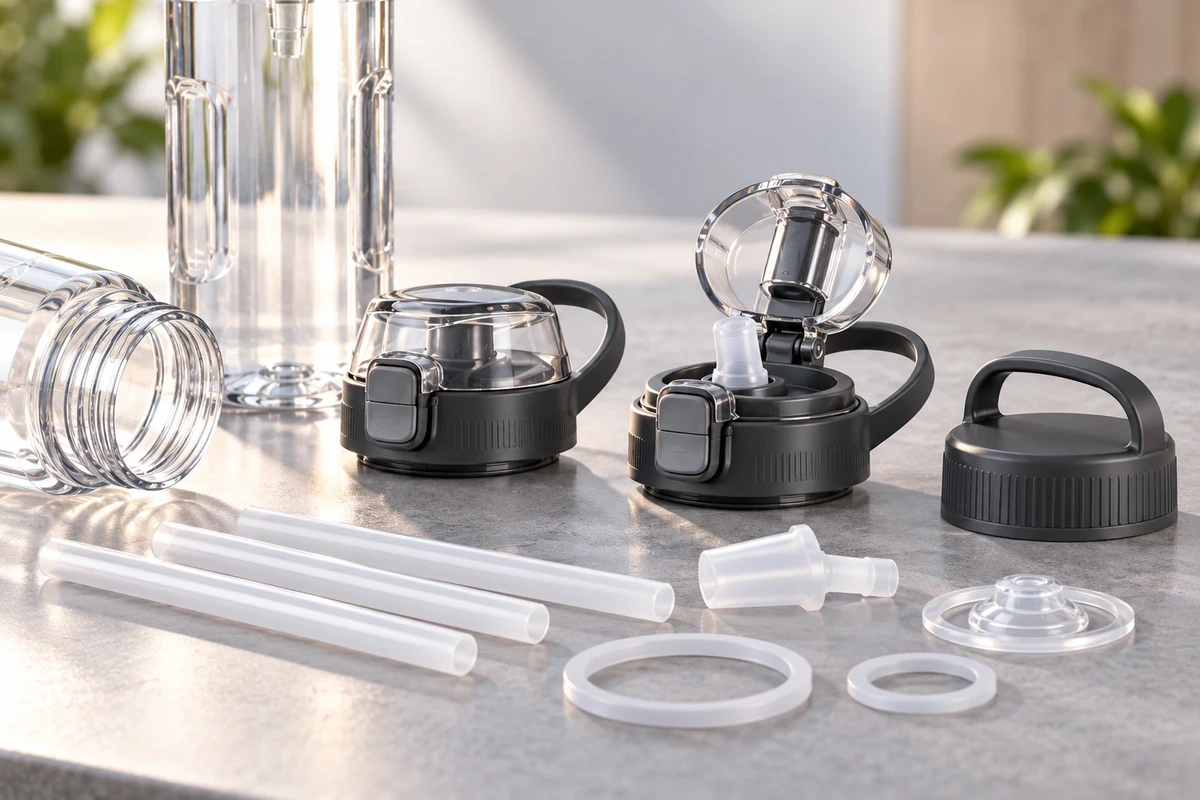
Start with the person who will use the bottle and the moment when they will open it. A gym user, a school program, a commuter, a warehouse team and a retail customer may value different combinations of one-hand access, spill control, cleaning access and carrying convenience. State whether the bottle will be used at a desk, outdoors, in a bag, during exercise or in a child-focused program. Also record whether the buyer needs a wide opening, a straw, a handle, a lock or a simple screw closure. These are requirements to confirm, not automatic performance claims. Once the use case is clear, the supplier can recommend a closure family and the buyer can test the full assembled sample instead of comparing isolated cap photographs.
- Define the audience, use case, destination and buying decision before requesting a quote.
- Record the exact model, listed capacity and component assumptions in the RFQ.
- Request a complete physical sample before approving decoration, closure or packing.
1. Answer the use-case question before naming a cap
Start with the person who will use the bottle and the moment when they will open it. A gym user, a school program, a commuter, a warehouse team and a retail customer may value different combinations of one-hand access, spill control, cleaning access and carrying convenience. State whether the bottle will be used at a desk, outdoors, in a bag, during exercise or in a child-focused program. Also record whether the buyer needs a wide opening, a straw, a handle, a lock or a simple screw closure. These are requirements to confirm, not automatic performance claims. Once the use case is clear, the supplier can recommend a closure family and the buyer can test the full assembled sample instead of comparing isolated cap photographs. Review model lo-008 as a physical reference before approving this variant; confirm its current product record rather than assuming the same material or cap configuration.
2. Compare flip, straw, screw and sport closure families
A flip closure may be convenient for quick access, a straw route may suit a particular drinking posture, a screw closure may be valued for simple parts, and a sport-style top may be requested for active use. An auto-seal or lock feature adds another approval question rather than removing the need for one. Use these labels as starting points only: suppliers may use different names for similar-looking designs, and the same family can have different threads, seals, buttons and removable pieces. Ask for the exact assembly drawing or complete sample, listed materials, cleaning path, open and closed position and intended handling. A comparison is useful when it records what was seen and tested, not when it turns a cap name into an unsupported promise. Review model 2511 as a physical reference before approving this variant; confirm its current product record rather than assuming the same material or cap configuration.
3. Confirm neck finish, thread and seal compatibility
The cap is not an interchangeable accessory unless the neck, thread, sealing surface and component dimensions are compatible. For each proposed model, record the bottle body, neck finish, cap version, gasket or seal, vent or straw parts and any lock or hinge. Request a complete assembled sample and check that the cap closes without cross-threading, the seal sits evenly, the lid does not interfere with the body and removable pieces can be handled as intended. If a buyer wants one cap on several capacities or shapes, test every body rather than assuming the same thread guarantees the same user result. This matters when a catalogue contains multiple plastic sports bottle capacities. Fit is a product fact to verify on the selected SKU. XUYI model 2095 · 500ml plastic sports bottle is a catalogue reference; confirm the exact assembly on the sample.
4. Create a practical leak and handling test plan
Do not replace a test plan with the word leakproof. Define the liquid, fill level, orientation, time, temperature, opening cycles and movement that represent the intended use, then record the result and exact assembled sample. Check the closed bottle in a bag or carton position where relevant, and separately observe opening action, lock position, straw or spout access and cleaning steps. If the product is for children or a public program, add handling supervision and cleaning instructions to the buyer brief rather than making a broad safety claim. Ask what was tested, on which model and with which cap version. Evidence is stronger when tied to a dated sample and purchase-order specification.
5. Match closure complexity to the audience and service plan
More parts can create more questions for cleaning, spare components, assembly and after-sales handling. A school or employee program may prefer an easy-to-understand closure, while a retail or sports line may accept a more feature-rich design if packaging and instructions explain it. Ask how the supplier identifies replacement caps, gaskets, straws or locks and whether the carton can keep variants separated. Confirm the exact color split and whether cap color is part of the bottle SKU or a separate component instruction. XUYI model 2095 is listed at 500ml and model 2106 at 750ml; use those catalogue facts only as references while confirming the full cap/body assembly and intended audience. XUYI model 2106 · 750ml kids plastic water bottle is a catalogue reference; confirm the exact assembly on the sample.
6. Put closure questions into the RFQ and sample record
A useful closure RFQ names the bottle model or shape, capacity, neck or thread reference if known, closure family, material direction, color, logo location, packing, quantity and destination. Add questions about removable parts, cleaning access, spare parts, sample timing, leak or handling test scope and change control. Ask the supplier to mark what is confirmed and what depends on a physical sample. Save the cap drawing, sample photos, approval notes and any test record with the purchase order. If the buyer later changes from a screw lid to a straw or flip design, treat it as a new configuration with a new cost and approval review. Put the approved cap version, body reference and test condition on the same purchase-order line so a later replacement part cannot silently change the assembly. This small record also gives quality and warehouse teams a clear way to identify the correct carton.
7. Select the closure that can be repeated, cleaned and explained
The final choice should be easy for a purchasing team to explain: this closure matches the users, fits the selected body, passed the agreed checks, has clear packing and can be identified at reorder. Keep a one-page closure specification with photos of open and closed positions, model, capacity, component list, cleaning notes and test evidence. Record what the test did not cover. When a future order changes capacity, material, color or closure component, compare it against the approved reference and decide whether a new sample is required. A reliable wholesale closure decision is not a universal ranking; it is a documented match between the buyer’s use case and an exact repeatable assembly. XUYI model 2501 · 550ml plastic sports bottle is a catalogue reference; confirm the exact assembly on the sample.
Wholesale Bottle Closure and Cap Selection Decision Matrix
Use the same evidence categories for every supplier and confirm the exact model before purchase.
| Decision point | Evidence to collect | Owner |
|---|---|---|
| Buyer need | Use case, audience and destination | Program owner |
| Exact product | Model, capacity, components and measurements | Product buyer |
| Sample gate | Complete sample, proof and test notes | Quality lead |
| Commercial basis | Quantity, packing, carton and freight assumptions | Purchasing |
| Change control | Approved version and new-sample triggers | Procurement manager |
| Reorder readiness | Saved evidence and repeatable instruction | Operations |
Buyer decision criteria, not XUYI certification, published MOQ or guaranteed delivery times. Verify the exact model and market requirements.
Buyer checklist
Use these points when comparing a factory sample, artwork approval and purchase quotation.
- Define the audience, use case, destination and buying decision before requesting a quote.
- Record the exact model, listed capacity and component assumptions in the RFQ.
- Request a complete physical sample before approving decoration, closure or packing.
- Separate catalogue facts from custom material, compliance and performance inquiries.
- Compare quantity, color, logo, packing, carton and freight assumptions together.
- Keep artwork, sample photos and test notes with the model record.
- Define who approves changes to the body, lid, seal, logo and carton.
- Use a dated inspection or test record tied to the exact assembled sample.
- Do not turn an illustration or catalogue statement into a universal claim.
- Save the final decision so the next reorder can use the same evidence.
Frequently asked questions
What should a B2B buyer confirm before placing a bulk bottle order?
Confirm the exact model, listed capacity, material direction, components, decoration or closure, sample result, packing, destination assumptions and change-control record. Keep open items visible rather than guessing.
Can a supplier promise the same result on every model?
Do not assume that. Surface, geometry, material, lid, capacity and packing can change the result. Ask for model-specific evidence and approve the assembled sample.
How should a buyer compare two wholesale quotations?
Put the same model, quantity, customization, packing, carton data, freight assumptions and evidence requirements into one table. A lower unit price is not comparable if the scope differs.
What should be saved for a reorder?
Save the approved model, product facts, artwork or component version, sample photos, carton instruction, test notes, open issues and the rule for when a new approval is required.
Need a quote for a specific model?
Send the intended model, material requirements, expected order quantity, artwork and destination market. We will review the options for that exact product rather than assume one specification fits every bottle.
Request a Plastic Bottle Quote →Related Buying Guides
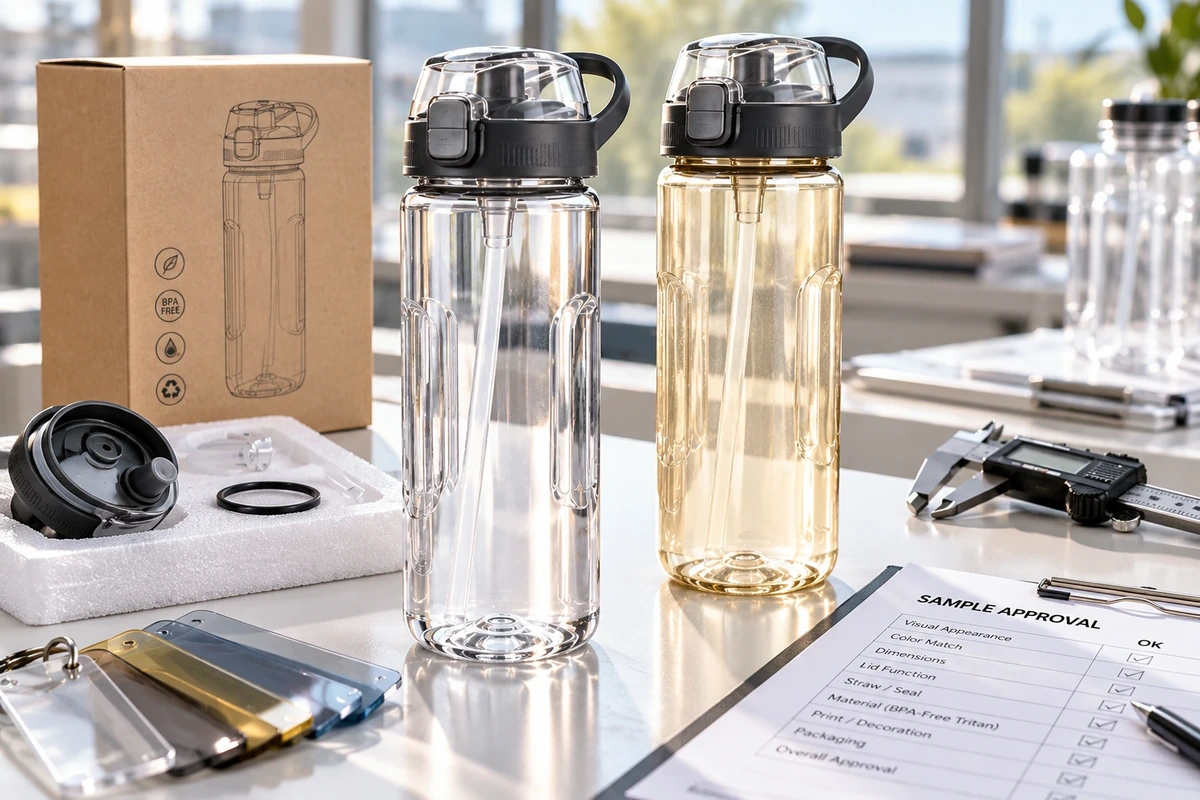 What Should a Wholesale Water Bottle RFQ Include Before You Ask for OEM Pricing?
A conversational B2B RFQ checklist for wholesale water bottles: define the model, capacity, material, colors, logo, packaging, destination and sample approval.
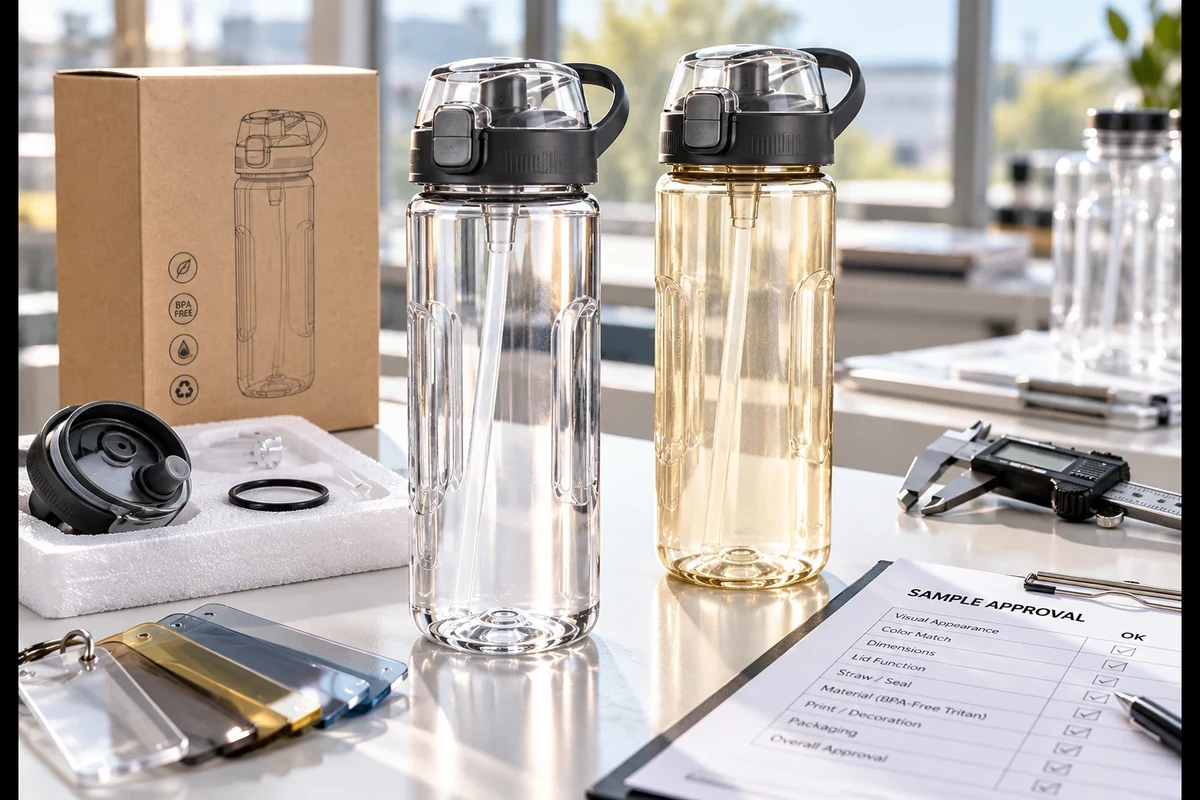 Water Bottle Sample Approval Checklist for Bulk Orders
Don't approve a bulk bottle order from photos alone. Learn how to check the body, lid, logo, packaging and golden sample before mass production.
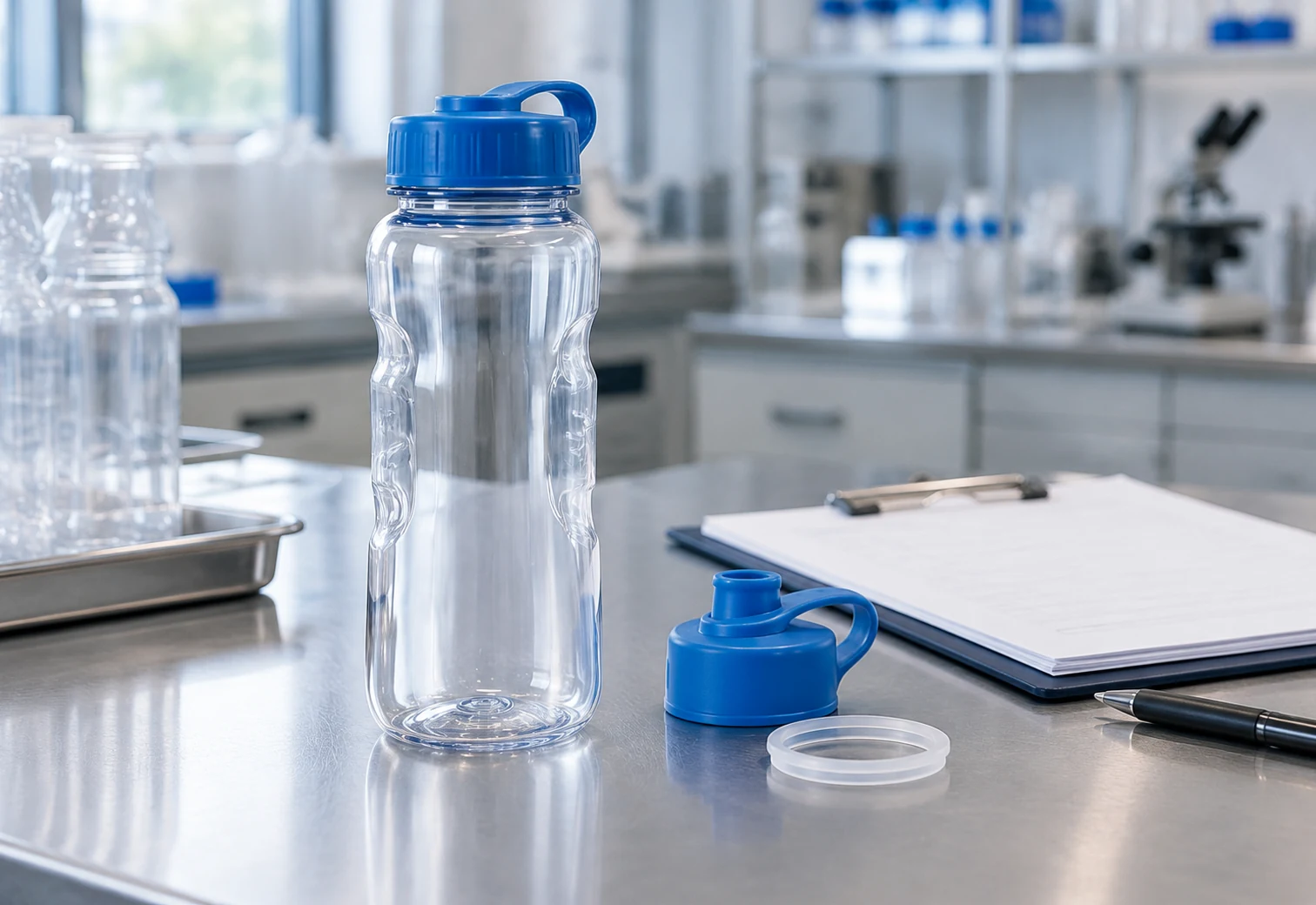 Plastic Water Bottle Compliance: Food-Contact Documents Buyers Should Request
Importing reusable plastic bottles? Check material declarations, food-contact test scope, migration conditions and traceability before approving bulk orders.