
A first bottle order is easier to manage when every SKU has a clear shelf role. Start with who shops your store, what they use the bottle for and how they compare sizes and colors. Then ask the manufacturer for model-level samples, confirmed specifications and reorder data before you divide quantities.
- Define the store type, shopper and job for each SKU.
- Record exact model and ml; mark oz as an approximate size class.
- Check sample dimensions against the real shelf, bag or carry use.
1. Define the shelf job before choosing models
Before asking a factory for a catalog, write down the customer and the decision the shelf must support. A campus shop, outdoor retailer, museum store and general gift shop may all sell reusable bottles, but their buyers do not necessarily compare the same carry needs, colors, size classes or price points. Use actual sales records, customer questions and the neighboring products on the shelf to define the role of each item. If this is a new category with no history, mark assumptions as assumptions and start with a small, measurable assortment plan rather than claiming a proven demand curve. Give the manufacturer the intended channel, target user, destination market and planned retail presentation so the sample review answers the right question. A bottle that looks attractive in a supplier photo still needs a clear reason to earn a SKU slot. Review model 2030 as a physical reference before approving this variant; confirm its current product record rather than assuming the same material or cap configuration.
2. Build a size ladder with a purpose for each option
Do not add several capacities simply because they appear in a catalog. Decide what job each size class serves, then compare the actual milliliter capacity, outside dimensions and filled weight from the specific model record. XUYI model 2400 is listed at 380 ml, model 2401 at 650 ml and model 2470 at 800 ml; their product pages also show approximate oz size classes, not exact fluid-ounce conversions. These records can help a buyer compare compact and larger choices, but they do not prove that all three fit every store or user. Ask for assembled samples and measure them beside the shelf depth, gift bag or customer carry use you actually sell. Keep exact ml as the specification and treat any oz wording as an approximate market class. Review model 2059 as a physical reference before approving this variant; confirm its current product record rather than assuming the same material or cap configuration. Use this listed 380 ml option as a compact-size comparison, then confirm fit and variant details on Model 2400 · 380 ml / 12 oz class.
3. Choose colors shoppers can identify and you can reorder
A color plan should be readable at the shelf and usable in a purchase order. Select core colors from the store’s customer and brand context, then decide whether seasonal colors are a limited test or a standing SKU. Ask the factory how each color is identified, what reference or physical sample will be used, and whether the color applies to the body, lid, strap or another component. Do not assume a screen image, informal color name or nearby product is a binding match. Record one approved reference for each component and name who signs off. If the assortment contains several colors, list a separate SKU row for each sellable combination so the buyer can connect photos, stock counts, carton labels and reorders without guessing which color was approved.
4. Separate model, lid and body combinations in the SKU map
A useful assortment file distinguishes the bottle model from the combinations the retailer will actually order. Give every line a model identifier, stated capacity in ml, color, lid or accessory configuration, material information exactly as confirmed, decoration status, packaging unit and destination. If the manufacturer says an option is customizable, keep it marked as a request until the selected sample and order documents confirm it. This prevents a custom color or component discussed in email from silently becoming a catalog fact. Review the full combination with the supplier: the approved body, lid, strap, artwork and package should refer to the same model revision. Use the current Model 2400 page as one comparison record, then check the product page and physical sample before treating it as a final SKU. Compare a mid-size catalog reference with the actual sample and current specification for Model 2401 · 650 ml / 22 oz class.
5. Allocate a first order using evidence, not a copied split
Quantity allocation should come from the buyer’s channel, shelf capacity, purchasing budget, forecast confidence and the supplier’s written order conditions. Ask for the minimum order quantity by model, color and decoration method rather than assuming one factory-wide MOQ. Identify launch priorities, controlled test variants and items that should wait until sales data arrives. Put total and per-variant quantities in one table; otherwise a quote may hide an unworkable split. If there is no sales history, keep that uncertainty visible and agree how the retailer will review sell-through after stock arrives. Never claim a mix is proven without actual records. A useful quote lets the buyer compare the same model, packing basis, destination and quantity tier across suppliers.
6. Keep product identifiers and artwork tied to each variant
Retail readiness includes a data handoff, not just a bottle and logo. Prepare a master record connecting model, sellable color and capacity combination, internal SKU, barcode or GTIN status, image, package artwork and approved sample. GS1 explains that distinct product variants can require distinct GTINs; confirm the brand owner’s assignment and trading-partner rules before printing labels. Do not reuse a barcode because two bottles look similar, and do not print a number before the exact variant and responsible brand owner are confirmed. For another size reference, compare Model 2401 against its current page and keep its capacity, color and artwork record separate from other models.
7. Approve the range once, then make reorders repeatable
Before production, review one assortment approval sheet with the buyer and supplier. It should show chosen model, confirmed capacity, component colors, approved decoration, package, quantity by sellable variant, label or barcode owner, destination and sample reference. Save dated sample photos beside the specification file, and record open questions as holds rather than leaving them in chat. On reorder, compare the quote against that approved version and ask the supplier to identify every proposed change. Model 2470 can serve as another current catalog reference, but a product page is not a substitute for the specific sample and order confirmation. Version control makes the first order easier to evaluate and the next one easier to reproduce. Use the 800 ml record as a larger-size reference; verify the selected SKU and package on Model 2470 · 800 ml / 28 oz class.
Retail SKU identity and food-contact documentation
A retail range is easier to maintain when each sellable variant is identified and product claims are tied to documentation for the exact item and market. GS1 guidance addresses product identifiers; the European Commission describes the food-contact framework. Neither source certifies an XUYI SKU.
Practical next step: Have the brand owner confirm GTIN assignment before packaging is printed. Separately request model- and component-specific documents for any food-contact claim that applies to the destination market.
Primary references
External regulations and standards are independent references, not product certification or proof of testing by XUYI. Confirm applicability and the latest rules for the exact product, destination and transaction date.
Retail assortment worksheet: compare before ordering
Make each sellable variant comparable; this is a buyer planning tool, not a demand forecast or availability promise.
| Decision | What to record | Who confirms it |
|---|---|---|
| Shelf role | Shopper, use case and display location | Retail buyer |
| Variant | Model, exact ml, color and lid combination | Buyer and manufacturer |
| Order basis | Quantity per variant, packing unit and destination | Purchasing and supplier |
| Retail data | Internal SKU, GTIN owner, image and package version | Brand or retailer |
| Approval | Dated sample reference and change control | Buyer and supplier |
Buyer decision criteria, not XUYI certification, published MOQ or guaranteed delivery times. Verify the exact model and market requirements.
Buyer checklist
Use these points when comparing a factory sample, artwork approval and purchase quotation.
- Define the store type, shopper and job for each SKU.
- Record exact model and ml; mark oz as an approximate size class.
- Check sample dimensions against the real shelf, bag or carry use.
- List colors separately and identify the approved reference per component.
- Confirm lid, strap, material and customization for the selected model.
- Ask MOQ and price by model, color and decoration combination.
- Separate launch priorities from low-confidence test variants.
- Confirm GTIN/barcode owner before label printing.
- Match images and package artwork to the approved variant.
- Save sample approval, quantity split and reorder revision together.
Frequently asked questions
How many bottle models should a retailer include in a first wholesale order?
There is no universal count. Choose models with a defined shelf role that can be sampled and ordered in workable quantities. Use store data where available and label assumptions when the category is new.
Should a buyer list both ml and oz on the purchase sheet?
Keep the manufacturer's stated milliliter capacity as the exact specification. If an oz size class helps the target market, label it approximate and confirm the conversion convention instead of presenting an exact equality.
Can one barcode be used for a bottle in several colors?
Do not assume so. Check the brand owner's GTIN assignment and retailer requirements for each sellable variant before labels are printed. Identify every approved color and capacity combination in the SKU file.
What should a bottle manufacturer confirm before quoting an assortment?
Send model, exact capacity, color and lid request, decoration, pack format, quantity by variant and destination. Ask the manufacturer to separate confirmed SKU facts from options that still require a sample or approval.
Need a quote for a specific model?
Send the intended model, material requirements, expected order quantity, artwork and destination market. We will review the options for that exact product rather than assume one specification fits every bottle.
Request a Plastic Bottle Quote →Related Buying Guides
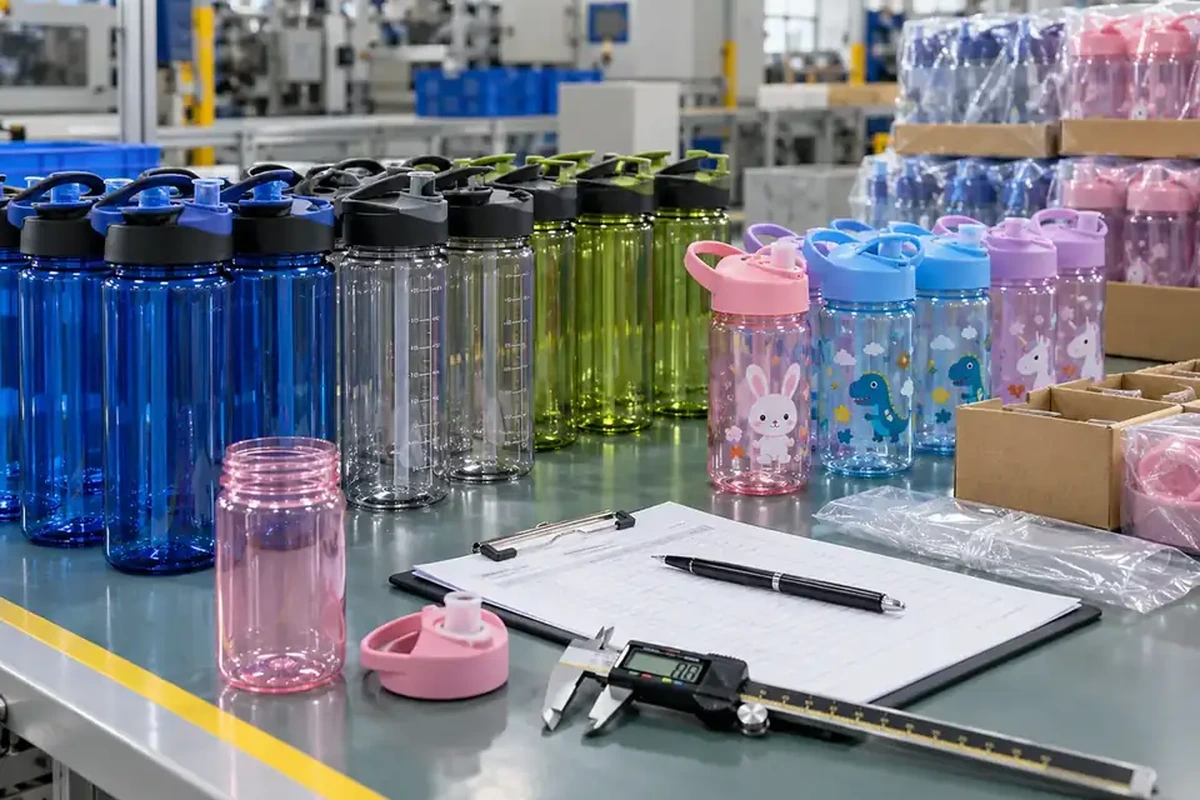 How Do You Compare Custom Plastic Water Bottle Suppliers for a Bulk Order?
A practical B2B guide to comparing custom plastic water bottle suppliers by material, sampling, decoration, packing, documentation and reorder control.
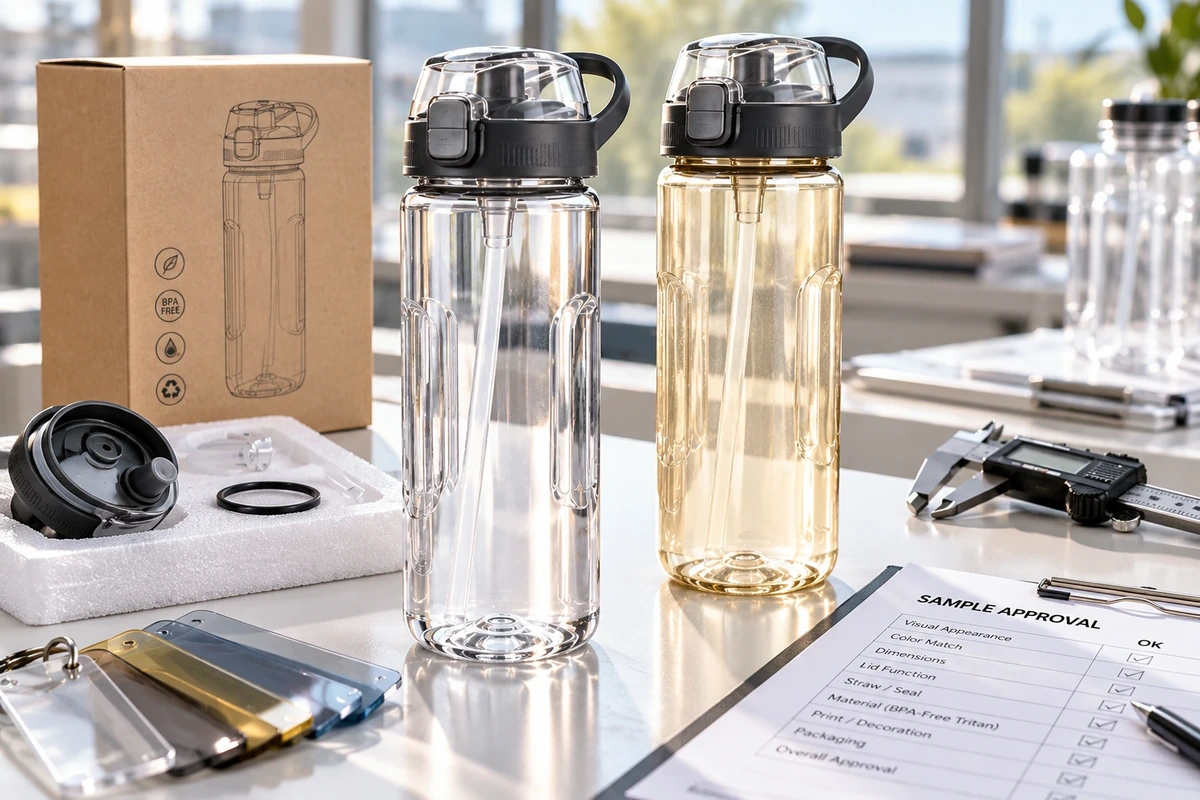 What Should a Wholesale Water Bottle RFQ Include Before You Ask for OEM Pricing?
A conversational B2B RFQ checklist for wholesale water bottles: define the model, capacity, material, colors, logo, packaging, destination and sample approval.
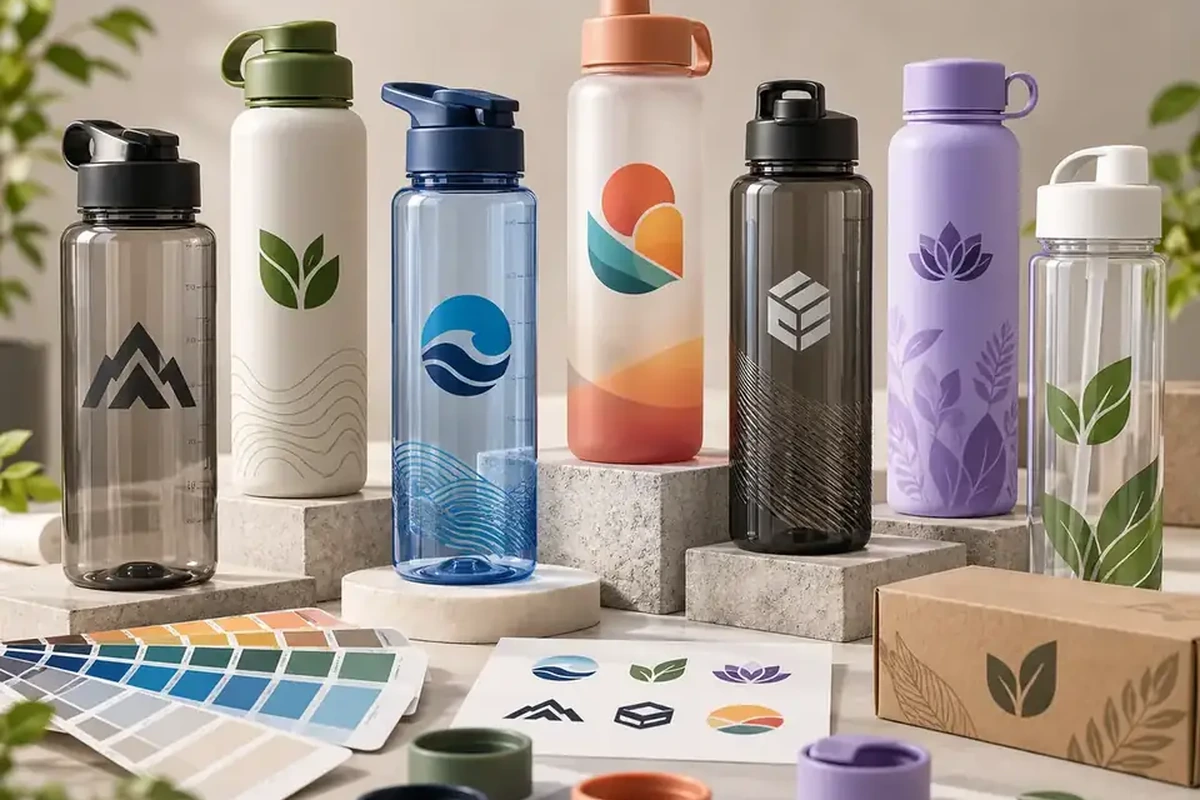 Which Logo Printing and Branding Method Should You Choose for Custom Water Bottles in Bulk?
A practical B2B guide to choosing a logo printing and branding method for bulk water bottles by surface, artwork, quantity, use case, sample proof and reorder control.