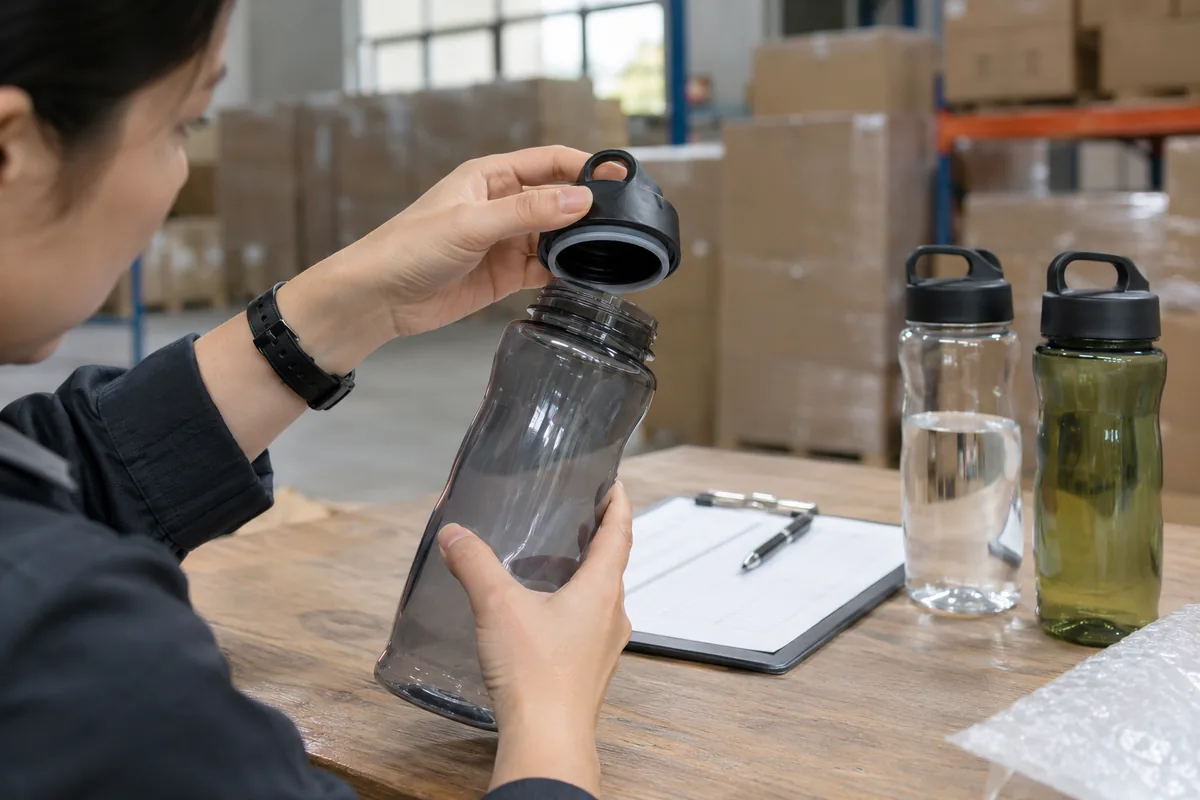
A cap that looks compatible can start on the wrong thread, pinch the gasket or become difficult to open after decoration and packing. This guide helps buyers review closure function on the exact bottle and cap combination.
- List exact body, neck, cap, gasket, valve and revision.
- Do not substitute capacity for neck identity.
- Check thread start, profile, seal, mouth, skirt and gasket seating.
Do not treat visual fit as functional fit
Define what the buyer means by a good opening before asking for a force number. A screw cap, flip-top, sport spout and push-button lid have different user actions and different failure modes. The relevant question may be whether a warehouse worker can open it with one hand, whether a child should not be able to open it easily, or whether a retail customer can understand the closure without a demonstration. Write the intended user, hand position, opening direction, expected fill level and cap torque into the sample brief. A single opening-force result without the cap type, bottle neck and test condition is not comparable. The supplier should identify the exact SKU and closure assembly so the sample test describes the product that will actually be quoted.
Record cap and neck identity
Check the neck, thread and gasket as one sealing system. Inspect thread start, pitch, cross-thread risk, stop position, gasket compression and the contact surface inside the cap. Fill the bottle to the agreed level, close it using a repeatable method and open it several times without changing the sample. Note whether the cap binds, slips, spins without engaging, pinches the gasket or requires the user to over-tighten it. A cap that feels smooth on an empty bottle can become difficult when the body flexes or when liquid pressure changes during transport. Record the neck finish and cap version on the sample sheet; a visually similar replacement cap is not an approved substitute unless its fit and seal are tested again. Check the neck and cap interface on 1000ml / 32 oz class gradient sports bottle model 2516, not only the catalog volume.
Check the first thread and gasket seat
Use a practical hand-opening sequence and record more than the first successful attempt. Test a clean, dry sample and a sample with realistic moisture on the cap, then try the closure after the bottle has been carried and placed in a carton. For a flip or sport closure, check the latch, hinge, button and drinking opening separately; for a screw cap, check initial breakaway and the remaining turns. Ask several representative users to describe where the operation feels difficult, but do not turn opinions into a certified measurement. If the buyer needs an instrumented opening-force limit, agree the fixture, speed, temperature, sample count and acceptance rule before production. The supplier's report should include raw readings or clear observations, not only a statement that the cap is easy to use.
Test opening and closing with the same method
Leak and transport checks belong next to opening checks because a cap can be easy to open and still fail in distribution. Close each sample with the approved torque or the defined hand method, store it upright and on its side, then inspect the seal after handling, vibration and temperature exposure appropriate to the route. Look around the thread, gasket, spout, button and vent for wetness or a slow leak. Check that opening and reclosing the lid does not twist the gasket out of position. Record whether the failure is caused by the cap, neck, seal, bottle deformation or user assembly. This evidence helps the buyer distinguish a closure design problem from an isolated assembly error and gives the factory a specific corrective-action target. Use 650ml / 22 oz class PP/PC sports bottle model 2100 to compare the same hand opening sequence and gasket inspection with other samples.
Run leak and handling checks together
Treat cleaning and care claims as a separate verification item. A closure may contain a gasket, spring, hinge, straw or textured cavity that needs a different cleaning method from the bottle body. Ask for the care instruction for the exact material and cap combination, and do not assume that a bottle marked dishwasher-safe makes every closure component dishwasher-safe. After the agreed cleaning cycle, check opening effort, gasket seating, odor, deformation and leak performance again. If a buyer sells the bottle into a market with local food-contact or labeling expectations, retain the relevant supplier declaration and artwork version. The published product page should describe the verified scope instead of using a broad claim that users could interpret more widely than the evidence supports.
Write care and claim boundaries
Freeze the closure configuration before placing the bulk order. The cap color, logo, tooling revision, gasket material, neck finish and packaging insert should each have a controlled identifier. If the factory proposes a lower-cost cap, a new gasket or a different thread, require a new sample and repeat the opening and leak checks. Compare the proposed replacement with the approved sample using photos, dimensions and a side-by-side fit test. For a multilingual B2B program, keep the same technical facts in every language and let the commercial wording vary only after the engineering scope is fixed. This prevents a translation or sales update from accidentally turning an untested closure option into an approved product promise. Record care and opening observations for 500ml / 16.9 oz class sports bottle model 2095 separately from a general family claim.
Approve a change-controlled sample
Put the acceptance rule directly into the RFQ and purchase order. State the SKU, neck finish, cap type, material, capacity in millilitres and ounce class, color, logo method, sample quantity, opening observations, leak condition, cleaning scope and packaging. Include the buyer's decision: approve, approve with correction, or reject and resample. Keep the signed sample record and the final artwork together, then use them at incoming inspection and at the first reorder. A useful closure checklist does not claim that one test applies to every market; it gives the buyer enough controlled information to ask a precise question, compare suppliers fairly and identify a changed component before mass production.
Cap and closure approval matrix
Approve the complete interface and function, not a cap silhouette or capacity label.
| Decision area | Buyer check | Safe record |
|---|---|---|
| Identity | Body, neck, cap, gasket, valve and revision | Approved for the listed components only. |
| Interface | Thread start, profile, seal, mouth and skirt | Engages smoothly and seats evenly. |
| Opening | Grip, hand position, force method and interference | Observed sequence recorded; no invented force claim. |
| Use | Inversion, movement, cleaning and transport context | Passed the stated conditions. |
| Change | Part, mold, material, color or decoration revision | New sample review before reorder. |
Buyer decision criteria, not XUYI certification, published MOQ or guaranteed delivery times. Verify the exact model and market requirements.
Buyer checklist
- List exact body, neck, cap, gasket, valve and revision.
- Do not substitute capacity for neck identity.
- Check thread start, profile, seal, mouth, skirt and gasket seating.
- Look for cross-threading, uneven contact and displaced seals.
- Repeat the same opening and closing motion on every sample.
- Record interference from straps, handles, artwork or packing.
- Run agreed inversion, movement and cleaning checks after closing.
- Keep observed results separate from market or care claims.
- Save approved cap, body, seal and reference photographs.
- Re-test after any component, mold, material, color or decoration change.
Frequently asked questions
How should a buyer compare bottle cap opening force?
Use the complete cap, seal and bottle assembly, define one repeatable test method, and record the sample configuration, test conditions and results. Do not compare loose caps or photos as if they were the finished product.
Can the cap type alone predict opening force?
No. Thread fit, gasket compression, valve or hinge design, surface finish and the assembled bottle can all affect handling. Approve the exact closure configuration offered for production.
What should a supplier include in the cap test record?
The exact SKU and closure parts, test method, sample identification, test conditions, result record and any acceptance range agreed for the intended users and market.
Can one cap sample prove every production lot?
No. Keep the approved reference and define receiving or lot checks for repeat orders, especially after a material, mold, gasket or closure change.
Need a quote for a specific model?
Send the model, expected order quantity, logo requirements and destination market. XUYI can review confirmed material and customization options.
Request a Plastic Bottle Quote →