A wholesale water bottle purchase order should do more than state a quantity and a unit price. It should identify the exact product configuration that was reviewed, show which sample and artwork were approved, and explain what happens if a supplier proposes a different lid, seal, material, color or package. Those details make the order easier to receive, compare and reorder. They also prevent a common dispute: the supplier believes a similar catalogue item is acceptable while the buyer believes the approved sample defines the goods. This guide turns that gap into a short, auditable purchase-order control.
- Record the exact supplier model, capacity and assembled configuration.
- Attach the dated sample reference and identify who approved it.
- List bottle, lid, seal, straw, handle, decoration and packing components.
1. Put the exact sellable configuration at the top of the order
Begin with an identity block that another buyer or receiving clerk can understand without opening a long email thread. Record the supplier model reference, the listed capacity, the bottle body, lid, seal, straw or strap components that belong to the order, the selected colorway and the intended packing format. Keep catalogue facts separate from open customization requests. For example, a 380 ml / 12 oz class reference, a 650 ml / 22 oz class reference and an 800 ml / 28 oz class reference are useful comparison points, but the purchase order still needs the exact SKU and assembled sample selected for production. Add the artwork revision, sample photo name and quotation revision to the same identity block. If a detail is not confirmed, mark it as pending instead of allowing a supplier or internal buyer to infer it from a product photograph. This simple header is the foundation for every later check.
2. Define what the approved sample actually approves
The phrase approved sample is too vague unless the order explains what was examined. State whether approval covers the bottle body, closure operation, seal placement, drinking opening, decoration, color, dimensions, carton presentation or all of these items. Keep a dated photograph or physical sample reference with the purchase order, and record who approved it. If the sample was checked only for shape and appearance, do not let the order imply that it proves food-contact compliance, dishwasher performance, leak resistance or every production condition. Those claims require their own model-specific evidence and use conditions. A good order tells the supplier which characteristics are locked and which remain subject to a separate document or test. It also gives the receiving team a usable boundary: a different component is not automatically acceptable just because the finished bottle still looks similar. Use Model 2400 · 380 ml / 12 oz class as a catalogue reference, then identify the exact assembled sample in the order.
3. Write the substitution rule in plain operational language
A substitution clause should name the parts that cannot be changed silently: bottle body resin or grade, lid, gasket, straw, valve, handle, decoration process, color reference and individual or master packaging. Then state the approval sequence for a proposed change. The supplier should identify the affected SKU, explain why the change is needed, provide the revised material or component information, show a representative sample and wait for written buyer approval before mass production or shipment. Avoid a sentence such as equivalent material may be used unless equivalence is defined by the buyer's intended market, use conditions, dimensions, function and documentation. A lower-cost or more available component may still alter cleaning access, fit, appearance, printed area or customer instructions. The goal is not to prevent every engineering change; it is to stop an unrecorded change from becoming a receiving dispute.
4. Connect artwork, color and packing to the same order revision
Many wholesale problems happen because product approval and packaging approval live in different files. Link the bottle sample to the artwork proof, body and lid color references, label language, carton marks, inner packing and master-carton instruction. If the order contains several colors or capacities, list each variant separately and show its quantity, image or sample reference and internal item code. Do not rely on a single group photograph to define every variant. If a logo position, color, carton label or insert changes after the sample is approved, update the order revision and state whether a new physical sample is required. The receiving team should be able to compare a carton label with the purchase order and identify the variant without guessing. This is particularly important for private-label and distributor orders, where a visually small change can create a different retail item or a different customer promise. Compare the listed capacity on Model 2401 · 650 ml / 22 oz class with the approved variant; do not use it to approve another SKU.
5. Make receiving evidence part of the purchase-order plan
A purchase order is more useful when it tells the buyer what to record when goods arrive. Define the receiving checks for the exact model, quantity, visible finish, lid and seal assembly, artwork version, colorway, packing unit and carton identification. If a functional test is required, write the method and conditions that the buyer will actually use; do not insert a generic word such as leakproof without a defined procedure. Keep the receiving record tied to the purchase-order revision, sample reference and lot or carton information. Separate critical issues that stop release from minor observations that can be corrected or documented. This does not mean the buyer is claiming that every unit was tested. It means the order creates a repeatable record of what was checked, what was not checked and which party must resolve a mismatch before the goods enter the sales channel.
6. State the reapproval triggers before production starts
List the changes that require a new sample or written approval before the supplier proceeds: a different body or lid material, a new closure component, a changed seal, a new mold or cavity, a different decoration method, a color reference change, a capacity or dimension change, a new packaging format and any change that affects the destination-market documentation. Also state what happens if the supplier discovers a production constraint after approval. The buyer may accept a documented alternative, request another sample or cancel the affected line, but the decision should be recorded against the same order revision. Do not make the supplier guess whether an apparently small change is material to the buyer. A short trigger list is easier to follow than a general promise to maintain quality, and it gives both sides a clear point at which a new comparison is required. Record Model 2470 · 800 ml / 28 oz class with the actual sample, packing and receiving notes before approving a reorder.
7. Leave a reorder record that another colleague can use
Close the order with a handoff package: the final quotation, approved sample identifier, product and component list, artwork and color records, packing instruction, receiving checklist, open deviations and the contact responsible for change approval. Save the package using the supplier model and internal variant code rather than a vague campaign name. When the next order is prepared, compare the new quotation against the prior approved configuration and ask the supplier to confirm whether any component, material, decoration or packaging has changed. If the program adds a new capacity or color, create a new variant record instead of editing the old one until the difference is approved. This makes the order history useful for procurement, quality, sales and customer service. A good purchase order is not only a legal or commercial document; it is the smallest reliable source of truth for the next reorder.
A purchase order is safer when product identity, approved sample scope and change control are written together
A purchase order is safer when product identity, approved sample scope and change control are written together. GS1 guidance helps buyers think about item identity across sizes and colours; food-contact evidence still needs to match the exact finished article and destination market.
Practical next step: Attach the exact model, component list, variant record, sample reference and any destination-market documents to the order. Treat a proposed substitution as a new decision, not as an automatic equivalent.
Primary references
External regulations and standards are independent references, not product certification or proof of testing by XUYI. Confirm applicability and the latest rules for the exact product, destination and transaction date.
Purchase-order control: lock the approved configuration
Use this worksheet to make the commercial order and the physical sample describe the same sellable item.
| Decision | What to record | Who confirms it |
|---|---|---|
| Product identity | Model, listed capacity, components and variant code | Buyer and supplier |
| Sample gate | Dated sample, photos and inspected characteristics | Quality or product buyer |
| Substitution | Parts that are locked and notice required for a change | Procurement manager |
| Packing | Inner pack, carton marks and variant labels | Operations |
| Receiving | Checks, exceptions, lot or carton record | Receiving team |
| Reorder | Saved revision and new-sample triggers | Procurement owner |
Buyer decision criteria, not XUYI certification, published MOQ or guaranteed delivery times. Verify the exact model and market requirements.
Buyer checklist
Use these points when comparing a factory sample, artwork approval and purchase quotation.
- Record the exact supplier model, capacity and assembled configuration.
- Attach the dated sample reference and identify who approved it.
- List bottle, lid, seal, straw, handle, decoration and packing components.
- Require written notice and sample review before a substitution or change.
- Separate catalogue facts from custom material and compliance requests.
- Give every color, capacity and package variant its own order line.
- Tie artwork, color references and carton labels to the same revision.
- Define receiving checks and any functional test conditions in plain language.
- List the changes that trigger a new sample or written approval.
- Save the final order package so the next reorder can be compared line by line.
Frequently asked questions
Is an approved water bottle sample enough to accept a bulk shipment?
It is a reference point, not proof that every unit was tested. Compare the received model, components, appearance, packing and any agreed functional checks with the approved sample and record the result.
Can a supplier replace a bottle lid with an equivalent part?
Only after the buyer reviews the affected function, dimensions, materials, care information and destination-market evidence. Similar appearance does not establish equivalence.
What should a private-label bottle purchase order identify?
Identify the exact model, capacity, body and lid components, colorway, artwork revision, packing, carton marks, sample reference, receiving checks and change-approval rule.
When should a new water bottle sample be requested?
Request one when a body, lid, seal, straw, material, mold, decoration, color, capacity, dimension or packaging change could affect the approved configuration or the buyer's claims.
Need a quote for a specific model?
Send the intended model, material requirements, expected order quantity, artwork and destination market. We will review the options for that exact product rather than assume one specification fits every bottle.
Request a Plastic Bottle Quote →Related Buying Guides
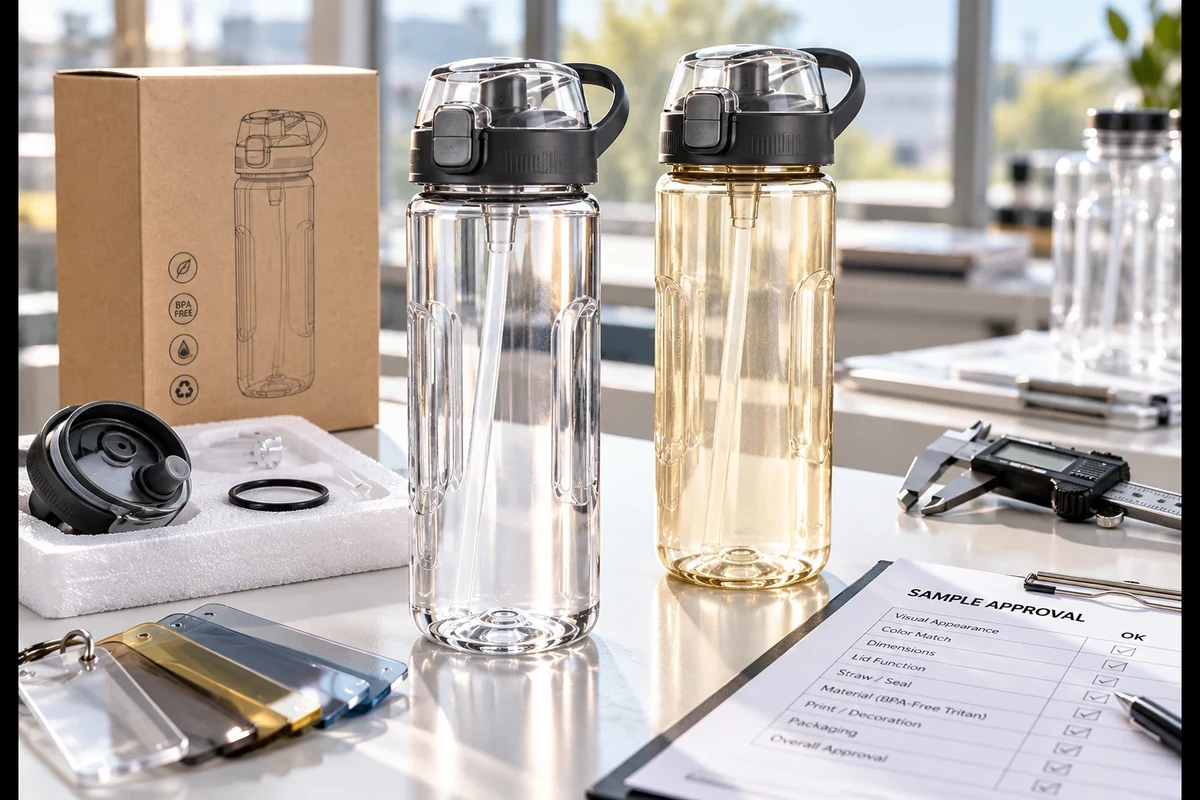 Water Bottle Sample Approval Checklist for Bulk Orders
Don't approve a bulk bottle order from photos alone. Learn how to check the body, lid, logo, packaging and golden sample before mass production.
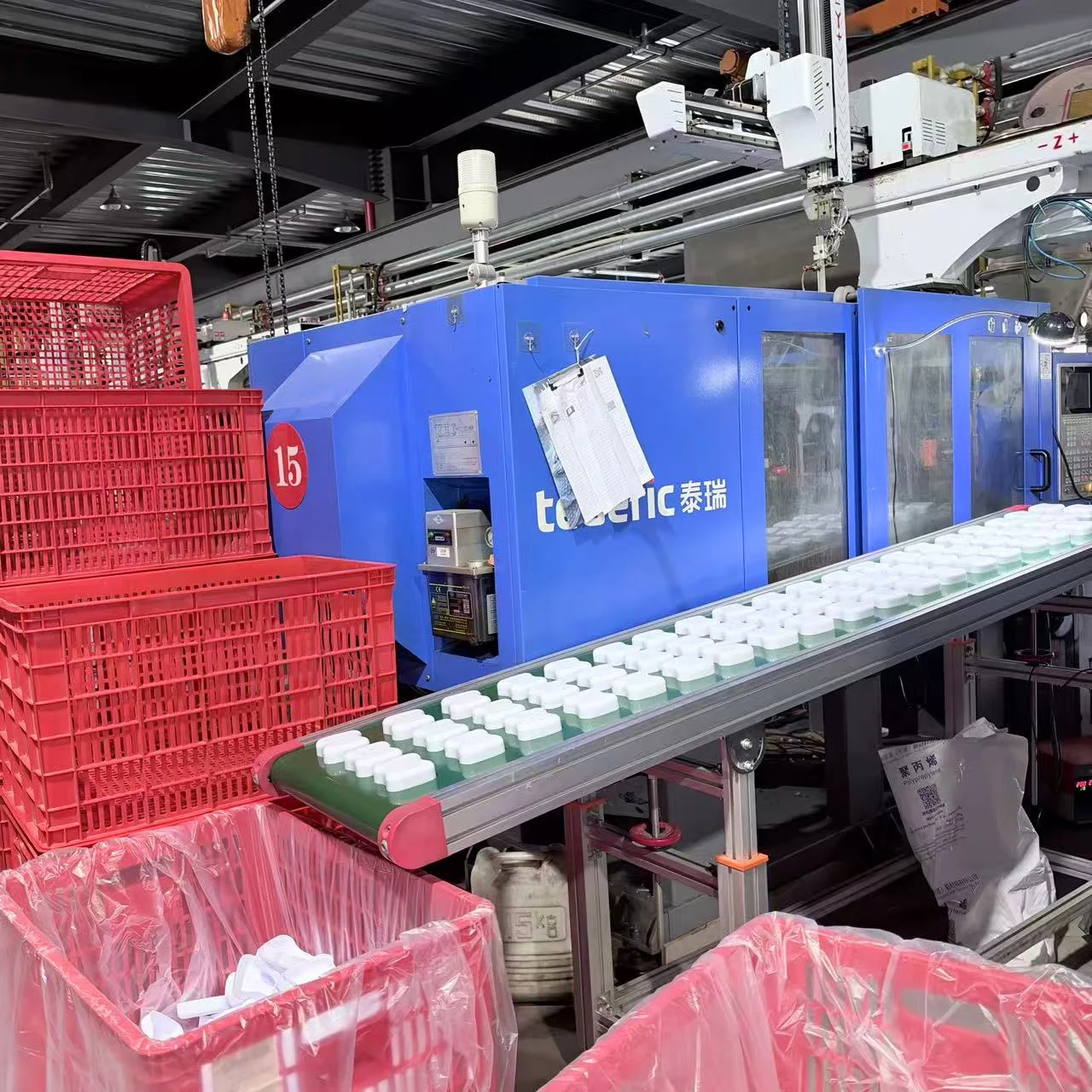 OEM vs ODM Plastic Bottles: A Guide for Brands
Understand stock customization, OEM production and ODM development, from drawings and samples to tooling and production approvals.
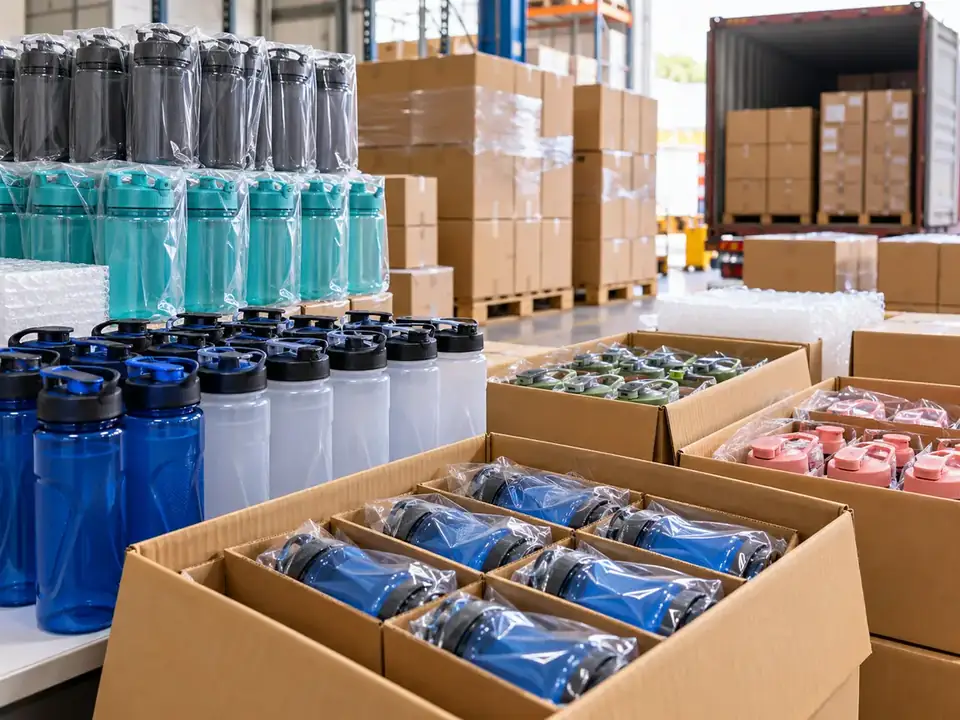 Export Packaging for Custom Water Bottles: Carton and Shipping Guide
Reduce damage and freight surprises with practical master-carton, retail-label and documentation checks for bulk drinkware.