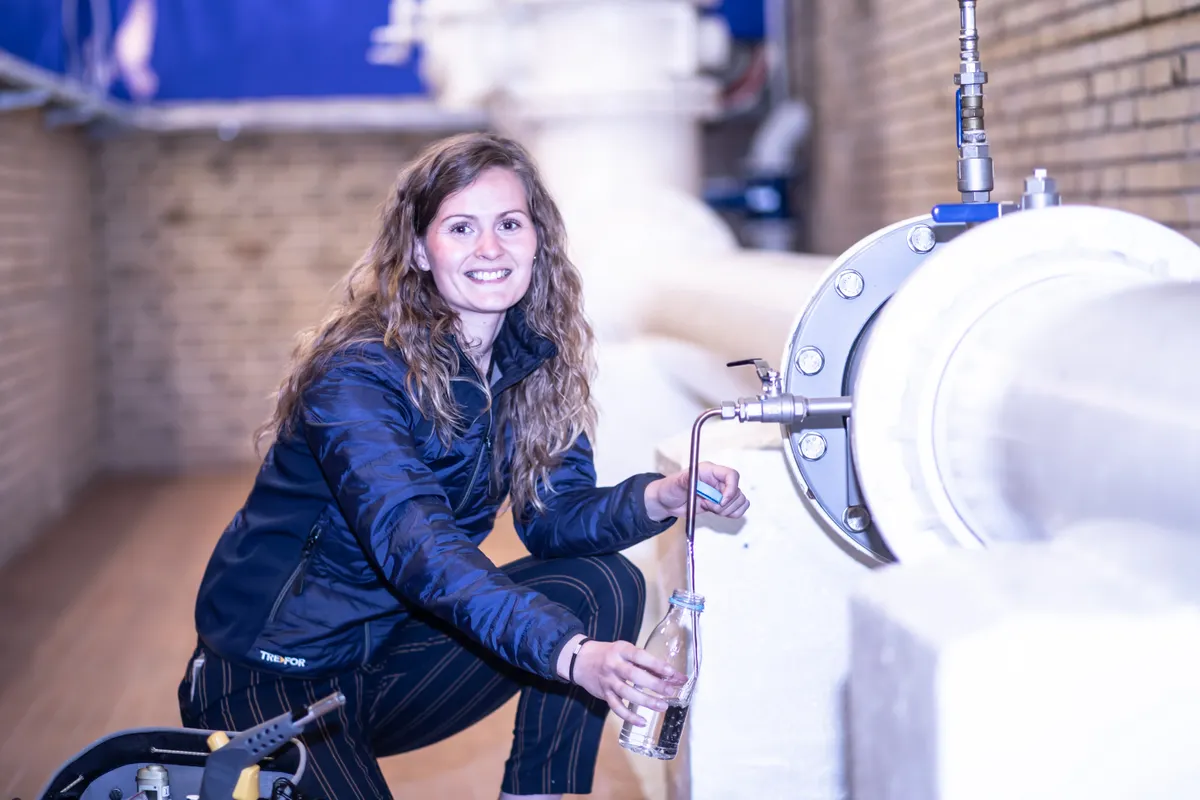
A bottle that looks suitable in a catalog may be awkward at the facility's refill point. Before a school, gym, office or hospitality program orders in bulk, compare the exact assembled sample with the actual dispenser, counter and user workflow, then record the approved model and conditions.
- List every dispenser type and facility location covered.
- Record exact model, cap and ml capacity.
- Request and measure model-specific height, diameter and opening.
1. Identify the exact refill point and how people use it
Start with the equipment at the facility, not a generic idea of a water fountain. Record the dispenser or filling station make and model if available, where users stand, whether the space is public or staff-only, and whether people arrive with a cap, handle or strap attached. Observe the flow at the location: approach, position, filling, closing and moving away. A school corridor, gym floor, office kitchen and hotel service area may have different clearances and traffic. If more than one dispenser type is installed, test each relevant one or document which locations are outside the program. Do not infer compatibility from a bottle photo or equipment marketing name; the physical relationship between opening, nozzle, counter and user is what the facility must confirm. Review model 2030 as a physical reference before approving this variant; confirm its current product record rather than assuming the same material or cap configuration.
2. Measure the bottle and opening that will be used
Ask the supplier for exact external height, widest body diameter, cap height and mouth opening for the selected model, then verify the assembled sample. Measure from the base to the highest point of the cap because a handle or spout may change how the bottle sits under a nozzle. Record the mouth opening only when the supplier confirms the measurement point; nominal capacity does not describe the opening. Test with the intended cap fitted and note whether it must be removed during refill. Current XUYI pages list model 2400 at 380 ml, model 2401 at 650 ml and model 2470 at 800 ml, but those capacities do not establish nozzle clearance or opening dimensions. Compare the exact product record with the actual refill point. Review model 2059 as a physical reference before approving this variant; confirm its current product record rather than assuming the same material or cap configuration. Compare the listed model record with its assembled sample at the actual point; see Model 2400 · 380 ml / 12 oz class.
3. Test the selected sample at the real facility location
Bring the assembled sample to the location and follow the facility's normal procedure. Position it under the actual stream, check whether the rim or cap hits equipment, and observe whether the user can hold it steadily without blocking a control or surrounding traffic. Use a dry run first if the site requires it, then perform a normal water refill if safe and allowed. Record dispenser, sample model, cap state and reviewer. One successful demonstration establishes only that the tested combination worked in those conditions; it does not prove every dispenser or bottle variant is compatible. If users struggle to align the opening or remove the cap, record the issue and test another model or workflow before committing to a large order. Check the selected cap and measured opening on Model 2401 · 650 ml / 22 oz class; capacity alone does not establish fit.
4. Check the whole refill workflow, not only nozzle clearance
The facility needs to understand where the cap goes while the bottle is open, where users can set down a full bottle, and whether the location has enough space for a person to refill and leave without blocking others. If the bottle includes a removable strap or other part, confirm how it is handled at the refill point. Ask the site manager whether the floor, counter and cleaning arrangements create specific restrictions. Photograph the setup without identifiable people unless authorized. The purpose is to evaluate the real workflow and make a practical purchase decision, not to claim that a bottle works in every public station. Capture one approved setup for each distinct dispenser type and keep site notes with the sample record.
5. Compare capacity, weight and refill frequency as a facility decision
Capacity is one input to facility selection. Use the exact milliliter capacity recorded for the model, then compare the filled sample's actual weight and dimensions in intended users' hands. A larger bottle may require fewer visits to a refill point but may be harder to carry for some users; do not state a universal preference without facility feedback. Ask the program owner how often people can refill, how the bottle will be stored and whether staff carry it between rooms. The catalog lists 380 ml for model 2400, 650 ml for 2401 and 800 ml for 2470; each page also gives an approximate oz class. Keep ml exact and treat oz as a size class, then let the site test determine which option works. Use the page as a SKU reference, then validate the full assembly at the facility: Model 2470 · 800 ml / 28 oz class.
6. Review material and care documents for the destination market
The physical refill check does not answer material or use-condition questions. Ask for written care instructions and model-specific documentation for the bottle body, cap, seal and each component contacting liquid. If the facility has rules for permitted materials, temperature, cleaning products or user groups, give them to the supplier before the quote is approved. For EU sales, the European Commission describes the food-contact framework and specific measures for plastic materials; U.S. buyers should check the applicable FDA regulatory status for each food-contact component. These official references explain market rules but do not certify a particular XUYI model. Tie each compliance statement to exact supplier evidence, finished product and intended conditions.
7. Approve a site-tested model and keep the next order aligned
Close the decision with a short approval record: facility location, dispenser type, exact model, capacity, cap and body configuration, measured dimensions, refill steps, care document, color, decoration and sample photos. Name the person who approved the test and the date. If the program covers several sites, list which dispenser types were checked and which remain pending. Link the record to the purchase order so a later reorder can be compared with the same approved combination. A current product page is a starting SKU record, not evidence of site testing. Ask the manufacturer to flag any proposed change in cap, body, dimensions or material before production and repeat the relevant test if the change affects the refill workflow.
Market documents and model references
A refill demonstration checks physical fit at one site. It does not establish material compliance or validate an untested model. Match documents to the exact components, intended use and destination market.
Practical next step: Keep the facility equipment manual beside the bottle measurement sheet, and request material and care evidence for the selected SKU before approving a purchase.
Primary references
- European Commission: Food Contact Materials legislation ↗
- U.S. FDA: Regulatory status of food-contact material components ↗
External regulations and standards are independent references, not product certification or proof of testing by XUYI. Confirm applicability and the latest rules for the exact product, destination and transaction date.
Refill-point compatibility worksheet for facility buyers
Record the actual product and equipment combination tested. A result at one location does not establish universal fit.
| Fit factor | How to check | Evidence to retain |
|---|---|---|
| Equipment | Dispenser type, model and location | Site record |
| Bottle | Exact SKU, assembled height and diameter | Supplier spec and sample |
| Opening | Measurement point and cap state | Sample photo and notes |
| Workflow | Position, refill, close and leave | Observed test steps |
| Approval | Reviewer, date and pending locations | Signed purchase reference |
Buyer decision criteria, not XUYI certification, published MOQ or guaranteed delivery times. Verify the exact model and market requirements.
Buyer checklist
Use these points when comparing a factory sample, artwork approval and purchase quotation.
- List every dispenser type and facility location covered.
- Record exact model, cap and ml capacity.
- Request and measure model-specific height, diameter and opening.
- Test the assembled sample at the actual refill point.
- Check cap removal, nozzle clearance, user position and traffic.
- Record which sample and dispenser were tested and by whom.
- Separate a single-site test from claims about all locations.
- Review care instructions and market-specific material documents.
- Save approved photos and site notes with the purchase order.
- Recheck cap, body, dimensions or material changes before reorder.
Frequently asked questions
Can a product listing confirm that a bottle fits a refill station?
Usually it cannot establish fit by itself. Compare exact bottle measurements with the actual dispenser and test the assembled sample at the location where the program will operate.
Which bottle measurements matter most at a refill point?
Check overall height with cap fitted, widest body diameter, the supplier-defined opening measurement, and any handle or strap that changes positioning. Confirm measurement points before comparing equipment clearance.
Should the cap stay on during refilling?
That depends on the bottle design and workflow. Test the selected cap at the site, follow supplier instructions and record whether the cap must be removed and where it can be placed.
Does one successful test at one dispenser approve every site?
No. The result applies to the tested model, cap, dispenser and conditions. For different equipment or layouts, record what was checked and test materially different setups.
Need a quote for a specific model?
Send the intended model, material requirements, expected order quantity, artwork and destination market. We will review the options for that exact product rather than assume one specification fits every bottle.
Request a Plastic Bottle Quote →Related Buying Guides
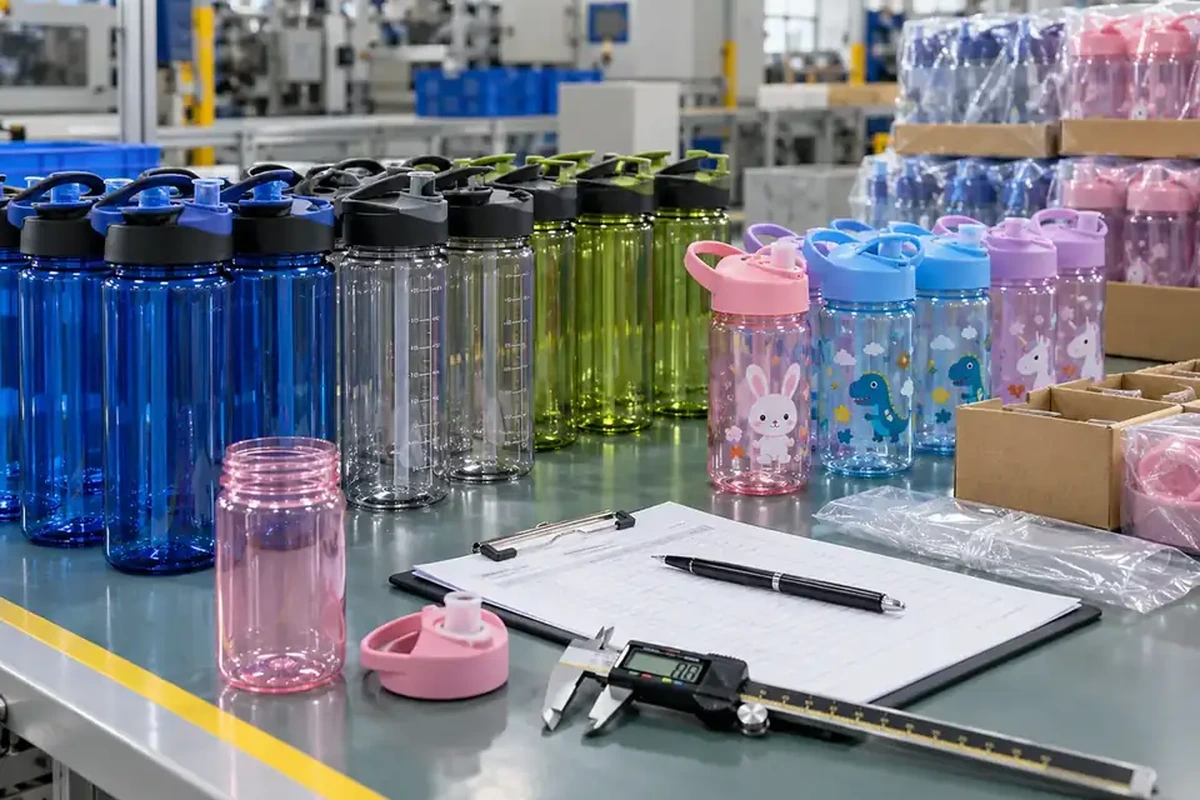 How Do You Compare Custom Plastic Water Bottle Suppliers for a Bulk Order?
A practical B2B guide to comparing custom plastic water bottle suppliers by material, sampling, decoration, packing, documentation and reorder control.
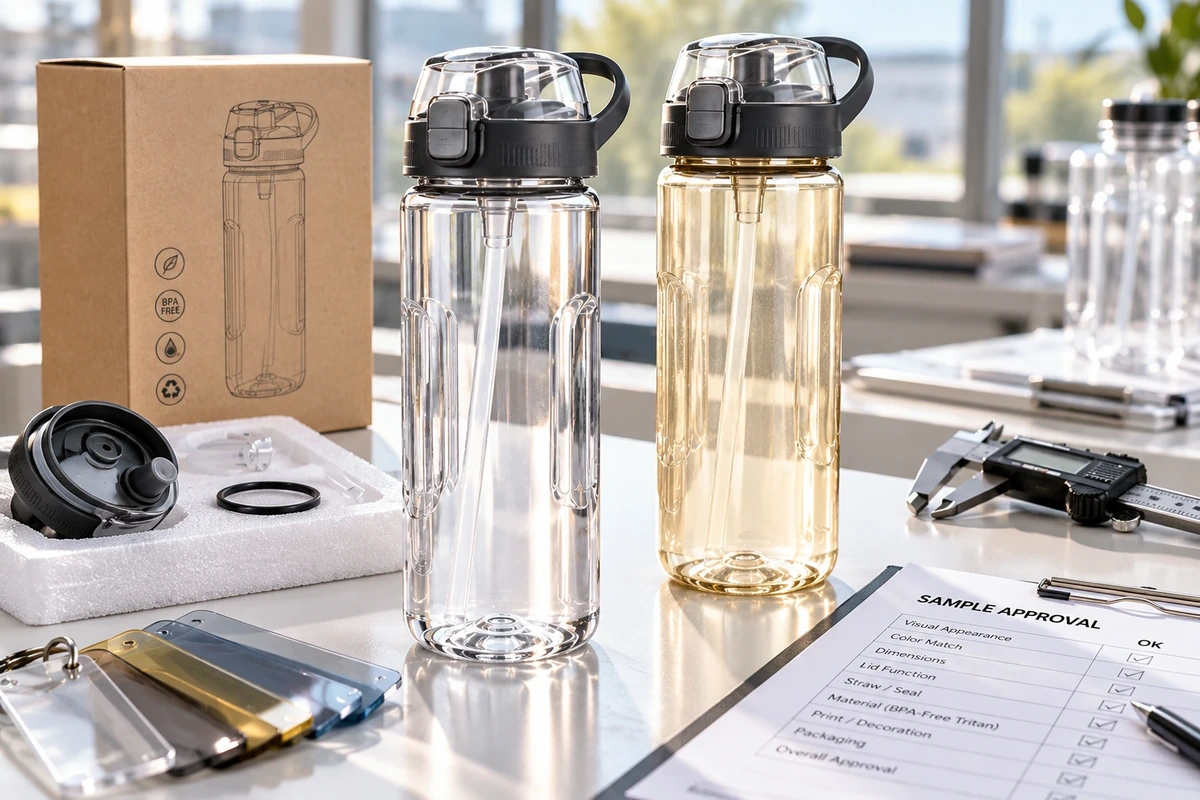 What Should a Wholesale Water Bottle RFQ Include Before You Ask for OEM Pricing?
A conversational B2B RFQ checklist for wholesale water bottles: define the model, capacity, material, colors, logo, packaging, destination and sample approval.
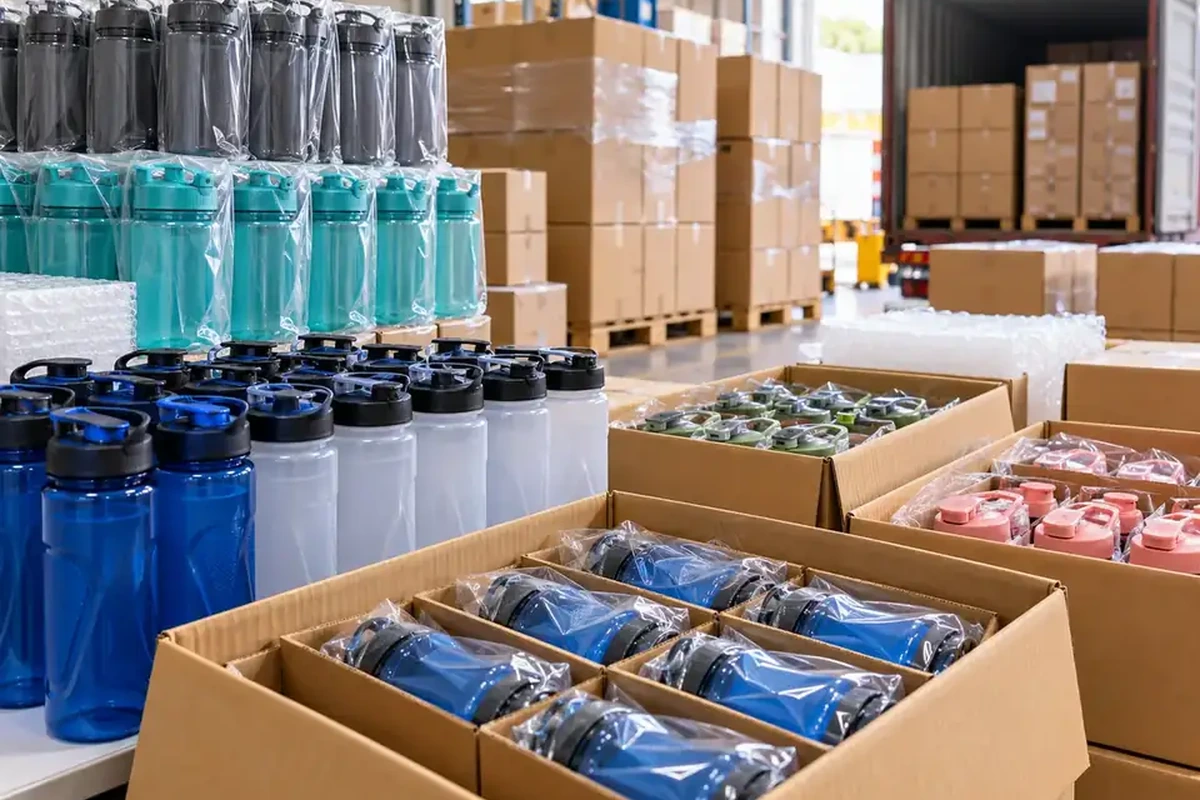 How Can Importers Plan Carton Packing for Custom Water Bottles Before Export?
A practical B2B guide to custom water bottle export packing, carton dimensions, labels, 3PL receiving, freight planning and reorder control.