City tour operators work to departure times, guest lists and limited space on coaches and at pickup points. Reusable bottle welcome kits can support a branded experience, but they must be specified as physical products with realistic pack-out, travel and cleaning instructions. This guide helps group-travel buyers plan an auditable wholesale bottle order without inventing claims about a particular tourist or route.
- Separate day-tour, multi-day, coach and partner-hotel handout needs.
- Define the kit bill of materials and the staff handout owner.
- Test sample bottle size in selected backpacks, seat pockets and totes.
1. Write the guest-kit brief by route and handout point
A day trip, a multi-day sightseeing program and a charter coach may require different packing and issue procedures. List the guest group, departure location, tour duration, available refill points and whether guides hand out bottles at check-in, on the vehicle or at a hotel. Decide if the reusable bottle is complimentary, sold, included in a premium package or reserved for staff. Record language requirements for care instructions and the actual departure schedule. A welcome-kit purchase should not presume that the operator controls potable-water availability at every stop or that the bottle replaces any separate passenger welfare arrangements. Segment forecast quantities by confirmed guests, guides, last-minute replacements and partner allocations. The company should own one versioned kit bill of materials so staff know precisely which items are intended for each departure. Review model 2030 as a physical reference before approving this variant; confirm its current product record rather than assuming the same material or cap configuration.
2. Check bag pockets, vehicle storage and real passenger handling
A bottle that looks compact online may not fit the travel backpack or coach storage actually used. Request physical samples with the final lid, strap and accessory arrangement. Measure the base diameter, height and opening clearance, then test the sample in selected daypacks, seat pockets, cup holders and check-in totes. A bottle should never be advertised as universally compatible with coaches or aircraft: facilities and carriers vary. Consider whether a screw cap, straw lid or flip top is practical for the intended user, but test handling rather than relying on photographs. For mixed-age groups, check relevant customer instructions and any market or age-specific requirements without assigning a child-suitability claim from appearance alone. Record what staff observed during packing, handout and collection of the sample. Review model 2059 as a physical reference before approving this variant; confirm its current product record rather than assuming the same material or cap configuration. Test the catalog-listed 550 ml XUYI model 2501 路 550 ml against a real daypack or pickup tote; do not infer universal travel compatibility from the product photograph.
3. Establish water, cleaning and transport guidance separately
A tour welcome bottle is an empty product unless the operator explicitly runs a separately validated filling and distribution process. Confirm the supplier's exact body, lid and seal materials, care instructions and destination-market documentation for each proposed model. Do not claim bottles are dishwasher-safe, leakproof, approved for hot drinks or compliant with a specific market without model-specific evidence. Avoid telling customers to fill from a particular location unless the operator has independently verified that it provides suitable drinking water. If guests travel by air, remind staff that airport security and carrier rules may affect filled containers; do not publish an unconditional rule. Ensure customer-facing care guidance is understandable in the operator's served languages. Keep the signed sample, model source and written product documentation in the procurement file.
4. Design a useful travel brand mark, not just a souvenir logo
A city tour company may want the logo, route name, city motif or a group partner mark. Ask the brand owner to approve legal use of the graphics, the exact body color and placement on the actual bottle shape. A souvenir that carries a seasonal date or temporary campaign slogan should be ordered separately from evergreen stock. Request artwork proofs, a printed sample when appropriate, and clear identification of the print method. Test whether the packed bottle and branding work with maps, tickets, sunscreen or other confirmed kit components. If several tour operators share a receiving warehouse, print carton identifiers that avoid giving one operator another's custom order. Avoid implying the pictured stock travel scene shows an XUYI passenger or that any model has been tested for a specific coach without actual validation. Consider the 650 ml XUYI model 2401 路 650 ml only when the sample's cap assembly, artwork and guest care information have been verified.
5. Plan arrival dates around departures and handout labor
Determine the earliest departure for which the order is intended, then work backward through arrival inspection, storage transfer, staff kit assembly, production, artwork approval and sample sign-off. International shipping estimates are not confirmed delivery dates. Include customs, local warehouse processing, public holidays and a contingency for damaged or late cartons. Ask whether the supplier can pack bottles by route, language, tour company or color without changing the agreed price. Verify outer carton size and hand-carry limits at the actual pickup point. If multiple destinations receive stock, allocate cartons by site and reserve a documented buffer rather than borrowing from another departure's quantities without updating records. The operations team should know the latest date for finalizing group numbers and how a short shipment would be handled before the first guest arrives.
6. Normalize supplier quotes for the complete guest kit
Compare offers on the same assembled bottle, color mix, logo process, packing, quantity, destination and delivery terms. Include setup charges, samples, printed sleeves or boxes, carton labels, freight and receiving work. A low headline bottle price may not save money if local staff must unpack and repack mixed cartons by tour departure. Decide whether to quote one reusable model for all tours or a compact model for urban day trips and a larger one for longer itineraries. Use documented physical testing to justify the split. If partner hotels distribute kits, agree in advance whether they receive bulk cartons or individually labelled units and whose staff will record the handout. Keep a clear list of inclusions and exclusions so that quotations from different factories can be compared on an equivalent basis. Compare 800 ml XUYI model 2402 路 800 ml for longer itineraries only after confirming the physical size, carton plan and delivery terms.
7. Inspect deliveries and learn from guide feedback
Before distribution, compare the received cartons with the purchase order, approved logo, model ID, color allocation and expected count. Inspect a documented sample for lid fit, printing, visible defects and any included packing material. Isolate damaged or mismatched items without silently mixing them into other departure inventories. Ask guides to record actual issuance, guest questions and practical complaints, such as difficult lids or poor bag fit; such observations support purchasing decisions but are not laboratory performance evidence. Compare ordered units with guest allocations and remaining stock after each travel period. For the next reorder, keep the exact model, artwork version, packaging plan, destination and timeline that worked. The goal is a repeatable guest-pack system, not a one-off souvenir purchase whose true cost and stock location are unknown.
Sightseeing Tour Guest Kit Approval Matrix
Use the actual route and distribution point to establish each procurement requirement.
| Buying decision | Evidence to collect | Approval owner |
|---|---|---|
| Departure and audience | Route, issue point and final passenger allocations | Tour operations |
| Bag and coach compatibility | Trial pack, pocket measurements and sample notes | Guide supervisor |
| Materials and use guidance | Assembly details and verified care information | Product procurement |
| Brand identity | Approved logo, seasonal version and color proof | Travel brand owner |
| Transit and site stock | Milestones, carton labels and site split | Logistics manager |
| Receipt and reorder | Inspection record and route-level stock balance | Operations coordinator |
Buyer decision criteria, not XUYI certification, published MOQ or guaranteed delivery times. Verify the exact model and market requirements.
Buyer checklist
Use these points when comparing a factory sample, artwork approval and purchase quotation.
- Separate day-tour, multi-day, coach and partner-hotel handout needs.
- Define the kit bill of materials and the staff handout owner.
- Test sample bottle size in selected backpacks, seat pockets and totes.
- Confirm the exact lid, seal, body materials and written care instructions.
- Do not make unsupported transport, water-safety or performance claims.
- Approve route logos, city designs and color variants on real bottle proofs.
- Freeze site-level allocations before the earliest departure.
- Compare landed cost including repacking, carton labels and local delivery.
- Inspect a recorded sample before issuing bottles to guides or partners.
- Track departures, shortages, unused stock and actual guest feedback.
Frequently asked questions
Should tour companies distribute bottles full or empty?
The bottle purchase alone does not establish a safe filling system. Unless a separately controlled filling operation exists, specify an empty bottle handout with clear, accurate care and refill guidance.
Will the same model fit all tour coaches and travel bags?
No. Vehicle seating, cup holders and bag pockets vary. Test the complete sample against actual equipment and note exactly which combinations were checked.
How can an operator avoid mixed branded cartons at several destinations?
Assign a SKU, color, artwork version and destination to every allocation. Request readable carton labels and reconcile quantities at local receiving points before guides start handout.
Does the cover picture show an XUYI tour customer?
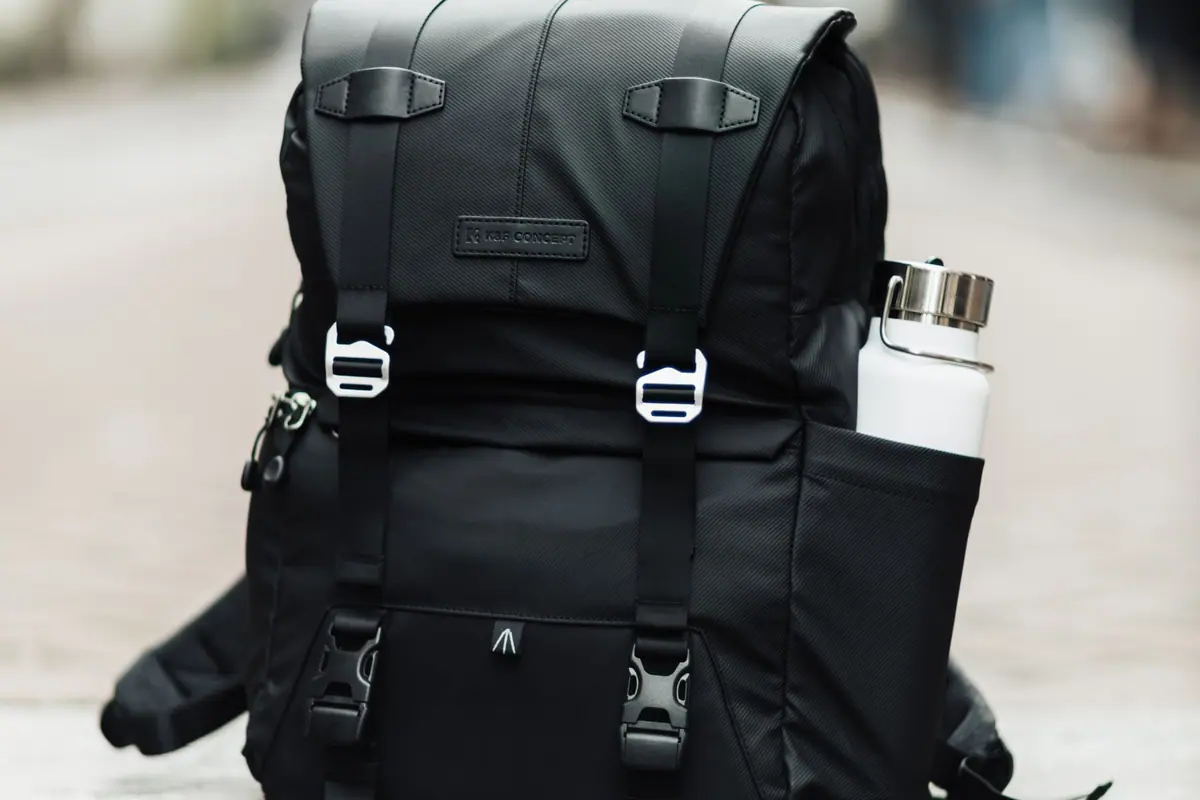
No. The licensed editorial image shows a city travel backpack holding a reusable bottle. It is illustrative, not evidence of an XUYI tour operator, contract or exact supplied SKU.
Need a quote for a specific model?
Send the intended model, material requirements, expected order quantity, artwork and destination market. We will review the options for that exact product rather than assume one specification fits every bottle.
Request a Plastic Bottle Quote →Related Buying Guides
 How Can Airport and Rail-Station Shops Source Reusable Water Bottles Wholesale?
Travel retail reusable water bottle wholesale: terminal assortment, sample review, packaging labels, shelf fit, case packs, margin, compliance and reorders.
 How Should Outdoor Tour Operators Buy Reusable Water Bottles for Group Activities?
Outdoor tour and adventure group bottle sourcing: user scenarios, carrying formats, verified materials, guide distribution, cleaning policies, group packing, contingency spares and replenishment.
 How Can Corporate Buyers Roll Out Branded Water Bottles Across Multiple Offices?
An actionable B2B guide to corporate water bottle gifts: recipient allocations, branding approvals, office drop shipments, packaging, budgets, timing and exception planning.