Race organizers have a fixed date, multiple stakeholders and thousands of small handout decisions. A reusable bottle for a race kit is merchandise, not a replacement for the event's approved course hydration plan. Use this purchasing guide to specify an actual bottle model, approve sponsor artwork, allocate quantities and avoid a last-minute packing problem.
- Separate participant merchandise from approved on-course hydration and medical operations.
- Freeze participant, staff, sponsor and replacement allocations by race distance.
- Test the complete bottle in the actual race-kit bag and pickup crate.
1. Separate the race kit from the official hydration operation
The first procurement decision is purpose. The runner kit may contain a reusable souvenir bottle, while course water stations, medical plans and on-route fluids are managed under the event's separate operational and safety procedures. Do not write an RFQ that treats one product as a solution to both. Record the distance, expected participants, wave structure, kit collection timetable, post-event merchandise plan and sponsor obligations. Then identify whether the bottle is a participant giveaway, a retail add-on, a volunteer item or an elite-athlete allocation. These segments can require different artwork and packing, even if the bottle model is identical. Keep a versioned allocation sheet for registered runners, late registrations, staff, sponsors and reasonable replacements. Event teams should reconcile this sheet against confirmed registration data before the final quantity lock; an early marketing estimate is not a purchase order. Review model 2030 as a physical reference before approving this variant; confirm its current product record rather than assuming the same material or cap configuration.
2. Choose a sample size and carry format that fit the kit
Compare complete physical samples rather than headline capacities. A compact sports bottle may fit a participant bag, while a taller option can be inconvenient at check-in or in a runner's day bag. Record the catalog-listed capacity of each candidate, then verify actual height, base width, lid projection and loaded weight using supplier samples. Test the assembled sample in the proposed drawstring bag, carton and handout crate. Ask volunteers to pack and retrieve it using the intended event layout. Distinguish drinking-cap style from a product's suitability for running: a catalogue image does not prove one-handed operation, seal performance or easy cleaning. If spectators or runners may take bottles home by public transit, consider whether the bottle is supplied empty and whether the kit instructions are easy to understand. Make a written choice supported by measurements and sample observations. Review model 2059 as a physical reference before approving this variant; confirm its current product record rather than assuming the same material or cap configuration. Use XUYI model 2501 路 550 ml as a documented 550 ml catalog option for kit-bag sample fitting; verify actual external dimensions and cap style on the selected sample.
3. Document the lid, materials and market requirements
Before comparing quotations, request the full bill of materials for the bottle body, lid, seal, straw or other removable parts. Confirm which claims the supplier can actually document for the exact model and intended destination market. Do not add 'BPA-free', 'dishwasher safe', 'leakproof' or food-contact compliance to sponsor copy unless the supplier has supplied evidence that applies to the finished assembly and the intended use. Test practical handling on the sample, including repeated opening, cap engagement, visible manufacturing defects and instructions for cleaning removable components. A race organizer should not promise temperature performance or leak resistance without defined testing. Keep the approved sample, its photos, the final artwork proof and the model-specific care information together so a different lid variant cannot silently be substituted after purchase.
4. Resolve sponsor artwork and participant identity before production
Race merchandise often contains an event logo, year, presenting sponsor and partner marks. Establish one rights holder who can approve every mark. Give the supplier vector artwork, exact print placement, color references and the hierarchy of sponsor logos. Require a proof on the actual bottle shape and color rather than approving a flat logo montage. If several race distances receive distinct designs, treat each version as a separate SKU for artwork and carton tracking. Recheck the event year, sponsor names and punctuation; the most expensive errors are often tiny changes caught after printing. If the race name or sponsor lineup changes, freeze the old proof and issue a new numbered approval, not an informal message. Ask the supplier which print method and substrate combinations have been sampled, and confirm whether a physical printed sample is required before the entire order proceeds. Compare XUYI model 2502 路 750 ml, listed at 750 ml, only after sponsor artwork and lid-component requirements are recorded for the actual model.
5. Work backward from the kit pickup opening hour
The hard deadline is the first participant pickup, not race morning. Work backward through delivery to the event warehouse, receiving checks, kit assembly, production completion, supplier artwork approval, sample review and booking of the production window. Ask for dates and the responsible party at every milestone. Separate estimated production time from transit time, customs clearance, unloading and local transfer. Account for a buffer to replace misprinted or damaged units before volunteers begin assembly. Check whether cartons can be labelled by distance, sponsor, color and delivery zone, and whether a split shipment is commercially workable. If the race changes its enrollment estimate, require a written confirmation of the last quantity adjustment date. A schedule with an unowned deadline is not a dependable supply plan.
6. Calculate cost per usable participant kit, not just unit price
Compare quotations on the same model, color split, logo version, print method, quantity, packing level and Incoterm. Include artwork charges, sampling, printed packaging, labels, freight, destination fees and any required spare units. Distinguish the bottle purchase cost from the final cost of placing one complete kit in a runner's hands. If the event relies on sponsor funding, show how additional branding or last-minute design amendments affect the approved budget. Confirm carton quantities and dimensions before estimating truck or event-site storage space. A lower unit price may become more expensive if it requires repacking, separate sticker work or a second local delivery. Use an approval table that records the supplier's assumptions so the next race can reorder against known specifications instead of relying on a previous headline price. Include XUYI model 2505 路 800 ml, the catalog-listed 800 ml model, in landed-cost comparisons only when carton quantity, decoration and shipping terms match.
7. Receive, count and close the loop after the race
Check the delivered cartons against the approved purchase order, sponsor artwork version, model and agreed color allocation. Open a documented sample of cartons to inspect damage, printing alignment, accessories and visible finish. Photograph issues before rework or distribution and isolate questionable stock. At kit assembly, count shortages by SKU rather than merging different sponsor versions. After the race, reconcile planned allocations with actual giveaways, leftover stock, sponsor commitments and any participant complaints. Decide whether remaining year-specific bottles can be sold or must be segregated. Retain the signed sample and accurate item specification for next season. The purchasing record should answer three questions: which exact model was approved, which handout quantities were used, and what must change before the next order.
Marathon Race Kit Bottle Approval Matrix
Keep the operating hydration plan distinct from participant merchandise procurement.
| Buying decision | Evidence to collect | Approval owner |
|---|---|---|
| Purpose and allocation | Distance and recipient group schedule | Race operations and merchandise lead |
| Complete bottle size | Measurements and trial kit pack | Kit assembly manager |
| Materials and care | Written model-specific supplier documents | Product buyer |
| Sponsor identity | Rights clearance and numbered proofs | Sponsorship lead |
| Timing and carton layout | Production milestones and warehouse labels | Logistics coordinator |
| Arrival and closeout | Receiving inspection and leftover record | Procurement manager |
Buyer decision criteria, not XUYI certification, published MOQ or guaranteed delivery times. Verify the exact model and market requirements.
Buyer checklist
Use these points when comparing a factory sample, artwork approval and purchase quotation.
- Separate participant merchandise from approved on-course hydration and medical operations.
- Freeze participant, staff, sponsor and replacement allocations by race distance.
- Test the complete bottle in the actual race-kit bag and pickup crate.
- Record physical dimensions, assembled components and model-specific care instructions.
- Check evidence for any materials, food-contact or performance claims.
- Approve each sponsor and race-year artwork version on the exact bottle color.
- Lock the production schedule against the earliest kit pickup date.
- Compare like-for-like landed costs, carton labels and spare quantities.
- Inspect received cartons and separate any mismatched sponsor versions.
- Track remaining bottles and record lessons for next year's race.
Frequently asked questions
Can race organizers treat a reusable bottle as the event hydration plan?
No. Souvenir and participant-pack bottles are merchandise. Course hydration, event medical arrangements and participant safety require their own event-specific operating plan.
What bottle size is best for a marathon participant kit?
There is no universal best size. Compare the supplier's documented capacities and test actual samples in the planned kit packaging, then approve a size based on the event's intended use.
Can multiple sponsor logos be printed on one bottle?
Possibly, depending on the bottle surface and selected print process. Obtain rights clearance, a model-specific proof and a separate signed version for every sponsor or color combination.
Is the race cover an XUYI customer or product photograph?
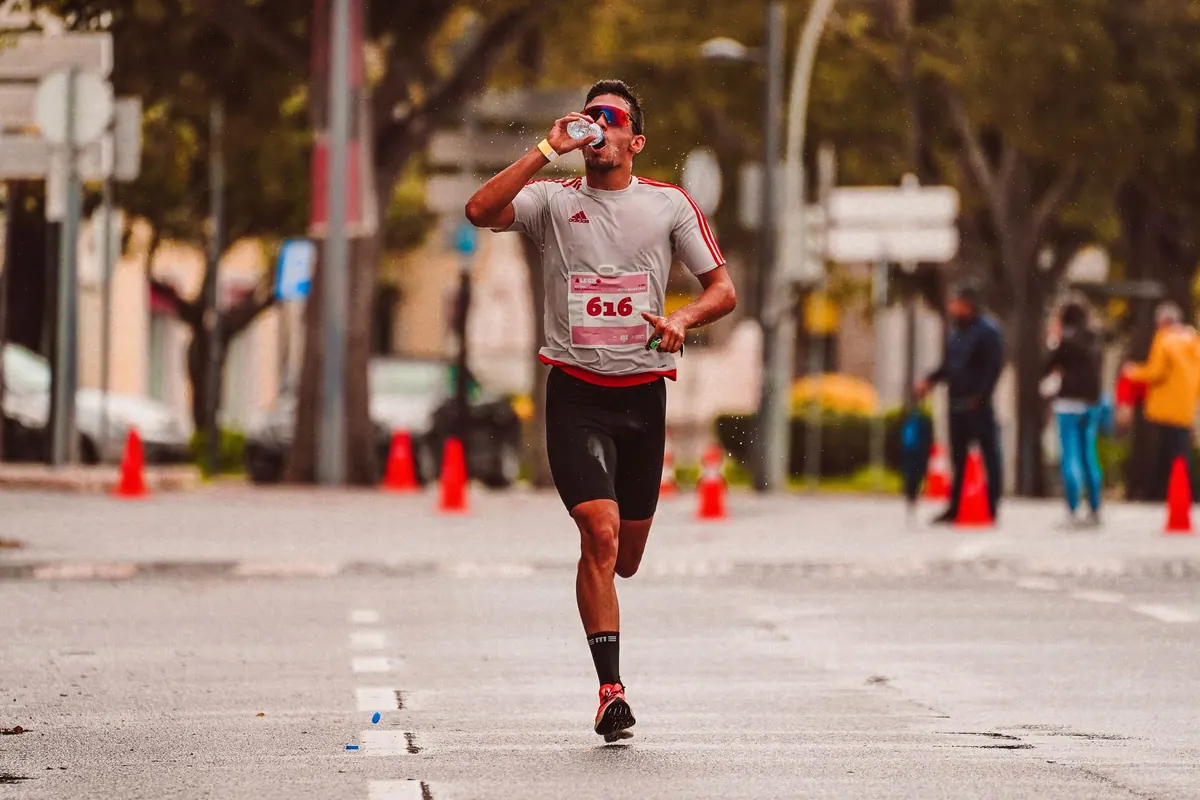
No. The licensed editorial photo illustrates a runner drinking during a race. It does not document an XUYI race order, customer relationship or tested bottle model.
Need a quote for a specific model?
Send the intended model, material requirements, expected order quantity, artwork and destination market. We will review the options for that exact product rather than assume one specification fits every bottle.
Request a Plastic Bottle Quote →Related Buying Guides
 How Should Cycling Clubs and Race Organizers Buy Branded Water Bottles in Bulk?
Cycling race water bottle wholesale guide: rider allocation, cage fit, printing, packing by start wave, delivery dates and receiving inspection.
 How Should Event Agencies Order Branded Water Bottles Before a Fixed Trade Show Deadline?
B2B event-agency checklist for trade show water bottle giveaways: reverse calendars, artwork proofs, attendee forecasts, carton labels, freight deadlines, contingency stock and quality control.
 How Should Soccer Academies Buy Reusable Team Water Bottles in Bulk?
Soccer Academy Bottle Procurement wholesale guide: exact bottle samples, licensed logo proofs, realistic allocation, packaging, landed prices and reorder controls.