A spa or wellness retreat may want one reusable bottle for arrivals, activity sessions and retail, yet these are different touchpoints. The strongest purchase brief begins with the guest journey, cleaning responsibility and actual model specifications rather than a generic sustainability promise. This guide turns that brief into a sample-led B2B procurement plan.
- Separate welcome-gift, class-use and retail bottle requirements.
- Record each guest touchpoint and who owns cleaning or care instructions.
- Test full samples against lockers, totes, quiet rooms and reception displays.
1. Map the guest journey before choosing a bottle
A guest might receive a welcome kit, take a class, walk between treatment rooms and use a refill point. Retail customers may want a different size from guests staying for one day. Map each touchpoint and decide whether the bottle is complimentary, refundable, rented, sold or guest-owned after checkout. Record expected occupancy, retreat session frequency, group size and seasonal peaks without inventing a usage volume from marketing forecasts. The procurement brief should state where and by whom bottles are distributed, whether each needs individual packaging, and where excess stock is stored. Guest-facing claims must remain accurate: a bottle may support a refill initiative, but the purchase itself does not demonstrate a measurable environmental benefit. Assign responsibility for care information and any required return or cleaning process before approving the order. Review model 2030 as a physical reference before approving this variant; confirm its current product record rather than assuming the same material or cap configuration.
2. Test the actual size against the wellness environment
Quiet movement spaces, class mats, lockers and guest welcome bags create practical constraints that do not appear in a product photograph. Select several catalog sizes and request complete samples. Compare height, diameter, grip, weight, cap opening, tabletop stability and the noise of opening or setting down the bottle in a quiet room. Check the sample in intended lockers, totes and reception displays, rather than claiming that a dimension fits all rooms. For an outdoor retreat, assess whether the design is comfortable to carry during the specific program. A compact size might work for a short workshop; a larger one can suit a longer activity but create more bulk. Use a short observed trial with staff and keep the approved model/color written down. Capacity alone should not decide the guest experience. Review model 2059 as a physical reference before approving this variant; confirm its current product record rather than assuming the same material or cap configuration. Review XUYI model 2400 路 380 ml, listed as a compact 380 ml sports bottle, for sample trials in short classes and welcome kits; confirm components and actual fit.
3. Define hygiene responsibility and evidence before marketing claims
Ask the supplier to identify body, lid, seal and any other removable parts for the exact assembled SKU. Request written cleaning instructions, applicable market documentation and any model-specific evidence supporting claims proposed for the spa's guest information. Do not advertise dishwasher suitability, antimicrobial properties, thermal performance, food-contact compliance or leak resistance simply because another bottle in the catalog appears similar. If the spa plans to collect and reuse bottles between guests, the business must separately establish and validate its own operational cleaning protocol under applicable requirements. The bottle supplier's marketing material is not a substitute for a facility hygiene procedure. If guests keep their bottles, provide understandable care guidance and identify replacement-part options only if the specific model supports them. Keep a signed sample and document changes to cap or seal components.
4. Build a consistent but restrained private-label identity
For wellness brands, a calm visual identity often matters more than filling every available print position. Specify the brand mark, color reference, intended placement and any guest-message copy, then ask the supplier for a proof rendered on the exact bottle shape. Check readability at normal viewing distance and after the planned printing process, using a physical sample if budget and timing allow. Confirm ownership of any partner or instructor logos before placing them on merchandise. If one model will be sold at reception and another given in welcome packs, make sure staff can distinguish their artwork and cartons. Avoid unsupported labels such as '100% eco-friendly' or 'medical-grade' without product- and market-specific evidence. Approve each color and logo combination as a separate version and preserve the final proof for reorder comparison. Consider XUYI model 2401 路 650 ml, catalog-listed at 650 ml, only after checking the lid assembly, printed artwork and the retreat's care instructions.
5. Align kits, replenishment and storage with occupancy patterns
Prepare an allocation plan for overnight arrivals, class-only visitors, instructor teams and retail shelf stock. Set a first-order quantity based on confirmed bookings and a documented operating buffer; treat a hoped-for occupancy percentage as a planning scenario, not a verified requirement. Confirm carton quantity, packaging dimensions and shelf space at the retreat before finalizing color splits. Work backward from the first event or opening date through sample approval, proof confirmation, production booking, freight and receiving checks. For ongoing properties, define a reorder point using actual guest consumption, retail sales and the supplier's confirmed replenishment cycle. If the business runs several locations, decide whether central receiving or separate deliveries reduce the risk of misallocation. A simple per-site record of opening stock, issued units and reorders will make the second purchase more predictable.
6. Compare the real delivered cost of guest use and retail
Ask suppliers to quote equivalent products: same assembled model, exact custom finish, color mix, printed packaging, approved print method and shipment terms. Separate unit price, artwork/setup charges, optional gift cartons, freight, local handling and storage. If a complimentary bottle is placed in a retreat package, calculate its cost per allocated guest rather than confusing it with retail margin. If bottles are sold, calculate the gross margin after packaging, payment charges and expected returns using actual operating data. Do not justify an extra premium with unverifiable sustainability claims. Request written treatment of damaged units, replacement parts, minimum order quantities and lead times. Normalize any supplier quote that uses a different carton quantity or included accessory before ranking offers. Put the comparison and signed proof in the same purchase file. Use XUYI model 2403 路 1000 ml, the catalog-listed 1,000 ml option, as a larger-size comparison; do not promise locker or tote compatibility without a trial.
7. Inspect the arrival and use feedback to refine the assortment
At receiving, verify model numbers, color splits, carton totals, decorative finish and visible condition against the approved sample and purchase order. Record a small inspection sample before distributing stock to guest rooms or reception. Label any mismatched cartons and photograph damage before asking for corrective action. During the first program cycle, collect staff observations about lid operation, cleaning instructions, guest questions and stock movement. Avoid presenting anecdotal feedback as a laboratory test or a validated health outcome. Separate guest giveaway quantities from retail sales so replenishment estimates remain credible. Retain the exact product source, approved artwork, batch details and the next-order improvement list. This turns a one-time branded accessory into a controlled, repeatable purchasing program.
Wellness Retreat Bottle Buyer Approval Matrix
Avoid relying on one generic product picture for several guest journeys.
| Buying decision | Evidence to collect | Approval owner |
|---|---|---|
| Guest use category | Welcome gift versus class versus retail allocation | Guest experience manager |
| Sample handling | Locker, tote and room trial notes | Wellness program team |
| Materials and care | Supplier assembly specification and care instructions | Procurement and operations |
| Brand identity | Approved logo, copy, placement and color proof | Brand owner |
| Stock and timing | Booking forecast, carton plan and reorder trigger | Operations manager |
| Receiving and feedback | Inspection record and usage observations | Receiving coordinator |
Buyer decision criteria, not XUYI certification, published MOQ or guaranteed delivery times. Verify the exact model and market requirements.
Buyer checklist
Use these points when comparing a factory sample, artwork approval and purchase quotation.
- Separate welcome-gift, class-use and retail bottle requirements.
- Record each guest touchpoint and who owns cleaning or care instructions.
- Test full samples against lockers, totes, quiet rooms and reception displays.
- Confirm body, cap, seal and accessory materials from the actual SKU source.
- Request evidence before making safety, performance or environmental claims.
- Approve restrained brand artwork and every color/print variant.
- Forecast arrivals and classes separately from retail stock.
- Check carton quantity, storage space, lead times and replenishment rules.
- Inspect a recorded receiving sample against the final approved product.
- Monitor guest feedback and reorder from actual consumption and sales.
Frequently asked questions
Should spas use the same bottle for giveaways and retail?
They may, but the use cases need separate forecasts, pricing, packaging and approvals. Test the same complete sample in both contexts before combining orders.
Does buying reusable bottles prove a spa is more sustainable?
No. Environmental outcomes depend on use, cleaning, transport, product lifetime and many other factors. Avoid numerical or absolute green claims without supporting evidence.
Can a supplier's bottle be reused between different guests?
A facility considering collection and redistribution must establish its own suitable cleaning procedures and applicable compliance checks. Do not infer that a generic product description proves an adequate facility hygiene process.
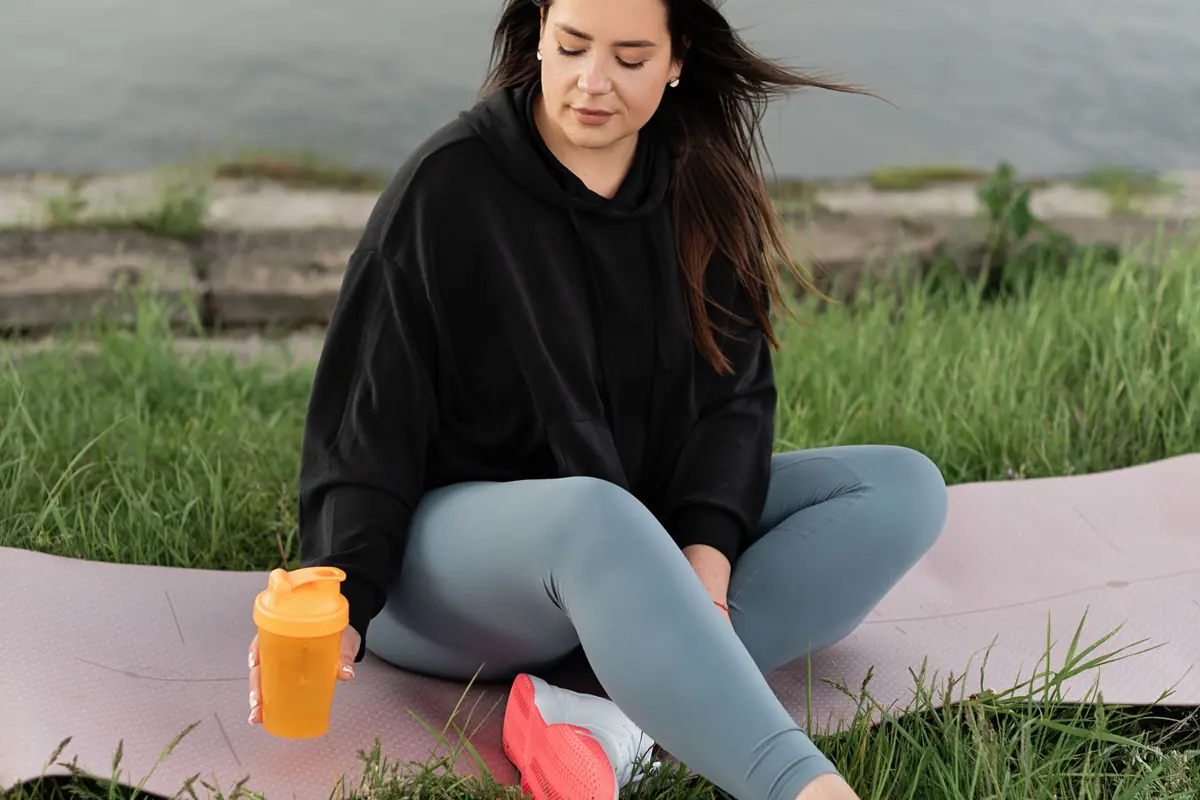
Does the wellness photo show an actual XUYI spa program?
No. The licensed stock image shows a person beside a yoga mat with a water bottle outdoors. It illustrates a wellness setting, not an XUYI client, product test or retreat partnership.
Need a quote for a specific model?
Send the intended model, material requirements, expected order quantity, artwork and destination market. We will review the options for that exact product rather than assume one specification fits every bottle.
Request a Plastic Bottle Quote →Related Buying Guides
 How Should Hotels and Resorts Source Reusable Guest Water Bottles in Bulk?
B2B hotel procurement guide to guest reusable water bottles: room-use requirements, cap hygiene, branding, housekeeping, packing, replacement parts and multi-property delivery.
 How Should Pilates and Boutique Fitness Studios Source Private-Label Water Bottles?
Practical wholesale purchasing steps for Pilates studio water bottles: class-ready samples, logo approvals, front-desk retail packs, receiving and reorder planning.
 How Should Lifestyle Stores Source 380–800ml / 12.8–27 oz Custom Plastic Bottles Wholesale?
A B2B wholesale and OEM guide for lifestyle retailers comparing 380–800ml / 12.8–27 oz reusable plastic bottles, material evidence, custom colors, packaging and replenishment.